It is during our darkest moments that we must focus to see the light

Mwen se echantiyon yon ras kap boujonnen men ki poko donnen

Si vous voulez vous faire des ennemis essayer de changer les choses

Showing posts with label IADB. Show all posts

Friday, February 28, 2014

Twenty Six Haitian-American Elected Officials Call on the State Department, the UN, OAS, CARICOM, IADB, IMF and World Bank to Act Immediately on the Dominican Republic


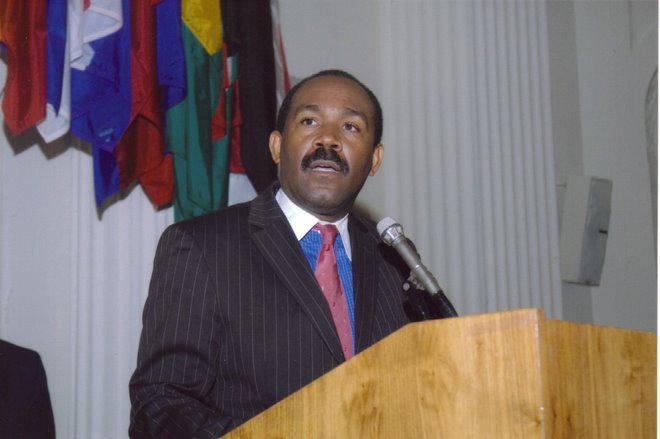
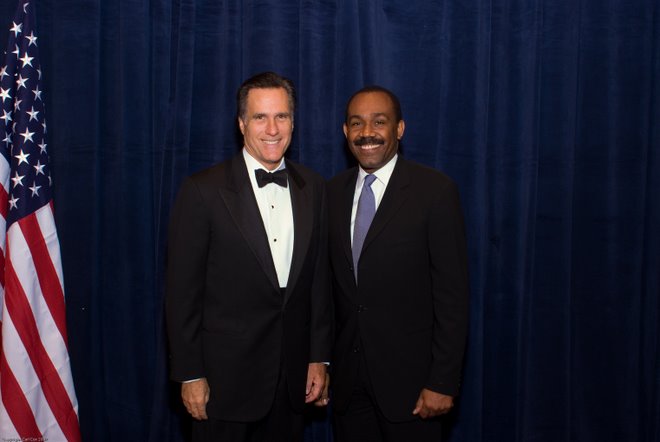
    Honorable Joseph Champagne, Mayor of South Toms River, New Jersey

The National Haitian American Elected Officials Network (NHAEON) strongly condemns the Dominican Republic court ruling (Sentencia 168-13) which renders stateless thousands of Dominicans, mainly of Haitian and Caribbean origin.

Media Contact: Joseph Makhandal Champagne, Jr., Esq., Chair
                       Tel: 732-240-0030 and email: nhaeon.chairman@gmail.com

The ruling officially states that any Dominican citizen without one parent of Dominican nationality will have their citizenship stripped retroactively to 1929.  This ruling violates the Dominican constitution and a number of international conventions. 

Consider the vast implications of this ruling.  Without citizenship, these Dominicans have no property rights; they are unable to use hospital facilities their children cannot go to school; their passports are void and they cannot travel.  They are in limbo.  An 80-year old grandmother living in the Dominican Republic for generations just lost everything – as have her children and grandchildren.  Most concerning to my organization is that a disproportionate number of Dominicans affected by this ruling are black and of Haitian descent.

Multilateral institutions, including the Caribbean Community and Common Market (CARICOM), Organization of American States (OAS), the United Nations (UN), and the Inter American Human Rights Commission, have condemned the decision. Haitian President Michel Martelly addressed the OAS on February 7, 2014 calling for constant vigilance on this issue (https://www.youtube.com/watch?v=8kk8Byb-kQA&list=PLkh9EPEuEx2sNOv3Z8kwhcHuDZXHHQTt8&index=3). Twelve days after that speech, CARICOM countries called on the OAS Permanent Council to consider the report of the Inter American Commission on Human Rights calling for the Dominican Republic to respect its international obligations (https://www.youtube.com/watch?v=zq34GEHxU1E&index=2&list=PLkh9EPEuEx2sNOv3Z8kwhcHuDZXHHQTt8).

Many human rights organizations have joined the condemnation, including Amnesty International and the Robert Kennedy Center for Human Rights and Justice.  Human rights activist and winner of the 2010 Nobel Prize for Literature, Mario Vargas Llosa, has likened the Dominican court ruling to tactics used by the Nazis and the brutal Apartheid regime in South Africa.  Unfortunately for Haitians, who are the main ethnic group targeted by this ruling, there is a troubling historic precedence underpinning this comparison.  In 1937, Dominican President Rafael Trujillo directed the purge of black Haitian workers and murdered as many as 40,000 Haitians without repercussion.

In the face of international pressure, the Dominican Government has only minimally responded.  They have engaged the Haitian government in a bilateral dialogue, which has resulted in no serious solutions to date.  Rather, the Dominicans have focused on a tangential issue, namely “regularizing” undocumented workers, and have issued two decrees that provide papers to those citizens.  Undocumented workers are not the core issue.  The rendering stateless of tens of thousands Dominicans is the core issue.

NHAEON is calling upon multilateral institutions, the Dominican and Haitian Diaspora, as well as human rights groups, and the global community to mobilize against this state-sponsored ethnic cleansing of Dominicans of Haitian and Caribbean descent by calling for the following actions:

1)   UN Security Council, the Secretary General and the Organizations of American States officially condemn the ruling of the Dominican court;
2)   Additional efforts by the CARICOM to suspend Dominican Republic participation in multilateral organizations, including the OAS, UN, the African Union, European Union, and PetroCaribe.
3)   Call for the World Bank, International Monetary Fund and the Inter American Development Bank to consider sanctions;
4)   Appeal for U.S. Diplomatic intervention and for Haitian Americans to build coalitions with our friends and allies in the Congressional Black Caucus, the Latino Caucus, the Progressive Caucus, the NAACP, Urban League, and religious groups to join us in protecting the citizenship of all Dominicans; and,
5)   Mobilize the Dominican and Haitian Diaspora to boycott the Dominican government and businesses and request host nations to condemn the Dominican ruling and impose trade sanctions.

ABOUT NHAEON
National Haitian American Elected Officials Network in the United States (NHAEON) is a non-partisan coalition determined to promote Haitian culture, education, welfare and well being while improving relations between the United States and Haiti.  NHAEON is committed to bringing a renewed national and local focus on key legislative, diplomatic, security, economic and human rights issues affecting Haiti.

State Department Human Rights on the Dominican Republic, see: http://www.state.gov/j/drl/rls/hrrpt/humanrightsreport/index.htm#wrapper

Friday, December 27, 2013

La Démocratie en Danger pour tous les Dominicains Par Roger Noriega


 Publie dans le Miami Herald le 26 Decembre 2013 

La communauté internationale a condamne avec raison la décision de la cour constitutionnelle de la république Dominicaine qui a révoque la nationalité de près de 350.000 Dominicains d’origine Haïtienne. Malheureusement, cette décision prise en Septembre n’est que le dernier d’un ensemble d’actions cyniques et partisan qui menacent l’état de droit et la croissance économique de cette nation. Les Dominicains de bonne foi doivent agir pour restaurer la probité et l’indépendance de leurs institutions pour garantir un futur meilleur pour tous les citoyens.

Au début du mois, La Commission Interaméricaine des Droits de l’homme, une institution très respectée,  a effectuée une visite d’urgence dans ce pays pour étudier l’implication de cette décision d’appliquer rétroactivement le contenu d’un amendement constitutionnel de 2010, qui redéfinît les droits a la nationalité, et de fait annulant pour une multitude leur droit a la nationalité. La Commission a publié de toute urgence une série de recommandations claires insistant que l’état Dominicain prenne des mesures “simple, claire, rapide et équitable” pour “garantir le droit à la nationalité de ces personnes qui ont déjà eu ce droit” avant la décision.

La décision du tribunal a été défendue comme une mesure nécessaire pour répondre aux préoccupations légitimes en matière d'immigration illégale. Toutefois, avant même que cette décision draconienne de la cour ait été délivré, les autorités électorales ont refusé de fournir des cartes d'identification des électeurs à des milliers de personnes d'origine haïtienne. C'est un indice que cette décision douteuse est probablement une manœuvre politique éhontée du Parti de la libération dominicaine au pouvoir (PLD) afin de disqualifier les électeurs d'origine haïtienne qui ont tendance à voter massivement pour le Parti révolutionnaire dominicain d'opposition (PRD). Par exemple, le feu José Francisco Peña Gómez, le fils fier d'immigrants haïtiens, a été un pilier du PRD.

Le patron du PLD, l’ancien président Leonel Fernández, a nommé ses partisans à la cour suprême et le tribunal électoral – c’est ce qui explique pourquoi ces importantes institutions de l'Etat servent ses intérêts politiques. Par exemple, le juge en chef actuel, Mariano Germán Mejía, était l’associe de Fernández dans son cabinet d’avocat, et un autre juge, Marta Olga Garcia, est la belle sœur de Miguel Vargas, un ami caudillo avec qui Fernández conspire pour saboter le parti de l’opposition PRD.

Bien que le tribunal électoral est censé être un groupe de magistrats impartiaux qui dirigent toutes les élections nationales, ses membres ont été choisis en fonction de leur loyauté envers Fernández et / ou le PLD au pouvoir. Fernández a exercé son contrôle absolu sur le tribunal pour truquer les élections récentes afin de bloquer la représentation proportionnelle du parti de l’opposition PRD au parlement; par exemple, bien que le PRD a gagné près de 42 pour cent des voix à l'échelle nationale en 2010, elle n’a reçue que 32 sièges au Sénat.

L’ancien président a manipule de façon flagrante les institutions de l’état pour construire “un état avec un parti unique”, c’est ce qui a été rapporte dans le rapport de Novembre du prestigieux Centre des Etudes Stratégiques et Internationales (CSIS) de Washington, prépare par un conseiller vétéran du Senat des Etats Unis, Carl Meacham. Meacham met en évidence une manœuvre d'airain de Fernández a travers un pacte avec l'ancien candidat du PRD Miguel Vargas pour prendre le contrôle du PRD, évincer les dirigeants les plus solides du parti, et saboter la capacité du parti a monter une campagne viable contre le PLD au pouvoir.   

“"Le Tribunal supérieur électoral (TSE) a assuré la désunion continu du PRD», rapporte Meacham. "Compte tenu de sa participation discrétionnaire dans la préservation de la présidence Miguel Vargas a la tète du PRD -- et sa décision de ne pas participer à l'expulsion de l'ancien président Hipolito Mejia – certain ont peur que le TSE joue un rôle excessif et décisif pour paralyser l'opposition primaire que représente le PLD."

Les institutions dysfonctionnelles enfermeront les Dominicains dans une cage de corruption et de déclin économique. Selon Transparency International (TI), ce pays est classé à la 123em place mondial en matière de corruption; seuls le Venezuela, Paraguay, Honduras et Nicaragua ont des cotes pires dans les Amériques. Un rapport du Département d'État cette année a noté que «la corruption reste endémique à tous les niveaux de la société dominicaine. Les autorités judiciaires, militaires et les officiels du gouvernement sont souvent accusés d'une série d'actes de corruption, y compris le trafique de stupéfiants, le blanchiment d'argent, des exécutions extrajudiciaires et d'autres crimes ". http://www.state.gov/j/inl/rls/nrcrpt/2013/vol1/204049.htm#Dominican_Republic

Ce n’est pas surprenant que le rapport du CSIS note que Fernandez et ses allies ont été accusés de corruption, de blanchiment d'argent et d'autres crimes graves. Par exemple, Vargas a été accusé dans un témoignage sous serment plus tôt cette année d'accepter $ 300 000 d’un baron connu de la drogue, José Figueroa Agosto David en 2008.

Les Dominicains haïtiens ne sont pas les seuls citoyens qui paient le prix de la corruption systématique. Peut-être le scandale international courant généré par décision irresponsable de la Cour suprême va stimuler la classe politique du pays et la société civile pour se mettre d'accord sur une révision urgente de ses institutions judiciaires et électoraux. C'est alors seulement que la République dominicaine  pourra redevenir un bon voisin et un partenaire productif pour la région et les Etats-Unis.

L'auteur a été ambassadeur des États-Unis à l'OEA et le Secrétaire d'Etat adjoint au cours de l'administration de George W. Bush. Il est chercheur à l'American Enterprise Institute et Directeur Général de Vision Americas LLC, qui représente des clients américains et étrangers.

Democracia en riesgo para todos los dominicanos Por Roger F. Noriega


Published en el Miami Herald, 26 de diciembre 2013

La comunidad internacional ha condenado con razón una decisión de la Corte Suprema de la República Dominicana de revocar la ciudadanía de por lo menos 350 mil dominicanos de ascendencia haitiana. Por desgracia, esta decisión solo es una de muchas acciones partidistas que amenazan el estado de derecho y el crecimiento económico en esa nación. Los dominicanos de buena voluntad deben actuar para restaurar la integridad e independencia de sus instituciones y asegurar un futuro mejor para todos sus ciudadanos.

A principios de este mes, la respetada Comisión Interamericana de Derechos Humanos, realizó una visita a ese país para estudiar las implicaciones de la decisión de implementar retroactivamente una enmienda constitucional del 2010 que redefinió los derechos de la ciudadanía. Esta decisión despoja a multitudes de su "derecho a la nacionalidad." La Comisión emitió con urgencia una serie de recomendaciones inequívocas que insisten en que el Estado dominicano adopte "claramente, rápidamente y con justicia"  medidas para "garantizar el derecho a la nacionalidad de las personas que ya tenían este derecho" antes de la sentencia.

La decisión del tribunal se ha defendido como una medida necesaria para responder a las preocupaciones legítimas sobre la inmigración ilegal. Sin embargo, incluso antes de la publicación de esta decisión judicial draconiana, las autoridades electorales se habían negado a proporcionar tarjetas de identificación de votantes a miles de personas de origen haitiano. Esta acción es probablemente una maniobra política por parte del Partido de la Liberación Dominicana (PLD) para descalificar a los votantes de origen haitiano que tienden a votar masivamente por el Partido Revolucionario Dominicano (PRD). El PRD ha tenido en sus filas a haitianos desde su fundación, como el fallecido José Francisco Peña Gómez, orgulloso hijo de inmigrantes haitianos, quien fue un pilar del PRD.

El presidente del PLD y ex presidente de la República Dominicana, Leonel Fernández, ha llenado  a la Corte Suprema y al tribunal electoral de amigos y partidarios, lo que explica por qué estas instituciones del Estado sirven a sus intereses políticos. Por ejemplo, el Presidente de la Suprema Corte de Justicia, Mariano Germán Mejía, fue socio de Fernández. Marta Olga García, quien también es juez de la corte, es cuñada de Miguel Vargas, un caudillo con quien Fernández está conspirando para dividir al partido opositor PRD.

Aunque supuestamente el tribunal electoral está compuesto por jueces imparciales, sus miembros fueron elegidos en base a su lealtad a Fernández y/o con el PLD. Fernández ha ejercido un control absoluto sobre el tribunal electoral para alterar el resultado de elecciones y para negar la representación proporcional del partido de la oposición en el Congreso. Aunque el PRD ganó casi el 42 por ciento de los votos a nivel nacional en 2010, solo obtuvo uno de los 32 escaños del Senado.

Esta manipulación atroz de las instituciones por parte del ex presidente Fernández ha creado un estado unipartidista, como se narra en un informe publicado en noviembre por el prestigioso Centro de Estudios Estratégicos e Internacionales (CSIS) en Washington, DC y escrito por el veterano asesor del Senado estadounidense Carl Meacham. Meacham destaca una maniobra descarada por Fernández al hacer un pacto con el ex candidato del PRD Miguel Vargas para usurpar el control del PRD , derrocar a los líderes más fuertes del partido y socavar su capacidad para establecer una campaña viable contra el PLD.

"El Tribunal Superior Electoral (TSE) ha asegurado la desunión continua del PRD", informa Meacham . "Teniendo en cuenta su participación discrecional en la preservación de Miguel Vargas en la presidencia del PRD - y su decisión de no intervenir cuando se expulsó del PRD al ex presidente Hipólito Mejía. Algunos temen que el TSE está desempeñando un papel indebido y decisivo para paralizar la oposición principal del PLD. " Https :/ / csis.org/files/publication/131111_Meacham_DominicanRepublic_Web.pdf

Instituciones disfuncionales atraparán a todos los dominicanos en la corrupción y el deterioro económico. De acuerdo con Transparencia Internacional (TI), el país ocupa el puesto 123 en percepción de mayor corrupción, solo por debajo de Venezuela, Paraguay, Honduras y Nicaragua en las Américas. Un informe del Departamento de Estado de este año señala que: "La corrupción sigue siendo endémica en todos los niveles de la sociedad dominicana. Los encargados de hacer cumplir la ley, militares y funcionarios del gobierno son a menudo acusados ​​de una serie de actos de corrupción, incluyendo el tráfico de drogas, lavado de dinero, ejecuciones extrajudiciales y otros delitos". Http://www.state.gov/j/inl/rls/nrcrpt/ 2013/vol1/204049.htm # República_Dominicana

No es sorprendente que el informe del CSIS señale que Fernández o sus aliados estén involucrados en lavado de dinero y otros delitos graves. Miguel Vargas, por ejemplo, fue acusado en un testimonio jurado a principios de este año de haber aceptado 300,000 dólares del capo de la droga José David Figueroa en Agosto del 2008.
http://www.elnuevoherald.com/2013/01/05/1378123/politico-dominicano-recibio-dinero.html

Los dominicanos de ascendencia haitiana no son los únicos ciudadanos que pagan un precio por la corrupción sistemática en el país. Tal vez el escándalo internacional actual generado por el fallo de la Corte Suprema estimulará a la clase política y a la sociedad civil para promover reformas urgentes a las instituciones judiciales y electorales. Sólo entonces la República Dominicana volverá a ser un buen vecino y socio productivo para la región y los Estados Unidos.

El autor fue embajador de EE.UU. ante la OEA y  subsecretario de Estado durante la administración de George W. Bush. Él es un investigador visitante en el American Enterprise Institute y director ejecutivo de Visión Américas LLC, que representa a clientes estadounidenses y extranjeros.

Democracy at Risk for all Dominicans By Roger F. Noriega


The international community has justifiably condemned a decision by the supreme court of the Dominican Republic revoking the citizenship of as many as 350,000 Dominicans of Haitian decent.  Unfortunately, that decision in September was just the latest in a pattern of cynical, partisan actions that threaten the rule of law and economic growth in that nation.  Dominicans of goodwill must act to restore the probity and independence of their institutions to secure a better future for all of its citizens.

Early this month, the respected Inter-American Commission on Human Rights paid an urgent visit to that country to study the implications of the decision to retroactively apply a 2010 constitutional amendment that redefined citizenship rights, effectively stripping multitudes of their “right to nationality.”  The Commission urgently issued a series of unambiguous recommendations insisting that the Dominican state take “simple, clear, fast, and fair” steps to “guarantee the right to nationality of those individuals who already had this right” before the ruling.

The court’s decision has been defended as a measure needed to address legitimate concerns over illegal immigration.  However, even before this draconian court decision was issued, electoral authorities had refused to provide voter identification cards to thousands of persons of Haitian background.  That is a clue that this dubious decision is likely a shameless political maneuver of the ruling Dominican Liberation Party (PLD) to disqualify voters of Haitian descent who tend to vote overwhelmingly for the opposition Dominican Revolutionary Party (PRD).  For example, the late José Francisco Peña Gómez, the proud son of Haitian immigrants, was a pillar of the PRD. 
The PLD’s boss, former president Leonel Fernández, has named his partisans to the supreme court and the electoral tribunal—which explains why these important institutions of the state serve his political interests.  For example, the current chief justice, Mariano Germán Mejía, was Fernández’s law partner, and another justice, Marta Olga Garcia, is the sister-in-law of Miguel Vargas, a fellow caudillo with whom Fernández is conspiring to hijack the opposition PRD.  

Although the electoral tribunal is supposed to be a panel of impartial magistrates who run all national elections, its members were chosen based on their loyalty to Fernández and/or the ruling PLD.  Fernández has wielded his absolute control of tribunal to rig recent elections to deny the opposition party proportional representation in the congress; for example, although the PRD won nearly 42 percent of the nationwide vote in 2010, it claimed only one of 32 Senate seats. 

The former president’s egregious manipulation of state institutions to build a “one-party state,” is chronicled in a report issued in November by the prestigious Washington, DC, think tank, the Center for Strategic and International Studies (CSIS), authored by veteran U.S. Senate advisor Carl Meacham.  Meacham highlights a brazen maneuver by Fernández to make a pact with former PRD candidate Miguel Vargas to usurp control of the PRD, oust the party’s strongest leaders, and undermine party’s ability to muster a viable campaign against the ruling PLD. 

“The Superior Electoral Tribunal (TSE) has ensured the continued disunity of the PRD,” Meacham reports.  “Given its discretionary involvement in preserving Miguel Vargas’ PRD presidency—and its decision not to engage in the party’s expulsion of former president Hipólito Mejía—some fear that the TSE is playing an undue and decisive role in crippling the PLD’s primary opposition.” https://csis.org/files/publication/131111_Meacham_DominicanRepublic_Web.pdf

Dysfunctional institutions will trap all Dominicans in corruption and economic decline.  According to Transparency International (TI), the country is ranked 123rd place in the world terms of corruption; only Venezuela, Paraguay, Honduras and Nicaragua have worse ratings in the Americas.  A State Department report this year noted that, “Corruption remains endemic at all levels of Dominican society.  Dominican law enforcement, military, and government officials are often accused of a range of corrupt activities including narcotics trafficking, money laundering, extrajudicial killing and other crimes.” http://www.state.gov/j/inl/rls/nrcrpt/2013/vol1/204049.htm#Dominican_Republic

Not surprisingly, the CSIS report notes that Fernández or his allies have been accused of corruption, money laundering and other serious crimes.  For example, Vargas was accused in sworn testimony earlier this year of accepting $300,000 from reputed drug kingpin Jose David Figueroa Agosto in 2008.

Haitian Dominicans are not the only citizens paying a price for systematic corruption.  Perhaps the current international scandal generated by the supreme court’s careless ruling will spur the nation’s political class and civil society to agree on an urgent overhaul of its judicial and electoral institutions.  Only then will the Dominican Republic return to being a good neighbor and productive partner for both the region and the United States. 

The author was U.S. ambassador to the OAS and assistant secretary of state during the George W. Bush administration.  He is a visiting fellow at the American Enterprise Institute and managing director of Vision Americas LLC, which represents U.S. and foreign clients.

Thursday, February 3, 2011

Putting Aid to Work for the Haitian People: Creating a Haitian Housing Authority by Stanley Lucas


Background
There has been much focus on the failure of foreign aid in Haiti prior to the earthquake and in the earthquake recovery process, see: http://solutionshaiti.blogspot.com/2011/01/haiti-one-year-after-earthquake-by.html People are asking why there is no visible program and what can be done.  There are many reasons aid failed to bring about development in Haiti prior to the earthquake – corruption, failure to build capacity in-country, and a patchwork approach to aid.  In the aftermath of the earthquake, these same dynamics have taken hold.  There are many good programs operating, but in spite of record funding (almost $10 billion in international aid has been pledged) their impact has been limited.  Aid is still being administered through a patchwork of programs not tied to any clearly defined short or long-term goal.  Turning this situation around and demonstrating a commitment to meaningful aid that improves the situation for the Haitian people requires a new approach. 


The Haitian people have no clear understanding of how the country will move forward nor does the international community for that matter as evidenced by their failure to remit the funds committed to reconstruction.  The reconstruction process is currently being run through a largely opaque operation, the Haiti Interim Reconstruction Commission (HIRC), co-led by former President Bill Clint on and Haitian Prime Minister Jean Max Bellerive.  Haitian members of the HIRC have complained publicly that they have no idea how projects are being chosen or how contracts have been awarded, see: http://solutionshaiti.blogspot.com/2011/01/haiti-interim-reconstruction-commission.html They say their role has been reduced to a “rubberstamp”.  Furthermore, they say that almost all reconstruction contracts have been awarded to foreign firms without bidding, and that Haitians have been largely marginalized.  The current process is not working and needs to be reinvigorated and refocused.

The reconstruction process needs an anchor program that focuses the reconstruction process and supports immediate, mid-term and long-term priorities.  An anchor program would galvanize the Haitian people and international community and reinvigorate the process.  The creation of a Haitian Housing Authority would address the immediate housing needs; would refocus aid money into a program that has tangible benefits for the Haitian people, and would address the mid- and long-term economic development challenges the country faces.
Click on pictures to enlarge


I hasten to add that a resolution to the political crisis surrounding the recent elections must also happen before any of this can happen.

Haiti’s Housing Crisis
Haiti’s top reconstruction priority must be rebuilding people’s homes.  About 1.8 million people are still living on the streets having lost their homes more than a year ago in the January 12, 2010 earthquake.  More than 500,000 homes were reduced to rubble.  Haitians are living in more than 1,370 makeshift “tent cities” that have sprouted up throughout the country.  I would note that the UN estimates one million people are homeless; however, their number does not include tent cities with less than 500 residents.  This is not humane, safe or sustainable.


One of the core challenges for economic development in Haiti is the lack of access to credit to launch a business or rebuild a home.  The banks are controlled by a small business cartel, the Groupe de Bourdon, which rules the Haitian economy through government favor and monopolies.  If you are lucky enough to secure a loan (mostly through relationships), chances are the interests rate will be around 43%.  And, the most common way to secure that loan is by using your home as collateral.  With so many people homeless, economic activity cannot really resume until Haitians can begin rebuilding their homes.

The Haitian Housing Authority
One creative solution to this economic and recovery challenge is the creation of a Haitian Housing Authority.  The Authority would be dedicated to the stated goal of “Building Back Better”.  It would essentially operate as a public-private partnership between the international community and the Haitian Government to do two things:  1.  Award Haitians low interest (2-4%) loans to rebuild their homes; and 2. Regulate the rebuilding process by providing training and certification to contractors, developing building codes, and monitoring rebuilding compliance. 
Click on picture to enlarge

In the short term, the HHA could quickly solve the most pressing need for housing in Haiti.  Keith Miyamoto, a San Francisco-based earthquake reconstruction expert, says it would take about $200 million and six months to put one million people into earthquake resistant homes.  He has already trained a corps of local engineers to identify homes that can be rebuilt and how to build new homes.  In the long term, the HHA could help solve the access to credit challenges, break up a bank monopoly by forcing banks to compete, and contribute to the overall building codes.  The HHA would also aim to build a new economic development center by training new contractors and providing a new skill set to Haitians and getting Haitians back to work by constructing homes.   

Funding and Establishment of the HHA
Funding this program should not require any new funding.  There is already plenty of aid money out there – about 80% of it has not even been spent yet.  The international NGOs that have received large donations and funds could be encouraged to allocate a portion of their funds to the new Authority.  Countries that have yet to remit their funds may be encouraged by such a straightforward and focused concept. 

Setting up the authority should be a straightforward process, but will likely require the Haitian Government lead in order to get it moving.  Many aid organizations will be reluctant to part with funds unless they see a role for themselves and a real commitment by the Haitian Government to make it work.  The Haitian Government needs to make the priorities of the Haitian people their priority and show some leadership.  The establishment of a Haitian Housing Authority would do just that.  The government could launch the HHA by an official decree. 


The Haitian Government will need to work to secure international buy in and identify partners from the international community in order to capitalize the fund.  International organizations, such as the World Bank and IDB, as well as NGOs have vast amounts of reconstruction funds at their disposal.  The Red Cross alone has almost $200 million remaining from the $445 million that was donated to earthquake recovery. 


The international partners should play a key role in establishing and managing the HHA, but should focus on building capacity in Haiti by working closely with the Haitian Government to set up the mechanism for vetting, approving and administering loans.  Mechanisms to counter corruption and graft must be central to the process.  Loan recipients should be free to identify their own contractors, but the HHA should require that contractors be certified by the HHA and build according to newly defined building codes (Haiti currently has no such codes or inspectors).  It should be key to the plan to include Haitian contractors and provide technical training for the required certification as well as training for building inspectors. 

Of course, priority access to the fund should be given to earthquake victims, but this project should also be sustainable.  Going forward, the fund could help Haitians make their existing homes and businesses earthquake proof.  This will help to spur a new local industry and build capacity in the Haitian construction sector. 

Conclusion
Concentrating aid in a priority sector that directly benefits Haitians should be a priority.  It has been more than a year since the earthquake, and we have not even begun to move towards rebuilding.  This type of program would provide real benefits to Haitians and give them the tools to help themselves, which should ultimately have lasting impact on Haiti’s economy.

Friday, October 15, 2010

$1.15 billion US Aid Package for Haiti Goes to the Clinton Global Initiative by Stanley Lucas

For the third time this week, Fox News Anchor Bill O’Reilly highlighted the “Haiti Aid Scandal”.  First, I think it would be helpful to outline the various pots of money that the US Government has allocated to Haiti so that we can all be clear about what is being discussed:


         1.     In the immediate aftermath of the earthquake, the US Government allocated approximately $1 billion in aid.  Of that, only a couple hundred million actually got to the Haitian people for emergency assistance (medical, food, water, etc).  The rest was to fund the cost of sending the 82nd Airborne and military down to Haiti to stabilize the country – as the UN mission was very badly hit by the earthquake.


2. Another $1.5 billion was allocated by the Congress for recovery (removing rubble) and rebuilding (permanent shelter).  Nine months later, more than 1.5 million people are still living in the streets.  That money was appropriated by Congress months ago and is only going to be released by the State Department in the coming weeks.  The State Department took months to submit their plan for how to combat waste and fraud with the allocated funds.


3. There is a third pot of money in the amount of $500 million for infrastructure projects that is currently being held in the Senate by Senator Tom Coburn (R) because it is “unfunded” meaning they have not offset the budget expense by an equal budget cut.


 The stunning news tonight is that the Clinton Global Initiative will receive all $1.15 billion of the $1.5 billion to deploy in Haiti as they see fit.  For the Haitian Diaspora in the US and Haitians in-country it is somewhat surprising that the Secretary of State would put the money exclusively in her husband’s hands.  This is disappointing because it is not what President Barack Obama promised Haitians.  He committed to developing a partnership with Haiti – meaning that US aid would go to directly to Haitian institutions to strengthen their capacity not third party. 


 There are several potential implications for this money going exclusively to the Clinton Global Initiative (CGI).  First, there are potentially other organizations that would be deserving of some of these funds but now everyone will have to prove themselves worthy to Mr. Clinton.  Second, this means big dollars for Clinton’s NGO.  The standard overhead or administrative fee used by NGOs is 22%, which means Bill Clinton’s NGO potentially just secured $253 million in overhead expenses, and has potentially fully funded his Initiative for years to come.  CGI will then presumably make grants to other organizations, which will also require an overhead operating budget.  This multiplier effect on overhead could result in more money than necessary going to operational budgets for international NGOs.  This is potentially a lot of money going into the US system and not actually reaching the victims. Third, Clinton does not have a stellar track record of helping Haiti.  On March 31, 1995, President Bill Clinton promised the people of Haiti 1,000 km in new roads, 1 million trees and job creation (see: http://ftp.resource.org/gpo.gov/papers/1995/1995_vol1_437.pdf ).  The people of Haiti are still waiting for him to fulfill that 15-year-old promise.  This has led to much skepticism about President Clinton’s high profile position in Haiti, which was brought to light after his appointment as UN Special Envoy last year (see: http://solutionshaiti.blogspot.com/2009/07/former-president-clinton-takes-his.html ).


A skeptical young Haitian listening to President Clinton last week

But most importantly, the question remains: Why doesn’t the US use the money to directly fund Haitian institutions (government, civil society, and Diaspora) and place technical advisors within those organizations to monitor the funds and program implementation?  Haitians have serious doubts that the Clinton Global Initiative will use the money to strengthen Haitians and Haitian civil society.  And, they believe that part of the reason that aid has been so ineffective after all these years is because money has not been used to strengthen capacity. See: http://metropolehaiti.com/metropole/full_une_fr.php?id=18364


One of the themes that emerged after the earthquake was the complete inability of the Haitian Government to respond to the earthquake and the disarray that the country is in despite $11 billion in aid money that has been poured into the country over the past 25 years.  What happened was that most donors channeled their aid through international NGOs and bypassed the Haitian Government, civil society, Haitian Diaspora and other Haitian institutions.  To be sure, the Haitian Government is rife with corruption, but there are ways to build capacity and fight corruption.  What happened was that many international NGOs built capacity in-house instead of building Haitian capacity.  Furthermore, there was a lack of coordination among aid agencies resulting in redundancy or one-off programs that did little to benefit Haiti in the long term.  If the United States wants to help Haitians and have a real impact with this money, they should change the framework and prioritize investing in bringing skills and capacity to the Haitian people rather merely financing NGOs.

Tuesday, July 27, 2010

Lugar Calls for Business Reform; Proposes Haitian-American Enterprise Fund By Stanley Lucas

Summary

On July 22, Senator Lugar released a report, authored by senior staff members, entitled, “Without Reform, No Return on Investment in Haiti” (see http://lugar.senate.gov/issues/foreign/lac/haiti/pdf/investment.pdf ). The report summarizes the limited impact of US and foreign investment in Haiti over the past two decades and the serious hurdles to setting up a business. In order to jumpstart the private sector, Lugar has proposed the establishment of a Haitian American Enterprise Fund. The bill was introduced on April 14 and is pending review in the Committee on Foreign Affairs (see http://www.thomas.gov/cgi-bin/query/z?c111:S.3202: ). The Fund would be modeled on the successful models of the enterprise funds created in the 1990s for Poland, Hungary, and other European countries after the fall of the Berlin Wall.

Analysis

Lugar’s team hit the nail on the head by pinpointing the reform of the business sector as the key to sustainable economic growth. In the immediate aftermath of the earthquake, former President Bush economist Glen Hubbard wrote a similar piece (see http://solutionshaiti.blogspot.com/2010/02/true-marshall-plan-for-haiti-by-glenn.html ) arguing that the success of the Marshall Plan in post-WWII Europe was based on the vibrant private sector, which was lacking in Haiti. To be sure, Haiti needs business reform and to formalize the private sector. The Haitian American Enterprise Fund is an interesting approach, but must be structured in a way that allows all Haitians access to the Fund. As the Fund is currently outlined, it will do nothing more than further strengthen Haiti’s elite business cartel and the current discredited leadership.

The report misses a critical element of why the business sector is in such disarray, and why there is almost no political will to make the necessary reforms. Haiti’s economy is controlled by a business cartel known as the “Groupe de Bourdon”, named after an affluent neighborhood. This cartel controls about 95% of the economy – and contributes a mere 4% of the income taxes collected. In the private sector they control food importation, the agriculture sector, banks, transportation, etc. They essentially monopolize all sectors, including the informal sector. For example, many people in the informal sector will buy bags of rice or other consumer products and then sell these items in the market for a slight mark up. They buy these products from the Groupe at an extremely high interest rate. It is feudalism at its best.

They do this with the support and participation of the Preval Administration. They financed Preval’s campaign, and in return, they gained control of the public and private sector. In the public sector, they leveraged their access to the President, they put in place the ministers of finance, commerce, public works, the directors generals of the tax offices and office to acquire state lands, the port and customs, the governor of the central bank, and economic advisors to the president. They also secured a monopoly of oil (via Petro Caraibe) and grains through PL480, a USAID program for Haiti. It is also the Groupe that is responsible for the incredible interest rates of 48-60% on small business loans and the limited access to credit. With this access they were able to acquire profitable state institutions for pennies on the dollar under the guise of privatization.

This Groupe also has the means to access the US Government, Congress and international aid. Several members of the cartel briefed the senate staffers. Unfortunately, the Lugar staff did not take the opportunity to meet with the local chambers of commerce and entrepreneurs that have been dedicated to bringing opportunity to all Haitians. This powerful group has effectively lobbied US codels, international delegations, Clinton, UN, IADB, and the World Bank. With the support of the Haitian government they have secured international aid funds to finance pet projects that do not at all benefit the Haitian people as a whole. For example, they are trying to secure an $80 million grant to build their own private university rather than modernizing and rebuilding the affordable state university. These loans and grant are taken on behalf of the Haitian people but finance their own end.

The report also misses the reason why there is a “dearth” of political will to make business reforms. The report states that President Preval is “resistant to overtures by the World Bank and other international partners to make difficult decisions, ostensibly because he fears being labeled a dictator by political adversaries if he makes certain reforms by decree.” First, it is unclear why these reforms would need to be made by decree. There is a legislature that is motivated to show some progress on important issues in advance of elections. But more fundamentally questionable is the assessment of Preval’s motives. He was unafraid of illegally extending his term in office and unafraid of passing the Emergency and Reform Act nullifying Haitian civil liberties. It is doubtful that he would be afraid to pass business reform measures that would make access to credit more possible and streamline regulatory procedures. President Preval is “resistant to international overtures” because the current system benefits him personally and his associates in the business cartel.

Finally, it is also somewhat confusing as to why the Dominican Republic factors so prominently into the report. Staff members met with as many representatives of the DR private sector as the Haitian private sector. As noted, the relationship between the two countries has been strained due to poor treatment of Haitian workers and a host of other issues. It is unclear why the DR private sector is bemoaning the fact that Haitian leaders are not looking at “island wide” recovery. The DR did not sustain the damage that Haiti did, and has likely only benefitted from the disaster with the increased numbers of aid workers and aid importation through their airports and ports.

Recommendations

The Haitian-American Enterprise Fund is an excellent idea, but there are additional efforts that could be undertaken to ensure that the private sector is bolstered:

· The Fund should be structured in a way that takes into account an entrenched business cartel and allows all Haitians access to the opportunities the Fund presents.

· While the Fund idea is strong and proven, it would be better as part of a more robust and comprehensive plan that includes technical assistance for legislative and regulatory reform to Haiti’s cumbersome business codes, training the judiciary and professionalization of government staff.

· Considering their past two decades performance, US AID Haiti’s capability to implement such a Fund should be reviewed. The US AID Haiti mission among the highest funded missions worldwide, but has not demonstrated a proven track record of results for the level of funding they have received.

· The report neglects to discuss the role of the Haitian Diaspora’s role as a key resource in supporting the building of the business sector. Unfortunately, the Lugar staff did not meet with prominent Haitian Diaspora business leaders in the US. This has been an issue for the Diaspora with the Administration and Congress throughout the rebuilding process and has left the Diaspora community wondering why they have been so seriously marginalized from the process.

· The regional and departmental Chambers of Commerce have also been neglected these organizations which have proven more representative of Haitian interests. They could use capacity building and professionalization programs. In addition, they are an excellent and more balanced source of information.

· In light of Preval’s resistance to implement private sector reforms, the Congress could consider working directly with Haiti’s legislature, which is highly motivated to undertake meaningful reform, especially with upcoming elections. Congress could consider establishing an interparliamentary exchange program with the Haitian legislature.

· Finally, the report mentions that critical lack of infrastructure is a primary obstacle to doing business in Haiti. This is an excellent area for US aid as it provides immediate job opportunities for Haitians, opportunities for US companies and tangible results. Most importantly, investing in infrastructure skirts the complicated political issues, such as FDI and the DR.