Executive Summary
The following report is intended to provide a brief summary
of the reasons for the breakdown of the most recent elections in Haiti. The
breakdown is happening on several tracks:
· First, one of the two Presidential candidates
qualifying for the runoff is undermining the electoral process by publicly
claiming that he will not participate in the runoff election. Yet, he has not formally
submitted a letter to the Permanent Electoral Council (CEP) giving notice that
he will not participate. Therefore, their hands are tied in organizing the
runoff.
· Second, a small faction of the opposition
parties, led by former President
Aristide’s Fanmi Lavalas party
along with the head of the Pitit
Dessalines party, Moise Jean Charles, are using violence and
intense lobbying in Washington, DC to derail the elections and conduct a coup
d'état against current President Michel Martelly. The solution for this
small faction is to disengage from the democratic process and push for a
transitional government, which would plunge Haiti into political instability
for at least the next 15 years. This faction
has scant support from the Haitian people and 90% of the people oppose the coup.
· Finally, six of the nine members of the CEP have
resigned as a result of the violence. By law, there must be five CEP members to
organize an election (there are currently only three). A plan to reconstitute
the CEP is being negotiated by the members of the opposition and others. Mr.
Celestin is advocating a “reshuffling” of the CEP.
Meanwhile, other representatives of the opposition parties
accompanied by the Administration and key influential leaders are advocating a
three-part strategy to maintain stability and the democratic process: 1. While
Martelly wants to leave on February 7 when his term expires, he should remain in
office until elections can be organized, as was done in 2011 under Preval; 2.
Install a new Prime Minister; and, 3. Reconstitute the CEP. The key question
is: how to set up a process that is inclusive in spite of the refusal of
Celestin and the small faction of the opposition to participate? The Permanent
Council of the Organization of American States (OAS) has assembled a mission to
facilitate
dialogue and find consensus, but there are serious questions about their goals. Since 2014, they are also serious questions about MINUSTAH's role in supporting democratic institutions against violence.
This report concludes with recommendations on a potential
path forward and recommendations for the role the international community can
play to help support a peaceful and democratic resolution to Haiti’s latest
electoral crisis.

Presidential and Legislative Elections
Haiti held Legislative Elections on Augusts 9 followed by elections
for President and the Legislative runoff on October 25. The August 9 elections,
which included 85 political parties, were characterized by administrative
deficiencies, fraud, irregularities and violence. The CEP sanctioned
the candidates and employees
of the electoral machinery involved in the irregularities. The Presidential
runoff elections were scheduled for December and then rescheduled for January
24. They were again postponed due to violence, and are still pending.
Extreme and Widespread Violence Stalls the Runoffs
A week before the runoff, Deputy Danton Leger, one of the spokespeople for former President Jean
Bertrand Aristide’s Fanmi Lavalas party,
called for the use of violence to stop the elections and threatened to kill
voters if they turned out on January 24 (see: https://www.facebook.com/Tripothaitien/videos/620246711446887/
). These calls were echoed by Andre Michel, a self-proclaimed radical leader,
and Rony Timothe, a former Lavalas member
and creator of the FOPARK grassroots movement associated with Pitit Dessalines. Given the country’s violent
electoral history[1], these
threats to stop the elections, intimidate voters and drive down turnout were
taken seriously by Haitian society.
According to several sources in the targeted
municipalities, on January 18, Lavalas
operatives took to the streets burning cars, businesses and houses in downtown
Port-au-Prince and indiscriminately beat innocent bystanders. Moise Jean
Charles, a former Lavalas senator who
is now the head of Pitit Dessalines,
had his supporters burn down the Municipal Electoral Office in Milot. Heavily
armed paramilitary-style commandos close to Lavalas
and Pitit Dessalines ransacked and
burned 15 municipal voting centers around the country destroying all ballots
and electoral material. And, they burned the country’s public schools
used by the Provisional Electoral Council (CEP) as voting centers.
In Port-au-Prince, two organizations MOLEGHAF (associated
with Lavalas) and FOPARK (associated
with Pitit Dessalines), were the actual
executers of the violence. Both organizations are considered anarchist movements
that co-opt disaffected youth and use them to develop a culture of political
violence to undermine any efforts to
build democratic institutions. They reject rule of law and use violence to
impose their will. Anyone opposed to
their agenda is verbally and physically threatened. Timothee, the head of FOPARK, even ordered his commandos over the
radio to kidnap the CEP President and called for the “necklacing”[2]
of President Martelly.
In the face of the raging violence, the CEP issued a communiqué postponing the January 24 elections
in order to protect the voters from the threatened carnage. The communiqué
detailed the violence and electoral intimidation.
The October Elections – Where the Crisis Began with False Claims of
Fraud
For the past four years, some opposition parties led by Moise
Jean Charles and Lavalas employed
various tactics
to block
the organization of the elections with the objective of taking control of
Haiti’s electoral machinery and organizing an electoral coup. President Michel Martelly, by
contrast, has consistently engaged the opposition reaching two major
power-sharing agreements with the opposition parties in an effort to keep the
democratic process on track. The first was
on December 2014, which gave the opposition control of the Prime Minister’s
Office and the Government. The second
was in January 2015 giving the opposition control of the CEP. This bears
repeating: President Martelly has given the opposition control of the Prime
Minister’s Office and the CEP. A third agreement was also on the table. In
order to keep checks and balances, Martelly offered to extend the senators term
in office (as was done in 2011) in exchange for them to sit for quorum[3]
and vote on the electoral law.
Of the nine members on the CEP, the body tasked with
overseeing the entire electoral process, all are representatives of the
opposition, including the faction of the opposition now undermining the
electoral efforts. Martelly’s government did not name a single member of the
CEP.
The CEP was composed of the following members:
1.
Marie Carmelle Austin, a former Aristide
Education Minister
2.
Pierre Louis Opont, a member of Preval’s Inite party since 2010 (resigned)
3.
Jacceus Joseph, a founding member of the Pitit Dessalines party (resigned)
4.
Nehemie Joseph, and member of the opposition
party MOPOD (resigned and replaced
by Carline Viergelin)
5.
Yolette Mengual, former chief of staff to
Lassegue, a former cabinet member of both Aristide and Preval (resigned)
6.
Pierre Manigat, former chief editor of the
Nouvelliste, close to Groupe de Bourdon (resigned)
7.
Lourdes Edith Joseph, from a worker union sector
close to the opposition
8.
Vijonet Demero from the protestant church, which
fielded six presidential candidates (resigned and replaced)
9.
Ricardo Augustin, from the Catholic Church. Two
presidential candidates were closely associated to the Catholic
Church and one boycotted the entire electoral process. (resigned)
See their resignation letters: http://www.slideshare.net/stanleylucas
When they gained control of the CEP, the opposition agreed
to cease their four-year effort to block elections and participate in the
democratic process. Legislative elections were held on August 9, but they were
a complete mess. From administrative breakdown to the efforts of 85 political
parties to manipulate the process, these elections were poorly managed. Because
of the technical and financial assistance provided by the international
community along with security from the UN Mission, MINUSTAH, Secretary John
Kerry paid a visit
to Haiti on October 6 to investigate the situation and attempt to broker
a resolution. After the implementation of a set of technical recommendations,
the Presidential election was scheduled for October 25 along with runoff
Legislative elections.
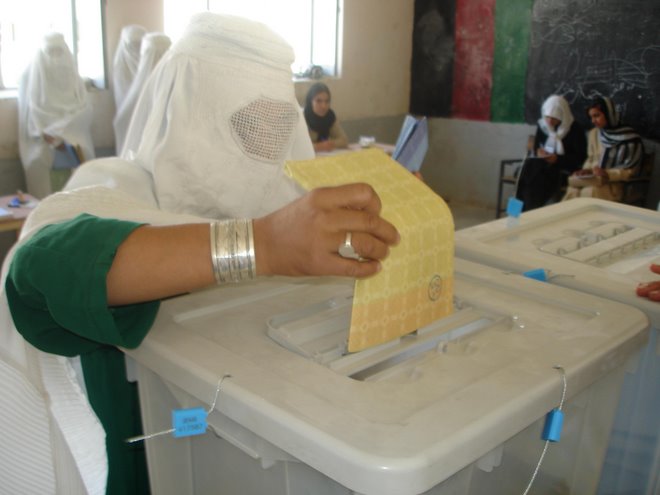
On October 25, 54
candidates participated in the Presidential elections, including one from the
ruling party PHTK. The elections were a success; turnout was good in comparison
to seven previous elections. There was no violence, and the electoral machinery
responded well. For the first time in Haiti’s rocky democratic history, there
was not at single death on Election Day. Haitian Diaspora expressed support for
the process. And, all national
and international
observers agreed that although there were some irregularities, there was no
evidence
of fraud, and the elections were acceptable.
Things turned sour the day after the elections. Several
Presidential candidates – who had been informed they did not qualify for the
runoff [4]
took to the radio screaming allegations of fraud.
Yet, they could not present any technical report or their tally sheets to prove
the elections were rigged. In fact, 96% of these candidates got less than 1% of
the vote. According to the Haitian Diaspora electoral observation mission,
(NOAH)-HDP, all of their evidence is anecdotal. Further, not one single
candidate crying foul officially registered a complaint under the process
outlined by the electoral law. Because they had a savvy media strategy – in
country and internationally
– their unsubstantiated claims got some traction. The candidates took to the
radio giving impassioned speeches about being robbed of their elections, and
Aristide’s highly paid US lobbying
team made sure the story was told in Washington and around the U.S. They were behind several press articles
undermining the elections, making damaging claims against the government and advocating
the installation of an unconstitutional transitional government – essentially a
coup against Martelly.
According to the official results, two of the 54 candidates actually
qualified for the runoff: Jovenel Moise (PHTK) with
32.81% of the vote, and Jude Celestin (LAPEH)
with 25.27%. Of the 54 candidates, 45 received less than 1% of the vote. Only
three candidates registered in the double digits. The third and fourth top vote
getters -- Moise Jean Charles (Pitit Dessalines) at 14.27% and Maryse Narcisse
(Fanmi Lavalas) at 7.05% -- continue to claim that they won although neither of
them has formally contested the results. Instead, they have attempted to block
the electoral process in order to install an unconstitutional transitional
government.
Maryse Narcisse employed a clever political communications strategy
by requesting to visit a tabulation center to evaluate 78 tally sheets she
previously selected (out of a total 13,265 tally sheets). She claimed that those
“randomly” selected tally sheets were all characterized by fraud. Her show gave
Aristide lobbyists fodder to derail the elections by presenting evidence of
fraud to Washington, DC community. Local and international election observers
and the CEP swiftly and decisively debunked
her story of the 78 tally sheets.
Celestin Says He’s Boycotting the Process
Despite qualifying for the runoff, Jude Celestin has
publicly stated that he refuses to participate in the electoral process unless
he gets full control of the CEP. After the election, he formally submitted his
recommendations to the CEP and the Independent Electoral Evaluation Commission for
how to move the process forward. The CEP took 70% of his recommendations, but
they did not revamp the CEP. This appears to be his major sticking point as
he’s advocated the “reshuffling” of the CEP.
Celestin was
a presidential candidate in 2010; he finished third with 230,000 votes. This
year, he squeaked into the runoff
after paying for and hyping some favorable polling results. He was completely
mute during the first round of the elections. He gave only one interview to
radio Vision 2000, and avoided the presidential debate organized by the Haitian
Press and the economic debate of the Haitian Chamber of Commerce. This was an
attempt to emulate Rene Preval’s 2006 electoral strategy in which his muteness
won him the election. But the political environment of the 2014-2016 elections was
different. The electorate demanded answers on many key economic and social
issues, but Celestin remained mute. For example, Celestin never addressed how
he would address the precarious situation of 3.5 millions peasants who are suffering
the impact of a six months drought. So when he saw his support was meager, Celestin
got his wealthy friends from an economic cartel known as the Groupe de Bourdon to
finance three favorable polls for him. In each of these polls, he registered 37%
support. He then had three influential radio stations hype these favorable
polls. As a result, he was able to capture an additional 164,000 votes to put
him at 394,000 votes qualifying him as second place for the runoff elections.
Without these polls, he would have been dead in the water.
About the Other Presidential Candidate – Jovenel Moise
Jovenel
Moise (PHTK), the ruling party candidate, is the son of a farmer and a
seamstress. He started his first commercial water project at age 23 with $500.
Today, his water company is worth $4.5 million. He has also been a successful
investor in Haiti’s agricultural sector. Jovenel borrowed money from a private
bank to create a company call AGRITRANS. Under this
company, he banded together 3,000 small banana farmers and made a commercial investment
in their combined business. As a result, Haiti is exporting
bananas to Germany for the first time in 54 years. AGRITRANS also sells 80 tons
of bananas in the local markets. This investment today is worth $27 million. Because
of his personal achievements and a good political communication strategy,
Jovenel connected with the voters who call him the “Banana Man” for his ability
to feed Haitians and return Haiti to the export economy glory. His campaign
promise was that the vast majority migrant workers would have an opportunity
under his Administration to return home and earn a descent living. Jovenel
reminded the voters that it was because of Haiti’s agricultural production that
the country could buy its freedom from the slavery of France in 1804. His
message has put him far out in front of Celestin.
The other advantage for Jovenel Moise is Martelly’s 2010 electoral
base that represents 700,000 votes. While not perfect, the government
performance under Martelly has been a vast improvement over the previous 40
years. Martelly inherited a country where all state institutions collapsed
after the January 12, 2010 earthquake where 320,000 lost their lives, $14
billion in infrastructure was lost and 1.6 million people were living in makeshift
tents. Even before the earthquake, Haiti was in dire shape. Kidnappings ware
rampant averaging 300 per month. Almost 70% of the national budget was
dependent on foreign aid, Haiti was not on the tourism map. About 1.5 million
kids could not go to school and 5.5 million people were living under absolute
poverty. Today, 1.55 million people are out from under the tents. The education
budget increased from 6.7 to 13%, and as a result, 1.4 million more kids have
access to school, transportation and a meal per day. The social programs, including ti
manman cherie, Aba Grangou and Ede Pep financially helped 1.5 million
pregnant women and heads of family with several kids. On the security side, kidnapping
went down from 300 to zero after massive efforts to professionalize the police.
Investments in tourism have attracted 12 new hotels, including Marriott and
Best Western, and bread and
breakfasts. The Administration made important investments in infrastructure
like roads, ports and airports necessary for economic development. Haiti also
climbed the rankings on two important democratic indices: the world freedom of
the press index on which Haiti is now 47 (next to the U.S. ranked 46), and the
global corruption index where there was very
slight progress moving up several spots to 161 out of 192 (it was previous one
of the bottom three). To be sure, Haiti has a long way to go, but the voters have
recognized that for the first time in generations, progress
has been made.
An Independent Electoral Commission Evaluates the Fraud Claims
In the face of the fraud claims, the opposition demanded and
received a Commission to evaluate the claims. The Commission was organized with
three independent observers. The opposition contested the members of the
Commission, but they went to work anyway and produced a report.
The Commission concluded that they identified irregularities and some fraud, but
those irregularities did not affect
the results of the elections. They made a set of recommendations, and the
government and CEP applied 75% of the Commission’s recommendations. They
additionally incorporated most recommendations made by Jude Celestin in a letter
sent to the commission.
In addition, there are two practical indicators that the opposition
claims of fraud were false. The first is that the parties claiming fraud
already had their senators and deputies elected in the August 9 and October 25
elections sworn into parliament. The House has 24 parties represented by 96
deputies and 11 parties by 16 senators in the senate. Generally speaking when a
ruling party is stealing elections they steel 75 to 85% of parliament like Fanmi Lavalas did in the May
21, 2000 elections trying to build a one party system, or like during the
Duvalier era when they controlled 99% of the single Chamber of Deputies.
A Coup Attempt for an unconstitutional transitional government
Incapable to win the elections even with the control of the
CEP, the goal of the opposition now is to block the electoral process in order
to implement a coup to take over the government without the consent of the
people. The opposition has employed extreme violence as outlined above. Out of
fear for the voters’ safety, the CEP postponed the elections. Now, with the
resignation of the opposition members of the CEP it is unlikely that the
Presidential elections will be completed by February 7 at this point. The best
guess is that elections may be completed by March or April.
This is exactly the same situation that was created by
President Preval in 2011. In January 2011, jurisprudence was created for
President Preval to remain in office for three months after his term ended. Preval
was late in organizing the election for a new President to be sworn in February
7, 2011. So, parliament passed a law allowing him to remain
in office until the elections were completed, despite calls
for his departure. Elections were held in April, and Martelly took office on May
14, 2011.
This time around, the opposition is trying to create an
environment to force the President out to prevent him from completing the
elections so they can open the door to an unconstitutional provisional government.
There is no constitutional provision to deal with the current political
situation and only one precedent set by Preval.
That unconstitutional government is
expected to nullify the entire process and return Haiti to political
instability once again. Failure to complete the elections opens the door to
putting aside the country’s constitution. A provisional government is required
to change every three months when the transfer of power it's legitimate not as a result of a violent coup. It will lack legitimacy or the political power to
return the country to any stable footing or to organize fair elections.
Ignoring Preval’s precedent, each section of the opposition
has their own plan to install their person as President under a transitional
government. The opposition currently is comprised of several grouping known as
the G-8, G-30, Espace de Resistance Democratique and Fanmi Lavalas:
·
G-8: Jude
Celestin qualified for the runoff is a member of G-8. The G-8 includes Pitit
Dessalines, OPL, Renmen Ayiti, MOPOD, KONVIKSYON. They all hate each other, but
have banded together for the coup. But it’s unlikely they can work together to
put together a coalition to defeat the ruling party candidate. Each of them has
their own transitional defacto government candidate. Two members of the G-8,
Moise Jean Charles Pitit Dessalines
and Samuel Madistin, MOPOD, have taken Jude hostage stating publicly if he
decide to run they will not support him. Moise Jean Charles declared that he
won the elections and should be the new President on February 7.
·
The G-30
a group of 30 candidates who represent a mere 8% of the vote wants the
annulment of the elections and a defacto provisional government
· Fanmi
Lavalas, Aristide would like to put Jocelerme Privert, the Lavalas
president of the senate in as the provisional president of the country and his
current lawyer Gervais Charles as the provisional Prime Minister. The first
step for Privert is to use negotiations
to block the National Assembly until February 7 and nullify the mandate of the
14 new senators and 97 deputies that emerged from the elections. Privet falsified the amendment of Haiti's constitution in 2011.
· Mirlande
Manigat (RNDP) who did not participate in the 2014-16 electoral process
published a letter basically asking to be the next provisional president. Her
Prime Minister would be Michele Pierre Louis. Manigat is part of Espace de
Resistance a group of political parties that did not participate at all in the
elections. This faction includes FUSION,
RNDP and some lesser parties that cannot compete electorally.
· Andre
Michel, an anarchist lawyer, wants to be President on February 7 as well.
·
There are several other proposals including from
the economic cartel Groupe de Bourdon and civil society that want a Supreme
Court judge close to them to take over. Religious sectors are also trying to
influence the process. The eight presidential candidates of the protestant and
the catholic churches got less than 2%. Another proposal is for a Prime
Minister of consensus to serve as the head of the Executive without the
President.
So what’s a viable, inclusive path forward?
Most of the recommendations of the Independent Electoral
Commission and Jude Celestin’s recommendations have been implemented. What’s
missing is the revamping of the CEP and more external technical assistance and
muscle against the violent actors that are burning schools, voting centers,
businesses and citizens private properties to impose their coup.
The Port-au-Prince coup makers were caught by surprise by the
reaction of the people from nine out of the ten geographic departments who have
peacefully taken the streets of the countryside waving their voting cards
asking for a date to vote-- bravery in the face of violence. They are also
calling “Elections Yes, Defacto government without the consent of the people
No!”
The next 15 days are crucial. Various actors of the
international community, such as CELAC,
OAS,
the US
and the UN,
are visiting Haiti. Aristide is lobbying in Washington, trying to blackmail
Hillary Clinton, and leverage two members of the Congressional Black Caucus, a former
key OAS figure and two foreign ideologues to get support for the violent coup.
But the consensus among reasonable democrats seems to be the
naming of a new Prime Minister, a reshuffling of the Provisional Electoral
Council (CEP), and as in 2011, allowing the President, despite his desire to
leave office on schedule, to remain in office until the completion of the
elections between the two-runoff candidates by May 14. Even with this group
sitting down to negotiate a democratic settlement, Lavalas representatives are floating unworkable solutions as a
means to slow down discussions and run out the clock for the February 7 end
date of Martelly’s Administration. This is widely viewed as a tactic to ensure
an unconstitutional transitional government.
During the current talks, Prime Minister Evans Paul’s
resignation was raised
by the opposition, several names for a replacement Prime Minister have been
discussed. Among then were former Prime Minister Jean Max Bellerive who was
rejected because of his abysmal record as Prime Minister; and, Eriq Pierre, who
has been rejected twice previously by parliament for the same office. Jonas Gue,
a former Minister of Agriculture under Preval was also rejected. Three names remain
on the list, Evans Paul, Senator Andris Riche and Reynold Deeb. Additional power sharing scenarios for the
cabinet are also on the table.
What is clear is that for stability in Haiti to ensure, the
idea of an unconstitutional transitional government should be decisively
rejected. Instead, the following recommendations should be considered:
1. Learn
from the 2010 electoral experience in which irregularities prompted a runoff
between Martelly and Manigat. The process could be replicated to resolve these
elections.
2. Organize
the National Assembly by February 3. If it is not organized by that date, anyone
can dissolve it creating further instability.
3. Revamp
the CEP by February 5 through consultations and agreement among the Executive
and Legislative branches and the two-runoff candidates. (February 10)
4. Parliament should ratify a new Prime
Minister and Cabinet by February 20 or a political agreement could reshuffle
the current cabinet with Prime Minister Evans Paul that the opposition is
trying to remove.
If the President decides to leave the Prime Minister and the Cabinet will act as the Executive Branch. It happened
twice before with Marc Bazin and Robert Malval. (February 6)
5. Reinforce
the international technical assistance to the CEP and electoral observation to
ensure more transparency (February 10)
6. Launch
an international investigation to identify the undemocratic perpetrators,
financier and organizers of the January 21-22 electoral violence, electoral intimidations
and sanction them using the Democratic Charter. OAS has done that when
political violence emerged in December 17, 2001 in Haiti. (February 6)
7. USAID
should use long term the funds given for democracy assistance to create a at
INAGHEI the National Institute for Political Party Building, Governance and
Electoral Worker training (June 2016)
8. Increase
media training assistance and journalists and radios accountability, fairness
to avoid violence
and support the creation of a national civil society press watchdog. (June 2016)
9. OAS
should train the national human rights community and ensure that some of the
national human rights organizations do not replace political parties or act as
such. (June 2016)
10. Facilitate one or two Presidential Debates using the model
of the Haitian Chamber of Commerce during the first round to avoid press
partisanships and engage the public directly. (March 6 and 15)
11. According
to the UN Security Council Resolution, review
and strengthen MINUSTAH electoral security strategy that failed to stem the
violence during the lead up to the scheduled January 24 elections. (February 4)
[1] On November 29, 1987,
paramilitaries burned voting centers and massacred dozens of voters to prevent
the vote that would sanction them to occur.
[2] Necklacing refers to a
method of murder in which the victim is doused with gasoline with tires around
his/her neck and set on fire.
[3] Five Lavalas senators
refused to sit for quorum for 215 days preventing the vote on the electoral law
– a necessary step for the organization of the elections.
[4] According to Haiti’s
electoral law, after counting the ballot in each precinct, the officials
prepare an original tally sheet and four copies. The original tally sheet and
the counting sheets go straight to the tabulation center; one copy goes to the
nine members of the CEP; one is immediately put in the front wall of the
precinct for public viewing; and, the remaining two go to the poll watchers of
the two candidates who received the most votes. So by midnight on Election Day,
if you didn’t get a copy of the tally sheet, you knew you didn’t make it.