It is during our darkest moments that we must focus to see the light

Mwen se echantiyon yon ras kap boujonnen men ki poko donnen

Si vous voulez vous faire des ennemis essayer de changer les choses

Showing posts with label haiti elections. Show all posts

Tuesday, August 9, 2011

COHA Analysis of WikiLeaks: Blame Others for Haiti’s Problems by Stanley Lucas


It seems there is a renewed effort to cast all of Haiti’s problems as those of the horrible West continuing to practice colonialism.  A fresh batch of WikiLeaks cables have been analyzed by the Council of Hemispheric Affairs, See: http://www.coha.org/wikileaks-cables-show-haiti-as-pawn-in-u-s-foreign-policy/ which concludes that US efforts to interfere in the Venezuela oil deal and keep Haitian wages low are merely an extension of exploitative colonialism.  This is beyond absurd particularly when the charges are leveled at President Obama’s Administration. 

First, the article discusses the Petrocaribe deal in which the US, on behalf of Chevron and ExxonMobil, attempted to scuttle an oil deal with Venezuela that would allow Haitians to buy oil at a much-reduced price.  They attempt to cast the US as the bad guy for advocating interests and not presenting a fair deal.  What would be the problem with Preval negotiating a better deal with the US?  Preval had no interest in that.  Yes, the Petrocaribe deal allowed Haiti to buy oil much more cheaply.  Preval then gave the importation monopoly to an elite business cartel, known as the Groupe de Bourdon, which turned around and sold the oil at the same price.  They did not pass on any of the savings.  They claimed that the additional profit would be invested in social programs.  It never was.  President Preval is suspected to have personally benefitted from this deal to the tune of $463 million in pilfered profits and kickbacks.  How did that benefit the Haitian people? 

Second, the article outlines US efforts to undermine Preval’s efforts to raise the minimum wage in Haiti from 24 cents and hour to 61 cents.  They note that Hanes, Fruit of the Loom and other garment manufacturers threatened to pull manufacturing jobs from the country given the high increase.  This is a clearly a much more difficult issue to manage.  Haiti is in a tough situation given the global context.  As China moves up the manufacturing value chain, there is enormous opportunity for developing countries to compete for that capacity.  Bangladesh and Vietnam have equally low wages.  Haiti’s leverage is low cost labor and proximity to the US.  Clearly wages need to rise in Haiti, but Preval went about this with his usual lack of strategy and delivered another loss to the Haitian people.  There is a tripartite commission in place with representatives of the Haitian government, industry and labor unions.  This mechanism was set up to tackle the wage issues and other labor issues, but was never used, and likely could have been a good tool for building consensus before rushing to legislate.  Further, Haiti could do a lot better in its trade agreements.  Preval should have thought about this problem more comprehensively and should have pursued and aggressive trade agenda to reduce barriers and make Haiti a more attractive destination for foreign companies.  He failed to take any action on a trade agenda. 

Finally, the article provides flawed analysis on the corrupt 2010 elections.  They note that donor countries and international organizations knew the elections were flawed but blessed the results in the interest of moving forward.  The article does not mention that the people revolted, which resulted in OAS being invited in to do a recount.  They mention that Martelly was elected with only 23% of the vote and attribute the low turnout to the exclusion of Aristide’s Fanmi Lavalas.  What about the 1% turnout in the 2000 elections in which Aristide won 83% of the vote?  Seems that turnout was significantly lower despite the “popular” Lavalas party’s participation?  People did not turnout because of threatened violence and because of the complete and utter fraud in the first elections.  Further, the international community only addressed the Presidential elections allowing the fraudulent Parliamentary elections to stand, which has resulted in political deadlock today, see: http://solutionshaiti.blogspot.com/2011/07/inites-deadlock-last-ditch-effort-to.html

Surely the partisan Electoral Council (CEP) excluded Lavalas in an effort to secure victory for Preval’s INITE coalition, but for once, they used a legitimate and legal reason.  Aristide refused to certify paperwork allowing his party to participate.  This was not a paperwork snafu as the article leads us to believe.  Further, they excluded several Lavalas candidates directly linked to drug trafficking, corruption and murder.  This is one case in which the CEP acted legally – albeit partisan.

The article concludes with the absurd assertion that, “Based on these cables, we see a disturbing image where U.S. foreign policy is shaped by the interests of the rich and is geared toward underhanded interference in the affairs of other nations.” 

For one, this is an unbelievably absurd accusation to level against the Obama Administration.  The debates over raising taxes in the US right now directly contradict this assertion.  But more importantly, this analysis portrays Haiti as a victim.  All of Haiti’s problems are the fault of evil Western countries.  In reality, Haiti cannot blame other countries for its problems.  The US – and every other country around the world – acts in its self-interest, and, not surprisingly, advocates the interests of its companies.  It is the job of the Haitian Government to defend its interests globally.  But Preval and his cronies were too busy advancing their own interests to bother with advancing their country’s interests.  Haiti is ranked one of the top four more corrupt countries in the world.  Does that not have something to do with the dire poverty?  Duvalier pilfered $600 million from Haiti’s coffers.  Aristide pilfered $350 million, and Preval pilfered $463 million.  Might that not have something to do with Haiti’s problems?  The Haitian people generally blame a predatory, incompetent and corrupt government for its problems.
    Click on pictures to enlarge

Thursday, May 5, 2011

HAITI ELECTORAL UPDATE: INITE TRIES TO STEAL PARLIAMENT -- L’INITE ESSAIE DE VOLER DES POSTES AU PARLEMENT par Stanley Lucas


Members of the CEP

President Rene Preval and his ruling party INITE were voted out of office in the November 28 and March 20 elections.  Since being elected in 2006, they have failed to deliver for the Haitian people, and the regime was marred by corruption. Haitians resoundingly voted for change.  But, of course, INITE will not go quietly.  They have no track record of respecting democracy, so we should not be surprised.  Their efforts now are focused intensively on stealing legislative seats. 

After the first round of elections in November, the ruling party tried to manipulate the results for many legislative seats and to secure a spot for their presidential candidate in the runoff despite the fact he did not receive enough votes to get there. In response to the efforts of President Preval and his allies to control and manipulate the results, the voters of Haiti stood up to defend their vote.  The international community stood by them for the Presidential elections but neglected the Legislative.  While the people succeeded in winning the battle on the Presidential side, Preval and INITE managed to slip through a couple of their Deputy candidates who did not win.  That was the first part of Preval’s revised electoral coup.  In order to move the process forward the OAS mission remained silent on these stolen seats, and they were never addressed.


On March 20 Haitians went back to the polls for the Presidential and legislative runoffs.  Election day went surprisingly well with only rare spots of violence.  The hope of the voters was that this time the Provisional Electoral Council (CEP), widely known to be a puppet of President Preval, and the ruling party INITE would respect their choice.  They did, but only for the Presidential elections.

A month later the when the CEP finally issued the legislative results, we learn that they rigged the results stealing 37 seats in the House of Deputies and six Senate seats between the first round and the runoff.  This was a shock for domestic and international observers.  Political party poll watchers that were present at the tabulation center every step of the way had a handle on the preliminary results.  But the results CEP released were completely different.  This blatant stealing of the Parliament has enraged Haitian voters; these INITE “elected” officials cannot even set foot in their districts for fear of violent retaliation. 

    Outgoing President Rene Preval

This undemocratic act threatens the legitimacy of Parliament.  An Organization of American States Electoral Mission has identified a list of 19 Deputies seats stolen by INITE, but has so far remained silent on the other stolen seats.  The OAS issued a report that has been communicated to the government of Haiti and the CEP and encouraged them to implement their recommendations to rectify the elections, but of course, nothing has been done yet.  U.S. Senator Patrick Leahy urged the State Department to take appropriate steps to convey our concern, including assessing the visa suitability and the lawful permanent status in the United States of Haitians officials who may be involved in election fraud.  It is critical that the outcome of the electoral process is recognized as free and fair by the international community and, most importantly, by the Haitian people.

Meanwhile, President Elect Michel Martelly has called on President Preval and the CEP to respect the vote of the people.  He added that an investigation should be launched by the appropriate Haitian institutions to find those responsible so they can be brought to justice.  The people agree.

In order to definitively resolve this issue, the broad consensus among the people of Haiti is the following:


  1. After his swearing in, President Martelly should create a commission of three members to evaluate the first and second round legislative elections with the support of domestic electoral observation organizations.
  2.  On inauguration day, May 14, he should fire the corrupt CEP and the technical members of the office BCEN.
  3. Immediately, name a new, nonpartisan Director General for the CEP.
  4. Consult with the sectors included in Article 289 of the Haitian Constitution to put in place a new independent CEP that will implement the recommendations of the commission and prepare and organize the senatorial and municipal elections of November 2011

Meanwhile, all of the District’s where elections were stolen are mobilized with some level of tension and violence.  This is an urgent issue and needs to be addressed urgently, or Haiti will likely see some level of political instability.  For more see: http://solutionshaiti.blogspot.com/2011/01/haiti-pre-and-post-electoral-updates-by.html

HAITI: L’INITE ESSAIE DE VOLER DES POSTES AU PARLEMENT par Stanley Lucas


Les electeurs ont vote contre le President Rene Preval et son parti INITE lors des elections des 28 Novembre et  20 Mars.  Depuis leur election en 2006, ils n’ont rien delivre pour le peuple Haitien alors que le regime nageait dans la corruption.  Les Haitiens ont donc vote avec force le changement.  Mais comme on s’y attendait l’INITE refuse d’accepter la sanction des citoyens.  Dans le passé ils n’ont jamais repecter les principes democratiques, nous ne devons pas etre surpris de leur comportement antidemocratique.  Leurs effort actuels se concentrent sur comment voler des sieges additionels au parlement pour garder une partie du pouvoir.

Apres le premier tour des elections en Novembre, le parti au pouvoir a essaye de manipuler les resultats des elections pour voler de nombreux sieges des legislatives et essayer d’envoyer leur candidat a la presidence au second tour malgre qu’il n’avait pas recu assez de votes pour y aller. En reponse aux efforts du President Preval et de ses allies pour controler le processus et manipuler les resultats, les votants ont prit les rues pour defendre leur vote. La communaute internationale les accompagna pour les elections presidentielles mais negligea les manipulations des legislatives. Alors que le peuple a reussi a gagner la bataille du coté présidentiel, Préval et Inite réussirent a donner la victoire a quelques un de leurs candidats qui n’avaient pas gagne.  C’etait la premiere partie du coup d’etat electoral de Rene Preval. Afin de faire avancer le processus electoral la Mission d’Observation Electorale de l'OEA resta muette sur ces sièges volés, et ce probleme n’a jamais ete pose.

Les membres du CEP

Le 20 Mars les Haitiens votaient pour le second tour des Legislatives et des Presidentielles.  A part quelques rares cas de violences tout se passa bien le jour des elections. L’espoir des votants etait que cette fois le Conseil Electoral Provisoire (CEP), connu comme la marionette de Rene Preval et de son parti INITE respecteraient leur choix.  Ils ont respecte le choix mais seulement au niveau des presidentielles.

    President sortant Rene Preval

Quand le CEP publia un mois plus tard les resultats des Legislatives, on se rendait compte  qu’entre le premier et le second tour ils volaient 37 sieges a la Chambre des Deputes et six sieges au Senat. C’etait un choc pour les observateurs nationaux et internationaux qui avaient déjà consulte les resultats preliminaires. Les mandataires des partis politiques ayant suivi l’ensemble des etapes au centre de tabulation avaient aussi une idée nette du contenu des resultats preliminaires. Mais les resultats publies par le CEP etaient completement differents. Ce vol flagrant a revolte les votants; Ces faux “elus” de l’INITE ne peuvent meme pas mettre leurs pieds dans leurs circonscription de peur de represailles violentes.

Cet acte antidemocratique menace la legitimite du parlement. La Mission d’Obervation Electorale de l’Organisation des Etats Americains (OEA) a identifie une liste de 19 sieges de deputes voles. L’OEA a publie un rapport sur la question qui a ete communiqué au Gouvernement Haitien et au CEP en les encourageant a appliquer rapidement les recommandations pour rectifier les resultats des elections, mais jusqu’a present rien n’est fait. De son cote le Senateur Patrick Leahy le Vice President de la Commission d’Allocations de Fonds a l’Etranger a demande au Departement d’Etat de supprimer les visas et les cartes de residence de ceux responsables du coup d’etat electoral.  

De son cote, le President Elu Michel Martelly a demande au President Rene Preval et au CEP de respecter le vote du peuple Haitien. Il a ajoute qu’une enquete nationale devrait etre lancee par les institutions haitiennes competentes pour identifier ceux qui sont responsables pour qu’ils puissent faire face la la justice. Les citoyens du pays sont d’accord.

Pour trouver une solution definitive a cette situation, le consensus general entre les Haitiens est la suivante: Apres sa prestation de serment, le President Matelly devrait:

  1. Creer une commission de trois membres pour evaluer le premier et le second tour des elections Legislatives avec le support des missions locales d’obervations electorales.
  2. Revoquer le Directeur General du CEP et les membres du BCEN.
  3. Nommer un nouveau Directeur General independant.
  4. Consulter les huit secteurs de l’article 289 de la constitution pour nommer un nouveau Conseil Electoral Provisoire qui sera charge d’appliquer les recommandations de la commission et d’organiser les elections pour le Senat et les Mairies en Novembre 2011.

En attendant, les circonscriptions ou les elections ont ete volees sont surchauffees avec un certain niveau de tensions et de violences. C’est une situation qui doit trouver une solution urgente sinon Haiti risque de tomber dans l’instabilite politique. 

Thursday, March 24, 2011

Haiti Post Runoff Electoral Update # 1 by Stanley Lucas

Background
Haiti went to polls on Sunday, March 20 to vote in the runoff elections for a new president, six Senators and 77 Deputies. The Haitian voters entered the process with ongoing concerns about the partisan Provisional Electoral Council that attempted to rig the first round elections in favor of the ruling party, Preval’s INITE.  Voters were also wary of unresolved technical issues like the integrity of the voter lists, availability of ballots to vote, the presence of former strongmen Duvalier and Aristide in-country, and the link between INITE and narcotraffickers who are trying to maintain their control over the political system and potential violence.  There was also concern about domestic observers not able to do their job as several groups that participated in the first round were not accredited for the runoff.

Voters and Turnout
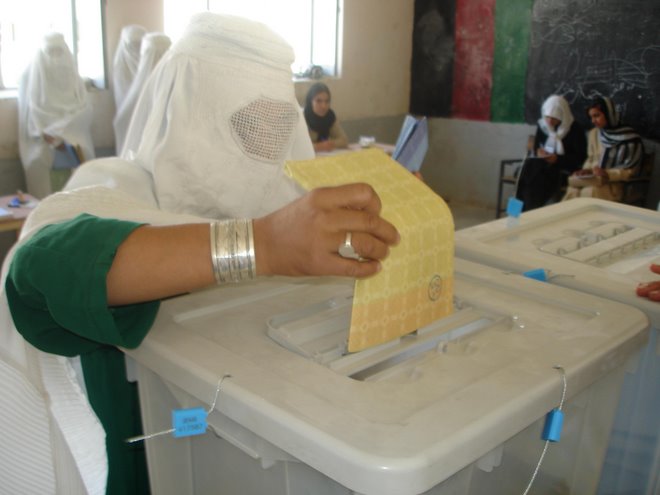
Despite these concerns, more voters went to the polls than in the first round. Turnout was estimated at 32-35%. Voters initially went early to the polls and encountered difficulties to vote because their names were not on the list, but were allowed to vote in the end because immediate actions taken by the CEP and local electoral officials. It seems that voters were satisfied and exercised their right to pick their leaders.

While the time was tight to update the voter lists for these elections, for the next Senatorial elections scheduled for this November, the voter list must be fixed. They also need to pay closer attention to stocking the polling stations. In more that fifty polling centers in the West department, basic materials like ballots boxes, ballots and ink were missing. The CEP reacted quickly to solve the problems, however. In some areas materials from the 2009 elections were distributed; an investigation is underway to shed light on this.


The Provisional Electoral Council
Knowing that voters remain very suspicious of them, on election day the CEP made a conscious effort to address technical issues related to voter lists, distribution of ballots that were not available at polling stations and other technical issues. Their interventions during the day to resolve these issues contributed to the level of confidence among the voters.  Overall -- despite some incidents -- the day went well.

At approximately 10:00 p.m. when members of the press started to broadcast partial results, the CEP went on the attack claiming that the electoral law does not permit such announcements. Their vitriolic reaction has triggered speculation that the institution was responding that way as part of a larger effort to prevent transparency so they could manipulate the results. According to Haiti’s electoral law, the votes are counted immediately after the closing of the polling stations. Within two hours, the tally sheets are publicly posted at each polling station, so the CEP was wrong about the law. Political party poll watchers representing the candidates were given a copy of the tally sheets as were domestic observers; an additional copy remains on file at the Departmental and Municipal Bureau; and the original goes to the tabulation center at the CEP headquarters in Port-au-Prince.  This process allowed the OAS Mission after the first round to identify the fraud of the CEP and the ruling party. They were able to compare the copy of the tally sheets that stayed at the polling station with the originals that they manipulated at the tabulation center. The picture below shows how the fraud was done by the CEP in the first round, at the polling station the ruling party INITE got 11 votes, at the tabulation center they turned it into 111. Hundreds of tally sheets were subject to that type of manipulation. The CEP’s efforts to stonewall the posting of results have been interpreted as a way to close the loophole that exposed their fraud in the first round. The broadcasting of the partial results directly from the polling stations would make it impossible to change the results at the tabulation center.
    Click on picture to enlarge

Counting the results
The process of counting the results at the tabulation center is underway with the presence of domestic and international observers. CEP employees have harassed the domestic observers because they speak the language and have a better understanding of how and what to observe while international observation is light. It seems according to the tally sheets that the big winner of the legislative elections will be the social democrat coalition ALTENATIV. For the presidential elections the CEP has only counted 33.80% of the tally, 23.06% for the Senate seats and 42.81% for the deputies. More details are available at: http://www.cephaiti2010.org/index.php?option=com_weblinks&view=category&id=62&Itemid=255 . 

But a parallel count is being conducted by civil society and is moving faster to prevent fraud. Their count is available on the internet. As of Wednesday afternoon, they counted the results of 7,757 tally sheets of the 11,181. There are 951,050 voters in the system.  Michel Martelly is significantly leading Mirlande Manigat. The following link shows Martelly’s vote in pink and Manigat’s in green, and for the vote count Manigat is “M” and Martelly is “T” for “Tet Kale” – his electoral nickname: 

Afficher Résultats des Dépouillements sur une carte plus grande


The popular mood around the results is that the government and the CEP will make a last attempt to steal the elections or spoil the entire process. People around Haiti are so alert that the government and the CEP would be in for a bad surprise if they do.

Security, Violence and Narco traffickers
Sunday’s elections were the least violent in Haiti’s recent election history. The Haitian National Police had a good security plan and acted in a non-partisan manner. They provided security to all. On election day violence occurred in two municipalities: in Dessalines in the Artibonite Department and Mare Rouge in the North West that reflected tensions between the ruling party and two opposition parties. In the following two days, violence occurred in the West, Center, Grande Anse departments mainly from the INITE party not accepting its defeat at the polls and still trying to manipulate the results.

It seems that part of the violence in the North West, Grande Anse and Center Departments are associated with the narco traffickers that are with or associated with the INITE party. These traffickers will try to manipulate the results in order to keep the status quo. The new government will need additional support from the US Drug Enforcement Agency to maintain political stability. Meanwhile the rest of country is quiet -- but alert -- awaiting for the results.

Jean Claude Duvalier and Jean Bertrand Aristide
Some analysts thought that these former strongmen could have an impact on these elections. They did not.  Haiti is ready to put them where they belong: in the past and in jail. When Jean Claude Duvalier debarked in Port-au-Prince in January that raised many hairs. The following days the Preval government -- weakened by corruption and an effort to manipulate the results of the November 28 elections -- was unable to react despite the clear corruption and human rights record of Duvalier. Meanwhile Haitian society reacted and demanded justice while only a couple hundred turned up to show support for the former president for life. Two days prior to the elections another strongmen linked to human rights violations and corruption, Jean Bertrand Aristide, landed from his exile in South Africa. He and his party Fanmi Lavalas wanted the annulment of the elections. Some analysts believed that his return could throw the country into political chaos and violence and the annulment of the elections. 


Aristide’s presence had no impact; in fact, the turnout was actually increased. These two strongmen represent a threat to democracy and stability unless a process of accountability is put in place by the new government with some international support. The following shows their alleged political and economic crimes and how Haitian society is seeking a judicial framework to try them.
    Click on picture to enlarge

International Observers
All international observers have reacted positively about the way that Sunday elections went. They are following the counting process and have issued statements that the will of the people should be respected.

Wednesday, March 16, 2011

Haiti Runoff Electoral Update #2 by Stanley Lucas


Background
The CEP opens the runoff campaign with their No. 69 communiqué asking candidates to validate the ballot.  While the country’s voters and run-off candidates are mobilizing, a number of questions remain unanswered and voters were well aware of the rampant manipulation and rigging of the first round, for more see: http://solutionshaiti.blogspot.com/2011/02/haiti-electoral-update-by-stanley-lucas.html    

The Provisional Electoral Council
During the first round under the influence of President Rene Peval and the leadership of the ruling party INITE, the CEP manipulated the results of both the Presidential and Legislative elections.  After the Haitian people protested, President Preval – in an effort to avoid having to resign – invited an OAS Commission to evaluate the results of the Presidential elections.  The OAS made recommendations about the Presidential elections and completely and totally ignored the manipulation of the legislative elections.  The OAS identified the manipulation of the tally sheets by CEP officials at the BEC, BED (local level election centers) and the tabulation center and made controversial recommendations about how to fix the situation.

Preval and the CEP used that opportunity to steal 17 deputies’ seats.  In addition the CEP manipulated the voters lists to decrease participation.  Many of the voters went back home on November 28 because they could not vote; their names did not appear on the voter list even though they had legitimate voting cards.  Low turnout facilitates the ruling party’s efforts to manipulate the process.  

People will be voting again on Sunday, March 20 but the CEP has not removed the people responsible for the manipulations of the tally sheets and results and no information concerning the correction of the voters list has not been given.  In addition, four members of the CEP, led by Ribel Pierre, and the director general of the CEP, Robert Opont, are leading an effort to ensure that three-quarters of the candidates and party poll watchers are INITE or INITE associates.  The word out is that CEP machinery received instructions to give INITE two-thirds of the seats in both chambers.  These are supposed to be “change elections”; the Haitian voters will not swallow this.

Haitian National Police and Security
The Haitian National Police headquarters issued a communiqué informing every police officer and agent of the force that the institution will be neutral.  They were reminded that every police officer has the right to vote and pick his or her candidate, but using the uniform, the armaments and the prestige of the institution to influence the elections will not be tolerated.  The Haitian National Police have put in place a security plan for the elections in conjunction with the MINUSTAH.

However, over the past few weeks, three electoral incidents have taken place.  In one incident, supporters of the two presidential candidates were involved.  But for the other two incidents, people on the street believe that supporters of former President Aristide wearing Mirlande Manigat and Michel Martelly campaign t-shirts were trying to create an environment of violence with a view to creating chaos and undermining the elections.

President Preval and the Government
President Rene Preval has been in Cuba for the past 11 days for medical treatment. Haiti did not even notice his absence.  The Minister of Information, Marie Laurence Lassegue, has taken a leave of absence to support Mirlande Manigat.  The Minister of Justice, Paul Denis, a member of INITE directory, is traveling around the country supporting INITE candidates and installing in many remote areas several new justices of the peace.  Haitians are questioning whether or not these new hires are political.  The government seems to be in slow motion awaiting the new president. The popular perception is that INITE is supporting candidate Mirlande Manigat.

Civil Society
Civil society is very engaged.  Women, youth, farmers, unions, and other sectors of civil society have engaged the candidates.  They have also called for change of personnel within the electoral machinery to ensure free and faire elections, but their calls have been ignored. There is a high level of awareness among civil society groups that Preval and INITE will try to steal the legislative elections.

The Haitian Press
The Haitian press is also very engaged in the electoral process.  It seems in this year’s elections, the press in divided into two groups: those that remain neutral analyzing the candidates and providing to their campaigns equal times (like Radio Kiskeya, Metropole, Signal FM and RFM Haiti), and those that endorse Mirlande Manigat (Radio Caraibes, Scoop FM, Vision 2000) saying they are helping voters pick the “right” candidates.  There is tension between these stations and the Martelly campaign believes they are trying to set him up.  During a press conference on March 15, Martelly tried to reconcile with them.

Narcotraffickers
It seems that most of them are supporting INITE for the control of parliament.  They are providing support through financial donations and support of their network.  Narcotrafficking was a main element of Aristide’s corruption.  Associates of Aristide who were previously arrested by the DEA on drug trafficking charges or money laundering, were convicted by Florida’s Courts and released seem to have resumed their activities. The following departments are under the influence of narcotraffickers: South, South East, West, Central Plate Leslyau, Artibonite, the North and North West.

The Presidential Candidates
Two different profiles and styles.  Mirlande Manigat, 70 years old, is former first lady (having served for four months before her husband Lesly Manigat) and Haitian senator.  She is an academic teaching at a private university, Kiskeya.  She was elected in 2006 as senator of the West department, but decided to back off in protest of the way her husband Lesly Manigat was treated when some Latin American countries in the name of stability influenced the CEP to not organize the runoff.  Manigat is the head of the RDNP party.  She is soft spoken and talks about herself as a Hilary Clinton-like figure and the best qualified to do the job.  Popular perception is that she is honest.  Women constitute 51% of the voters, and are likely to vote for her.  She secured the support of a political organization named CORE, two youth groups RENEH and Barikad, some protestant pastors, and Nawoom Marcelus an INITE senate candidate in the north department involved in human rights violations. She has also picked up some last minutes endorsements from Mrs. Marie Laurence Lassegue, Minister of information in Preval’s cabinet, which has contributed to the popular perception that INITE is backing her.


Michel Martelly, 50 years old, is a popular singer and a practical man involved in business as well.  Martelly speaks to the youth that constitutes 77% of the 4.7 million voters.  Martelly talked about the system that keeps people in poverty and change.  Martelly has secured the support of the party PAIN, Wyclef Jean (another popular singer based in the US), five presidential candidates that participated in the runoff, a network of pastors in Haiti and the Diaspora and an INITE senate candidate from the North East that switched sides stating that Martelly was his personal friend since he was a kid, and he has the utmost confidence in him.


Both candidates campaigned extensively in the countryside bringing out thousands of people in each city and have made an effort to reach out to the Diaspora.

The Presidential Debate
The debates were a win for Haiti. The debate organize by GIAP was one of the great achievements in many efforts to institutionalize democracy in Haiti.  This was the first time that a successful debate was organized.  There were some imperfections on the part of the candidates and the journalists, but overall this was a great premiere for Haiti and all radio and TV stations in Haiti and the Diaspora broadcast it.  The debate was organized on Wednesday, March 9 and was animated with candidates throwing punches at each other.  Later on the debate sparked a lot of conversation among Haitians and the radio commentators about who did better. The organizers, the GIAP, released the results on Saturday night confirming that Michel Martelly won the debate.

    Click on picture to enlarge

Utilization of Modern Political Tools to Campaign
This election is the first where candidates clearly opted for the uses of political tools such as political consultants, campaign managers, pollsters, focus group specialists, fundraisings, polling, and tools of information technology like the internet, websites, live chat, facebook, mailing lists, and mobile phones.  This is due to the work on technical assistance provided to Haitian parties by IRI and NDI in previous years.

Duvalier and Aristide
For many, Jean Claude Duvalier and Jean Bertrand Aristide two former controversial strongmen of Haiti remain a threat to democracy.  According to Haiti’s Accounting Office both stole hundreds of millions of dollars from Haiti’s coffers and are responsible for human right violations, see: http://solutionshaiti.blogspot.com/2011/01/duvalier-returns-to-haiti-merely-pawn.html .  Duvalier has taken a low profile approach while trying to reconnect with society after 25 years in exile.  He is under house arrest but is relatively free to move about and socialize.  He has not yet faced any charges.  The Preval government appears to be weak, but many speculate his lack of action is calculated – he is afraid that by prosecuting Duvalier he could open the door for himself to be prosecuted.  Aristide’s approach is more defiant, see: http://solutionshaiti.blogspot.com/2011/03/aristide-engages-lobbyists-and-thugs-to.html  He is challenging the Obama administration’s calls for him to defer his return and using lobbyists to force them to back off their objections to his return.  


In-country his supporters have implemented a plan to annul the elections by creating violence and chaos and later retribution for all the sectors of Haitian society that called for his resignation in 2004 for his abuse of power.  He announced in the Haitian press that he rejected the Obama administration’s suggestions to postpone his trip until after the elections and that he will be in Port-au-Prince this week.  The best thing that could happen to Haiti is to create a framework to try these strongmen that are responsible for all the failures of the country and for terrorizing the Haitian population.
  
    Click on picture to enlarge

Domestic Observation
The National Network for Observation requested more permits from the CEP in order to cover more polling stations on elections day to prevent fraud.  The CEP has resisted and is not allowing more domestics observers.  That has been a point of contention for the past week.  Domestic observation played a major role in exposing and documenting the manipulation of the first round.  There is no solid reason for the CEP to resist accrediting more observers unless they are just concerned about having their role in the manipulation exposed.

International Observation
The OAS international observation mission was a failure in the first round.  The mission was incompetent and poorly organized.  After the first round, while the Haitian people were protesting against the outrageous manipulation, the OAS mission gave a press conference three days after the election and stated that the elections had some problems, but they were good elections.  Haitians were upset and OAS lost credibility.  The UN had to fix their initial reaction by identifying the fraud.  The Haiti Democracy Project (HDP) observation did the best job and provided accurate information on how the fraud of the first round was conducted.  It seems that the Haiti Project Observation has annoyed some actors because the State Department denied them funding to observe the runoff providing no explanation.  Many analysts believed that was strange since they have done a good job supporting the Haitian people in their quest for free and fair elections.


Presidential Swearing In and Challenges
Haitians believe that the new president should take his oath in office no later than April 7, two months later than expected since the official date should have been February 7, 2011.  The new president will face several challenges: one million people living in tent for 15 months with no serious effort to move them into permanent housing; they will likely face the new hurricane season starting in two months on June 1; the UN cholera epidemic that has killed 7,500 people and contaminated 120,000; and of course the crushing poverty of the country and devastated infrastructure.  The departing government will leave the state coffers empty.  The prices of oil and food products are rising steadily.  Haiti imports 85% of what it consumes.  And, the prospect of budget cutting in the US could reduce assistance to Haiti.  Furthermore, the failure of the Interim Commission of Reconstruction to make any progress in rebuilding, and Duvalier and Aristide are actively undermining the fragile Haitian state.  The new president will have less than 100 days to prove him or herself because impatience is already growing.

Monday, March 14, 2011

Aristide Engages Lobbyists and Thugs to Orchestrate His Return to Haiti this Week By Stanley Lucas


Despite President Preval’s efforts to manipulate the first round of the elections and despite contestations on how the ruling party stole 17 deputies and two senate seats, the country’s voters are mobilizing around their favored candidates for the runoff presidential and legislative elections scheduled for next Sunday, March 20.  Mirlande Manigat and Michel Martelly during rallies around the country have brought thousands of supporters out in each city.  While voters look favorably at these two candidates, they are still worried that Preval will try to steal all the legislative seats in both Chambers.  Voters are gearing up to counter a legislative electoral coup still in the works.  The environment is favorable for a change election, meaning that they will vote against INITE.

This is the reality in which four Aristide lobbyists are trying to undermine the fragile democratic process and create chaos for personal gain.  Namely, Ron Daniel, Burton Wides, Brian Concannon, and Ira Kurzban.  Aristide provided lucrative retainers to these four operatives on the poor Haitian taxpayers by robbing the Haitian treasury and telecommunications market.  For their lucrative retainers, they turned a blind eye to Aristide’s well-documented corruption, human rights violations, political killings, drug trafficking, kidnappings, and election rigging.  During Aristide’s reign from 1995 to 2004, these effective and well finance lobbyists tried to mute the voice of the Haitian people and criminalize reformers and democratic activists that stood up for their rights.  For a public account of how much money these operatives were making as Aristide lobbyists from a country where the average citizen makes $1 a day, click here: http://www.haitipolicy.org/Lobbying7.htm .  But these fees were only the tip of the iceberg.  According to one of Haiti’s former Prime Ministers, they made tens of millions more in other business deals under the table.


Some of these lobbyists seeking to reinstate their fat retainers and secure a piece of the lucrative reconstruction funds are trying to bring chaos again to Haiti for their boss, Jean Bertrand Aristide.  Their objective is to undermine the elections, weaken institutions and create chaos in order to create conditions for Aristide return.  In this chaos – the reasoning goes – there will be no one to stop Aristide’s return or arrest him upon his return.  They have lobbied the Congressional Black Caucus on Aristide direction making the argument that the CBC owes him for things that he did for them.  Some Lavalas members (Aristide’s political party) have confirmed that the CBC will pressure Secretary Hilary Clinton and her chief of Staff Cheryl Mills to get Aristide back to Port-au-Prince by Thursday.  At the UN, they are counting on Aristide’s informal advisor Paul Farmer, who is Bill Clinton’s deputy UN Special Envoy to Haiti, to remove any roadblocks that organization might raise.

While Aristide is putting pressure on the Clintons, members of his network are making arrangements for him to fly to Haiti this week.  In Aristide’s mind the elections must be aborted and retribution must be sought.  Aristide tried the retribution policy through Operation Baghdad I and II, which were two bloody campaigns of political violence against his opponents resulting in the murder of more than 2,000 people, but failed.  For more on Operations Baghdad see:

On a parallel and separate track from his lobbying efforts (i.e. his lobbyists would be unaware of this initiative), Aristide has instructed Lavalas thugs to prepare a hit list with names of Haitian political leaders, union representatives and civil society activists.  Names on that list include:

Historians Michel Hector and M. Michel Soukar
Union leaders Jean Lavaud Frédéric  Jean-Claude Lebrun, André Lafontant Joseph, Charles Faustin, Fritz Charles, and Patrick Numa
Professor Anthony Barbier
President of the Haitian Chamber of Commerce (CCIH), Dr. Reginald Boulos
Human rights activists Jean-Claude Bajeux
Writer M. Jean-Claude Fignolé
Coordinator of Collectif de Cité Soleil, Charles Dunais
Secretary General of Nouvelle Haïti Foundation (FNH), Mrs Yanick Lahens
Director General of Radio Vision 2000, Léopold Berlanger
Engineer Pascale Oriol
Businessman M. André Apaid
Filmaker M. Raoul Peck
M. Gesner Armand
Sociologist and researcher M. Laënnec Hurbon
M. Claude Pierre
M. Luc Smarth
Mme Geneviève L. Esper
Representative of Village de Dieu
Mrs Florence Maître
Civil engineer Pierrot Exama
Peterson C. Orélus, the head of Civil Society Initiative (ISC)
Rony Desroches, the representative of the National Association of Haitian Doctors (AMH)
Georges Beauvoir, Engineer
Women activists Jessie Benoît and Mrs Evelyne Trouillot
Writer and poet M. Gary Victor
Charles Faustin
Professor Michel Hector
Writer and poet M. Lionel Trouillot
Professor Pierre Buteau
M. Pascale Oriol
Mrs. Paulette Poujol-Oriol
Mrs Florence Maître
Writer and poet M. Franck Etienne
Peterson C. Orélus, M. Michel Acacia, Charles Baker

Aristide has the right to go home.  No Haitians should be living in exile, but hundreds are right now.  However, given his vast political and economic crimes, his return should be managed by a newly elected government in the interest of stability and democracy in a country that is facing tremendous challenges.  Like Jean Claude Duvalier, another strongman, Aristide will need to face justice for his political assassinations and the $350 million he stole during nine years from Haitian coffers, according to Haiti’s General Accounting Office, for more see: http://www.haitipolicy.org/content/3284.htm . In the name of democracy and stability, and in the interest of the Haitian people who have yet to begin to dig out from the earthquake a year later, these lobbyists should put aside their personal gain and let our country breath.

Friday, February 18, 2011

Haiti Runoff Electoral Update # 1 by Stanley Lucas


Background
On November 28, Haiti organized an election for President, a third of the senate and 99 seats in the lower Chamber. The pre-electoral period was characterized by political manipulation of the electoral process by the ruling party INITE, a partisan Provisional Electoral Council (CEP), corruption, questionable technical assistance that led to organizational failures, and weak international electoral observation missions, for more see pre and post electoral updates: http://solutionshaiti.blogspot.com/2011/01/haiti-pre-and-post-electoral-updates-by.html


Election day was characterized by blatant and universal efforts to rig the vote and various technical breakdowns at the local and national levels. As a result, 13 of the Presidential candidates called for the annulment of the elections. Despite calls for the annulment, the CEP went ahead with the ballot counting and in the process presided over the rigging and manipulation of tally sheets.  The following is a chronology of events immediately following the elections:

  • On December 6, the CEP completed the “counting” process. That day observers present at the tabulation center of the CEP took notes of the final results for President; it was understood that Mirlande Manigat and Michel Martelly qualified for the runoff.  Based on that information international news outlets broadcast those results.
  •   On December 7, the CEP – under the influence and direction of President Preval -- changed the results and put the ruling INITE party candidate, Jude Celestin, in the run off omitting Martelly. 
  •  At the same time, the Legislatives elections were subject to deeper manipulation. A revolt erupted around the country in the following days.  
  • On December 9 the OAS Electoral Mission outraged Haitians when they stated in a press conference that: “there were some problem on election day but the process was acceptable and sound”. The Secretary General of the United Nations had to subsequently issue a statement to calm the outraged Haitian voters saying that there were in fact serious problems with the process and they were bigger than previously evaluated.  
  •  Preval called on the OAS to recount the tally sheets for the president only (see:  ).  At the end of the process the OAS recommended that the results be corrected and that the ruling party candidate withdraw from the elections leaving Manigat and Martelly to participate in the run off.
  • Secretary of State Hillary Clinton went to Haiti to address the situation. No one knows the details of the conversation between her and Preval and Haiti’s political network -- even the US ambassador did not take part in those private discussions according to Haitian government sources.
  • Preval’s CEP then published the presidential “results” according to the OAS recommendations. The rigged legislative elections have not been addressed so essentially the ruling INITE party has been allowed to steal a number of seats. Emboldened by the inattention to the initial round of legislative elections, they are currently preparing to steal the remaining seats up for election in the runoff.
  •  Two of the losing Presidential candidates have contested the legality of the election results with the Haitian Attorney General’s Office.


Meanwhile former President-a-Vie Jean-Claude “Baby Doc” Duvalier has been charged with economic and political crimes.  Ousted former President Jean Bertrand Aristide is trying to get back in country and will likely face charges for his political and economic crimes.

This is the context in which the OAS is calling on the CEP to move forward with the runoff.

The Provisional Electoral Council
Several members of the CEP have been found responsible for the manipulation of the results -- in favor of the ruling party -- at the Tabulation Center. Vice President Toussaint, Ginette Cherubin, Ribel Pierre, Gaillot Dorsinvil, and Director General Robert Opont appear to be the source of the manipulations. Michel Martelly called for their replacement and Mirlande Manigat requested change within the electoral machinery. The Haitian people have completely lost confidence in the CEP.


The CEP Director General Robert Opont, the CEP technical personnel working at the Tabulation Center and the leadership of the BED and BECs (the local election officials) have played a direct role in the manipulation of the tally sheets and elections results are still in place. None of them have been removed despite calls by the presidential candidates, Haitian civil society and the Diaspora. Every Haitian knows that the partisan CEP’s focus is to give Preval two-thirds of both chambers.

Haitians have become skeptical of the international community’s reaction to and leadership of the electoral process. To date, the OAS Electoral Observation Mission has refused to address the irregularities of the legislative elections despite numerous reports by domestic electoral observation groups documenting the fraud and violence.  Haitians believe that the international community struck a deal with Preval allowing him to steal the legislative elections in order to save face. The belief is that if this process moves forward without addressing legislative election results, there will likely be a huge political crisis in the months ahead. How do you explain to the people that voted for change that the ruling party stole (unchallenged) two-thirds of both legislative chambers?

Election Results
This is the first time in Haiti’s history that the CEP published results without listing the number of vote that each of the legislative candidates received. Even Haiti’s dictators used to take the time to publish fake results. The CEP published a list of 20 names of candidates that were “elected” in the first round for the House of Deputies (most from INITE) and four winning senate candidates (all INITE).

Only four of the eight CEP members signed the elections results; five signatures are required.  The CEP spokesperson was called to the Attorney General’s Office to answer questions about why results were published in the manner that violates the Electoral Law and voter and candidates’ constitutional rights. The next step is for the Attorney General to question members of the CEP. CEP President Gaillot Dorsinvil has expressed concern that he could be arrested at any moment.

Voter Lists
Most observers will agree that after the first round, the CEP manipulated the voter lists in order to prevent high voter turnout, which would be a negative for the ruling party candidate. On election day, voters stood in front of polling stations from 4:00 a.m. until noon and could not vote because their names were not on the voter registration list. An estimated 45-50% of the voters went back home after waiting six to seven hours. Many of those that finally found their names on the list learned that somebody from the ruling party had already voted for them. To date, the corrupt CEP has not taken any steps to correct the voter registration list. In fact, on February 15, the CEP has issued a communiqué (#70) that seems to suppress voter participation by stating that Article 32 of the Electoral Law says that registration of citizens should take place 60 days prior to elections. According to this timetable, no one will be able to register. In other words, the lists will not be corrected to allow disenfranchised voters to participate.

Tally Sheets
Domestic observers and International Observation Mission had shown exactly how the CEP manipulated the tally sheets at the Tabulation Center by comparing the duplicate (copy) of the tally sheet at the polling station with the original used at the Tabulation Center. For example, 18 votes noted at the polling stations were changed to 118 votes at the Tabulation Center. No steps have been taken to address this unsophisticated and blatant manipulation of the resuts.

Security
The security situation has worsened. More than seven police officers have been murdered since the elections. According to witnesses who called into Haiti’s Radio Signal, it seems that in each case the police officers were specifically targeted.


Many are afraid that part of the Aristide network that used to target police and kidnap innocent Haitian citizens are reconstituting. From 2004 to 2006 Aristide ordered his gangs to kidnap and spread violence as part of a strategy to force his return. These groups killed 1,941 Haitian citizens, kidnapped 800, and raped 400 under a violent campaign known as “Operation Bagdad I” -- a similar number of people were brutalized under “Operation Bagdad II”. At that time with the same goal another Operation Pakatan’n (or Operation Can’t Wait) was launched by Amaral Duclona one of Aristide’s right hand men and resulted in the killing of dozens of citizens. (see:  1. http://www.rnddh.org/article.php3?id_article=314  2. http://www.rnddh.org/article.php3?id_article=300 ).  It took three years for the police to disband and get rid of these gangs. Many citizens believe that the recent targeting of the police is linked to Aristide and this marks the beginning of Operation Bagdad III for the return of Aristide.

Political Parties, Haitian Senators and former Presidential Candidates
A coalition of political parties – some boycotted and others participated in the process – have called for the annulment of the elections and the application of Article 149 of the constitution, which would replace President Preval with a Supreme Court Justice.  They assert that Preval’s term legally ended on February 7.  This coalition is comprised of Altenativ, Rasanble, Liberasyon , UCADDE, Lavalas and several Haitian senators.  The 12 presidential candidates who each won 1% of the vote are also calling for the annulment of the elections. This coalition is organizing protests around the country that so far are not having any traction.

Civil Society
Civil society organizations have accepted the run-off solution to the rigged presidential elections. Haitian civil society continues express outrage for the manipulation of the legislative results though. They are calling for the verification and comparison of the polling station tally sheets with the ones used at the Tabulation Center for both the Deputy and Senate candidates.

Preval Term Illegally Extended
Preval’s Constitutional Term ended on February 7, 2011.  Rene Preval has stated that he will remain in office until a newly elected president is sworn in. He has passed a law to extend his term in office until May 14.  For Haitians this law is unconstitutional, but because of the division of the opposition -- and in the interest of stability -- Rene Preval has been given a pass. We have witnessed over the past few weeks the disastrous consequences of prioritizing stability over democracy, however.

OAS Electoral Observation Mission
The OAS observation Mission (EO) needs new leadership. In the eyes of the Haitian people, this mission has not contributed to a free and fair electoral process.  On the contrary, they have made things worse. The Mission demonstrated that it was incompetent and inefficient time and time again.  After the fiasco of November 28, the OAS EO stated that the elections were acceptable to them and needed to retract those statements later. While observations have a key role to play in ensuring free and fair elections, the OAS needs to regain credibility by, at a minimum, replacing the leadership of that mission.

MINUSTAH, Elections, Cholera
As a Mission, MINUSTAH has failed the Haitian people. From the mismanagement of the earthquake, to the strengthening of democratic institutions, through the assistance provided for the elections and the spreading of the cholera, the leadership of the Mission has shown incompetency. While there has been modest progress with their efforts to strengthen the Haitian National Police, MINUSTAH has little else to show for the US$4 billion spent from 2004 to 2010, and does not merit the $864 million requested for 2010-11.

The countries contributing to this Mission, including the U.S. taxpayers, deserve a more productive use of their money. Cholera continues to kill Haitian citizens. There are approximately 7,500 dead and 130.000 contaminated. There seems to be no clear strategy on how to address the epidemic that is killing Haitians at an alarming rate. The evidence presented by the US CDC pinpointing the cholera bacteria to a strain from South Asia combined with the French report concluding the Nepalese soldiers as the source of the outbreak, should be enough to establish MINUSTAH as the source of the epidemic. The UN has denied these claims and has appointed UN personnel to investigate the source of the epidemic (judge and jury). This failure to address the situation will continue to undermine the credibility of MINUSTAH in the eyes of the Haitian people and the Diaspora. Many Haitians expected help from the Obama Administration in order to establish the United Nations responsibility in the cholera epidemic and have them support the cholera recovery in the same way he held BP responsible for the oil clean up. Cholera is not only killing people, it is having a negative impact on the consumption of local rice and vegetables because they are grown on the river that was the source of the cholera epidemic.  People are afraid to buy those products.

Reconstruction
Reconstruction is stalled. Haitians are upset at the Haiti Interim Reconstruction Commission (HIRC) led by former President Clinton and Prime Minister Bellerive. The 12 Haitian members of that commission have public decried the fact that all the contracts are allocated to foreign friends and companies, and they are used merely as rubber stamps for decisions (see: http://solutionshaiti.blogspot.com/2011/01/haiti-interim-reconstruction-commission.html ). Many Haitians hope that structure will be addressed for a lack of results and will in the future include greater Haitian input (from Ministers and the Haitian business sectors) and will be more inclusive.

Haiti’s Strongmen
The return of former dictator Jean Claude Duvalier and the potential return of former dictator Jean Bertrand Aristide is a threat to Haiti’s political stability and the rule of law.  Both strongmen have records of political and economic crimes in Haiti. Aristide and Duvalier both have a myriad of U.S. lawyers and lobbyists advocating for them in the United States and the international media in order to silence Haitian voices calling for justice.


Duvalier has hired former US Congressman Bob Barr and others to defend him and promote his reconciliation propaganda on the international scene, see: http://www.mediaite.com/tv/former-rep-bob-barr-haiti-is-worse-now-than-under-his-client-baby-doc-duvalier/ . While Aristide continues to leverage ideology (casting himself as a victim of US imperialism) to hide his political and economic crimes by using lobbyists, lawyers, see: http://www.haitipolicy.org/Lobbying7.htm , ideological actors, and former US government officials to call for his immediate return, see: http://haitisolidarity.net/downloads/Miami%20Herald%20Ad%20Jan%202011.pdf . He made most of these people millionaires by granting them access to sweetheart deals and lucrative retainers.  Members of this network include: Ira Kurzban, Brian Concannon, Randall Robinson, and others. He has also brought to the table some new American political figures like Reverend Jeremiah Wright to advance his case as a victim of US imperialism. For Haitians it’s about political assassination, kidnappings, corruption, drug trafficking, and embezzlement. Haitians want justice brought to Duvalier, Aristide and Preval for their crimes, for more see: http://solutionshaiti.blogspot.com/2011/02/united-nations-partisanship-in-haiti-by.html


Launching Runoff Campaigns
On February 17, Manigat and Martelly launched their campaign for the runoff. Manigat chose to hold a press conference focusing on issues and responding to questions about education and the fate of Haiti’s strongmen. Martelly took the road and opened his campaign in Cap Haitien, the second largest city of the country where thousands of youth attended in an environment of victory. During the week Wyclef Jean, a singer that failed to meet the requirements to run for president, endorsed Martelly. Polling showed that if elections were held today, Martelly would get 66% of the vote and Manigat 33%. The runoff campaign was launched without any efforts to address the manipulations of the legislative elections and without any effort to address the technical and political issues that were at the source of political instability after the first round.


Recommendations
There are a number of technical issues that should be addressed in order to avoid further political unrest and ensure a more democratic process in the run offs:

  • Partisan members of the CEP under investigation should be replaced immediately
  •  The Catholic Church should name its member to the CEP
  • The Director General and technical employees of the Tabulation Center should be replaced
  • Members of the BED and BECs should be replaced with nonpartisan actors
  • Voter registration list should be fixed
  • The tally sheets and results for the senate and deputy candidates should be reviewed for manipulation 
Additionally, there are number of critical political environment issues that should be addressed:

  • Security strategies should be reviewed and strengthened
  • Haiti Judicial System should indict the country’s strongmen
  • OAS Electoral Observation Mission should be revamped – replacing the leadership as a first step
  •  MINUSTAH’s leadership should be replaced
  •  An international independent panel to investigate and establish the source of the cholera epidemic should be appointed. This should include Haitian experts from abroad.


Friday, February 4, 2011

Correcting the Facts on Haiti’s Electoral Process by Stanley Lucas


It was announced yesterday that Haiti will move forward with a run-off between the two top vote getters – M. Michel Martelly and Mme. Mirlande Manigat -- as determined by the Organization of American States (OAS).  The government-backed candidate, Jude Celestin, has bowed out of the process.  On the surface, this seems to have eased political tensions; however, there was no resolution to the legislative elections, which were just as rife with graft as the presidential elections.  Therefore, Preval’s ruling party, INITE, has managed to secure many of the legislative seats.  This unresolved issue could be a potential problem going forward.

In reading the reporting on the announcement and Haiti’s electoral process, there have been several factual inaccuracies about the process regarding the end of President Preval’s term in office and what the constitution says about a provisional government.  These two issues underlay much of the political wrangling and manipulation stalling the process, and merit a factual correction.

First, regarding the electoral process and the end of President Preval’s term, the Washington Post reported the following (for full text, see:  http://www.washingtonpost.com/wp-dyn/content/article/2011/02/03/AR2011020302222.html ):

“The next question is what happens with Preval. Under the constitution, Preval's five-year term is supposed to end Monday. An emergency decree passed by the Senate last year would allow him to remain in office until May, because his 2006 inauguration was delayed.

Preval could remain in office until a successor is elected. The president has repeatedly stated that he wishes to remain in Haiti after his term is over - and not flee into exile as so many of his predecessors have done.”

This is the argument that Preval is making, but it is constitutionally inaccurate and a manipulation of the facts.  The March 24, 2006 Presidential Decree nominating him President states that his term ends on February 7, 2011.  The May emergency decree is unconstitutional and has no legal authority to trump the Haitian constitution.  Further, there is no provision to extend the term of office to account for a delayed inauguration.  Preval knows this.  In fact, in January 1999 there was a delay in seating the legislature, but Preval, then serving as president refused to extend the legislative term to account for the delay.  This is the process, and he cannot trump the rule of law.

Second, the Washington Post reports the following about the Constitutional provision regarding a provisional government:

“If Preval steps down, the Haitian constitution says the top member of Haiti's supreme court should serve as a caretaker leader for no more than 90 days. The court's presidency is currently vacant.”

The Constitution does not say “for no more than 90 days”.  It is possible to extend the provisional government beyond the 90 days, and that has been done twice before:  in 1989-90 and  2004.  The fact that the court’s presidency is vacant does not impede the process, article 149 of the Constitution.  Another member of the court may assume the provisional presidency.  Preval has deliberately kept that position vacant to create confusion in this situation.  Obviously, he anticipated the possibility of a provisional government at some point.

Preval is again manipulating the facts in order to cling to power.  The democratic opposition is calling to respect the rule of law in Haiti and follow the official process, which clearly says Preval’s term is over on Monday, February 7.