It is during our darkest moments that we must focus to see the light

Mwen se echantiyon yon ras kap boujonnen men ki poko donnen

Si vous voulez vous faire des ennemis essayer de changer les choses

Showing posts with label Ban Ki-Moon and haiti. Show all posts

Thursday, December 9, 2010

A Solution to Haiti’s Political and Electoral Crisis by Stanley Lucas (Updated Dec 15 @ 12:11 a.m.)

   Age 20, shot dead in PaP, for democracy, he wanted his vote to be counted
   Executed by INITE operative, click on picture to enlarge
   See video of the execution: 
Overview
Before the January 12 earthquake, the situation in Haiti was already dire.  Haiti ranked at the bottom of almost every development index – 158th for education, 70% unemployment, and average life expectancy at 52.  It ranked among the top four most corrupt countries in the past several years.  More than 90% of the economy and the wealth of the country are controlled by a corrupt business (Groupe de Bourdon) cartel that does not pay taxes.  The January earthquake exacerbated the situation bringing unimaginable devastation to the country.  More than 300,000 people died and another 400,000 were injured.  The country lost an estimated US$40 billion, 6,000 schools and 500,000 houses, leaving people with no collateral to rebuild.  Then, just when it seemed things could not get any worse, Haiti had an outbreak of cholera, which had not been seen in country for 200 years.  See: http://solutionshaiti.blogspot.com/2010/11/cholera-in-haiti-is-united-nations.html          


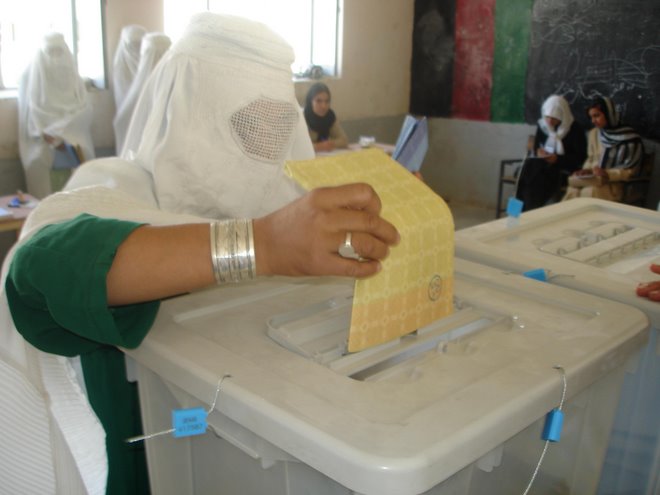
This is the context in which Preval, the United Nations and OAS pushed for elections on November 28.  Not only was the electoral infrastructure almost completely devastated, but also no one believed that a peaceful transition of power was even a remote possibility.  Civil society groups and analysts had been sounding the warning bells about Preval organizing an electoral coup, but still elections proceeded.  The November 28 elections were held in complete chaos, see:
1. http://solutionshaiti.blogspot.com/2010/12/haiti-preval-clings-to-his-coup.html 
2.  http://www.youtube.com/watch?v=dA0NKdfnqNs
Rene Preval and the partisan Provisional Electoral Council (CEP) blatantly rigged the elections by putting in place a partisan team of poll workers, instituting a campaign of violence and political intimidation, manipulating the voter lists, stuffing ballot boxes, changing the results (even after international observers watched the vote count at the tabulation center), and enlisting international spokespeople to defend the elections, see:


James Johnson, age 16, shot dead allegedly killed in Cap Haitien by an operative of Senator Moise Jean Charles of the ruling party INITE

Context:  Preval’s Electoral Record
None of this should come as a surprise.  Preval has never organized a free and fair election.  He has rigged all five elections during his ten years as president of Haiti.

Fact:  He rigged the April 7, 1997 elections by manipulating the results.  His own Prime Minister, Rosny Smart, blocked his version of the results, which led to the prime minister’s resignation and the dissolution of parliament by Preval on January 11, 1999.

Fact: President Preval and Aristide rigged the May 21 and November 2000 elections. Those electoral coups coupled with corruption, repression and drug trafficking led to a citizen revolt and the resignation of President Aristide in 2004.

Fact: President Preval rigged the April 19 and June 21, 2009 senatorial elections giving him absolute control of the senate.  And finally, he conceived of and implemented an electoral coup during the November 28, 2010 legislative and presidential elections.  For more on President Preval's questionnable record on democracy see: http://solutionshaiti.blogspot.com/2008/01/president-rene-prevals-questionable.html           

    Ruling party appointed poll worker manipulating results

Fact: In spite of widespread irregularities, there is consensus that Mirlande Manigat and Michel Martelly qualified for the presidential runoff.  The domestic and international media and the OAS publicly announced those results.  We know that the CEP and Preval then changed the results the next morning in favor of their candidate, Jude Celestin, removing Martelly from the race.

Fact: As a result of the level of fraud and ballot stuffing, we know that it is difficult to sort out who won in the legislative elections. see results: http://184.168.116.203/rewsa19q36/mapa-a.php and see: http://haitipolicy.org/fraud.html?PHPSESSID=69718e054d9c1cd2543839d94cbd12bc   


Given this context, we must come up with a quick and decisive solution that, most importantly, reflects the will of the people. Their frustration and outrage at this sham election will not simply go away with calls for “calm”.  A reasonable and responsive solution must be presented or this situation could spiral out of control. 


The following are elements of workable solution, but the fundamental point is that the current CEP cannot be in charge of or preside over any contestation or newly organized elections.  They are one of the main sources of the problem as they have already manipulated the results and the tally sheets and rigged the entire process.  Any plan that avoids addressing this critical piece, is not workable. Additionally, it would not be acceptable to send three candidates to the final runoff just because Preval wants his candidate to advance. According to article 134 of the constitutions only two candidates are permitted to stand for elections in a presidential runoff.


Elements of a Solution
   1.  Quickly replace the current CEP with nine new members in accordance with Article 289 of the constitution.  Within the next three days, the eight sectors of civil society represented on the CEP should designate new CEP representatives.  The executive branch should also designate a new, non-partisan CEP representative.

    2.  Name a new Director General for the CEP.

    3. The new CEP should organize the presidential runoff in January 2011 as scheduled.

    4. Legislative and local elections should be postponed until April or May 2011 to allow the situation to diffuse and to ensure that the electoral infrastructure is brought up to date, including updating the voter registration lists.

   5. Legislative and local elections should be opened to all parties that meet legal requirements, including  those that boycotted the November 28 elections.

If this solution is not acceptable to the Haitian leadership, then President Rene Preval should resign, and Article 149 of the constitution should be invoked allowing a member of the Supreme Court to become interim president.  In this scenario, elections should be organized within 90 days.

There is no time to let this situation play out further.  Haiti is stressed to the limit so a workable solution that contains these elements must be presented and put in place immediately.


Leahy Calls For Freeze Of Funds To Haiti’s Central Government And Of Travel Visas For The Government’s Leaders Who Are ‘Trying To Subvert The Will Of The People’


December 10, 2010
[(FRIDAY, Dec. 10) -- U.S. Senator Patrick Leahy (D-Vt.) Friday said he has urged the Obama Administration to withhold funding to the central government of Haiti, and to suspend visas for travel to the United States by senior Haitian Government officials and their immediate family members, until necessary steps are taken to ensure a fair and democratic outcome to the elections held on November 28, 2010. Leahy chairs the Senate Appropriations Committee’s Subcommittee on The State Department and Foreign Operations, which handles the Senate’s work in funding foreign assistance, including aid to Haiti, and the State Department’s budget.  Leahy also chairs the Senate Judiciary Committee, which handles immigration policy issues.  Leahy released the following statement:]

“As if Haiti did not have enough problems, now, once again, those in power there are trying to subvert the will of the people.  The United States must come down squarely in support of the Haitian people’s right to choose their leaders freely and fairly.  By suspending direct aid to the central government and visas for top officials and their immediate family members, the United States would be sending that message.  This process needs to bring about a legitimate government respected by the Haitian people and recognized by the international community.”
# # # # #


State Department : Daily Press Briefing - December 10, 2010

Philip J. Crowley
Assistant Secretary
Daily Press Briefing
Washington, DC
December 10, 2010

HAITI
This Electoral Process is Critical to the Future of Haiti / U.S. Committed to Support the Review Process / Will Judge Future Relationship by the Actions Haiti Undertakes / Believe Results of Process Can Lead to a Credible Election
QUESTION: Can I ask you a quick one on Haiti? Senator Leahy, who chairs, as you know, the Senate Appropriations foreign ops subcommittee, put out a statement this morning in which he calls for the United States to suspend direct aid to the central government of Haiti and visas for top officials and their immediate family members, so as to send a message that the United States squarely supports the Haitian people’s rights to choose their leaders freely and fairly. Do you have – this is obviously a key player in Congress and on your budget. Do you have any sympathy for his call for suspending aid to the central government, and for not doing visas for members of the government and their families? MR. CROWLEY: Well, let’s focus on where we are now. We have – we’re in the middle of an electoral process. This electoral process is critical to the future of Haiti. We have already publicly stated our significant concerns about the results that have been announced. There is a process underway. I think today is the last day to file formal complaints to challenge the results that have been announced.
And we are committed to support this review. It needs to be credible. The results that -- when these results are finalized, leading to a run-off election next month, the people of Haiti have to believe that these are the candidates that they have chosen, they haven’t been chosen by the government behind closed doors.
This is a critical moment for Haiti . We are prepared to support Haiti. We are also sending a very clear message to the existing government that that this election has to be done properly, in accord with the wishes of the Haitian people. We will judge our future relationship by the actions that Haiti undertakes, but -- and we are committed to supporting this process. But let’s wait until we see what happens first, and then we will judge the implications. QUESTION: So you have no sympathy for Senator Leahy’s – MR. CROWLEY: Well, the Senator is outlining some actions that are, of course, within our purview. But let’s get to the end of the electoral process, find out what actually happens, and then we will evaluate what the nature of our future support for Haiti should be. QUESTION: Last one for me on this. You don’t think, therefore, the exercise of this kind of pressure might be beneficial toward getting to a more credible outcome? MR. CROWLEY: Well, again, there is an existing process ongoing within Haiti. The election is not done yet. I think it’s premature for the United States to take this kind of action until we are convinced that the existing process cannot work. I think we are committed to try to help to make this process work. There is a lot at stake here, but we want to see the process unfold, and we believe that it can lead to a credible election result.


RNDP: REPONSE AU COMMUNIQUE #59 DU CEP

La candidate à la présidence de la République, Mirlande Manigat, prend acte du communiqué No. 59 du Conseil Electoral Provisoire portant sur la vérification des procès-verbaux liés aux présidentielles du 28 novembre 2010.

A l'analyse, il résulte que ce communiqué n'indique ni la date ni l'heure d'une éventuelle invitation des intéressés, ni surtout la procédure envisagée pour une telle opération. Dans ces circonstances, la candidate regrette de ne pouvoir s'associer à une pareille démarche.

Toutefois, soucieuse des intérêts de la nation, dans cette conjoncture troublée, Madame Manigat demeure ouverte à toute initiative pouvant favoriser un dénouement de la crise, pourvu que la solution soit empreinte de transparence et de légalité.

Port-au-Prince le 10 décembre 2010

Pour le conseil juridique :

Me. Carol Chalmers, av.

Me. Wilmine Raymond Saint-Pierre, av

REPONS PEYIZAN: REPONSE AU COMMUNIQE #59 DU CEP

Monsieur Gaillot Dorsinvil
Président du Conseil électoral provisoire
Pétion-Ville


 Monsieur le Président,
Accusant réception de votre invitation à participer au recomptage des procès-verbaux des résultats du scrutin du 8 novembre 2010, je m’empresse de vous informer qu’en ma qualité de candidat à la Présidence de mon pays, par respect pour moi-même et surtout pour le Peuple haïtien, je me vois contraint de décliner cette invitation.

La question que tout un chacun est amené à se poser en cette circonstance bien malheureuse, est celle-ci : quel est l’intérêt et quelle est l’économie de cette démarche tout à fait surprenante et illégale du CEP, démarche  qui, à n’en point douter, ne vise qu’à conforter ce dernier dans sa position exprimée le mardi 7 décembre 2010, qui viole les intérêts et les droits de l’immense majorité du Peuple haïtien, victime expiatoire d’une véritable machination politique.

La solution à cette farce publique qui a déjà occasionné des pertes regrettables en vies humaines, ne consiste certainement pas en un recomptage pur et simple des procès-verbaux en possession du CEP, mais bien en l’annulation radicale des procès-verbaux des centres et/ou bureaux de vote saccagés, vandalisés, objet de fraudes massives et scandaleuses en faveur du candidat du Parti au pouvoir, M. Jude Célestin, tel que constaté par la presse tant nationale qu’internationale, le Peuple haïtien en son entier et le Centre national d’Observation électorale (CNO) ; ce que ce CEP n’est pas sans ignorer.

Vous vous rappelez, Monsieur le Président, que bien nombreux étaient les citoyens qui, en violation de la Constitution et de la loi électorale, ont été empêchés d’exercer leurs droits politiques en raison, d’une part, des voies de fait et autres menaces exercées contre eux et d’autre part, des irrégularités flagrantes observées dans l’organisation des élections.
  
Le Centre national d’Observation électorale (CNO), présent le jour des élections dans tous les centres et bureaux électoraux, jusqu’à la fermeture des bureaux de vote, agissant en toute indépendance et sous aucune pression, avait rendu public les vrais résultats, les seuls et uniques résultats crédibles des élections présidentielles, à partir des procès-verbaux non truqués.

Il est à se demander par quel moyen, par quel artifice et suite à quelles pressions politiques gouvernementales ou autres, ce CEP croupion est parvenu à réduire à sa portion congrue le quantum des voix que j’ai obtenu pour, avec la même vitesse, augmenter celui de Jude Célestin. Cette fraude patente et inadmissible a été immédiatement éventée et démasquée par une population en fureur.

Les crimes et délits contre la Constitution, les crimes et délits relatifs à l’exercice des droits politiques, les attentats à la liberté sont prévus et sévèrement punis par la Loi pénale.

Les membres du Conseil électoral provisoire (CEP) en aucune façon, n’auraient du ni valider, ni cautionner ces actes arbitraires, illégaux et scandaleux, engageant leur responsabilité personnelle.

Veuillez agréer, Monsieur le Président, mes salutations très distinguées que vous aurez l’obligeance d’étendre aux autres membres du Conseil électoral provisoire.

Michel J. MARTELLY
Candidat à la Présidence,  Repons Peyizan
COMMUNIQUE DU GROUPE DES 12
CLIQUEZ SUR LE COMMUNIQUE DU G-12 POUR L'ELARGIR

FOR CHOLERA UPDATES SEE: http://www.cdc.gov/haiticholera/whatsnew.htm

View MAP OF CHOLERA EPIDEMIC IN HAITI

Tuesday, February 23, 2010

Haiti: Let the Pontificating Begin by Stanley Lucas


Reconstruction plans for Haiti proliferate, but who decides which plan goes forward?


The Haitian people still do not have tents to live in or regular access to drinking water and food, but attentions have shifted to reconstruction. There are now as many reconstruction plans as there are aid organizations. Everyone who has even had tangential exposure to Haiti has put forth an opinion on how it should be rebuilt. Bill Clinton has a plan and the funds to implement it developed by pre-eminent poverty experts, including Paul Farmer, Jeffrey Sachs and others. The US State Department has put together several rebuilding scenarios and shared them with the Haitian Government. The French have a plan. The Canadians have a plan. The Haitian Diaspora are developing a plan. The World Bank, IMF and UN have plans. Economists are writing op-eds about what the plan should and should not include. Conferences and seminars are being convened to discuss myriad plans. Prominent development experts are advocating for a Marshall Plan and other are pointing out why that will not work. In short, there is a proliferation of pontification. Surely, there will be many areas of accord and many areas of discord. However, no one has addressed the central question the elephant in the room namely, who will decide which plan will go forward?

In most countries, the government would have the authority to set forth the national priorities and then develop, organize, oversee, and implement the plan to achieve those priorities. In Haiti, however, the government is not in the position to develop a plan or manage reconstruction on its own for three main reasons:


First, the international community has completely lost confidence in the Haitian government. While most actors are likely willing to work with the government, they do not trust the current regime, which has come under so much fire for corruption, to undertake such a massive humanitarian effort. As evidence of this lack of confidence, currently, only one cent of every aid dollar flowing into Haiti is under the control of the Haitian government. This is a clear vote of no confidence.

Second, the government lacks the capacity to develop, vet or implement a massive reconstruction plan. They simply do not have the bandwidth. Only three of the 18 Cabinet ministers are competent and qualified for their job. The Prime Minister is extremely qualified, but the President has been implicated in numerous corruption scandals and is completely beholden to the business cartel, the Groupe de Bourdon. Furthermore, more than 10% of Haiti's civil service was lost in the earthquake.

And third, the Preval Administration is facing the very real possibility that simmering frustration as a result of their inability to get basic necessities to the victims will come to a full boil, and people will riot in the streets demanding a change in government. Hopefully, this type of political instability can be avoided because Haiti is in no position to be able to absorb this stress to the system.

The ineptitude of the Haitian government, however, should not be viewed as an open path for international actors to take matters into their own hands; Haitian national sovereignty must be respected. Furthermore, such an uncoordinated approach to developing a reconstruction plan is inefficient, prone to waste, and worse, could result in divisive turf battles. In short, this uncoordinated approach can only lead to chaos. We have already witnessed such chaos with the distribution of aid to the victims. Without central coordination in the aid and recovery efforts, interagency turf battles sometimes crept into the aid distribution on the ground resulting in significant and sometimes life threatening delays. That said, the international community has obviously shown a tremendous outpouring of support in the wake of this tragedy, and the Haitian people look upon their efforts with gratitude. It should be noted that everyone on the ground is working against tremendous obstacles and in the worst conditions. However, the fact is that people are still having trouble accessing basic necessities a month and a half after the quake despite the $1 billion and counting that have been donated to recovery. This approach simply does not work.

In light of these dynamics, some observers have advocated that the UN or an international reconstruction authority take over the management of the country. The absence of Haitian input in most of the proposed reconstruction plans seems to indicate that this is a very real possibility. Recent press articles have highlighted the exclusion of Haitians both Diaspora and Haitians organizations in-country and the limited role of the Haitian government in the preparatory meetings for the March 31 donors conference in New York. But the lack of Haitian input in these plans only undermines Haiti when it is most vulnerable, and puts the country on a continued path of failure. The international community is not equipped to develop or manage a reconstruction plan without Haitian guidance, support and most importantly, buy-in.

The international community has a dismal track record to date in Haiti. More than $14 billion in aid money has been poured into the country over the past two decades, with little to show for it (for additional information see: http://solutionshaiti.blogspot.com/2007/01/international-aid-debacle-how-to-get.html). Haitian leaders, most notably Presidents Duvalier and Aristide, and their corrupt cronies have pilfered much of the country's funds. The international community has never demanded accountability from the Haitian leadership or developed a system of transparency for the deployment of aid funds. It is obvious that the strategies and approaches that have been adopted over the past several decades in Haiti have not worked. It is time for some new, fresh thinking on how to move forward. But usurping Haiti's national sovereignty is not the kind of fresh thinking that Haitians need. It is merely subversive and will be viewed as such by the Haitian people (remember them?).

The Haitian people have as much skepticism about the international community as the international community has about the Haitian Government. The limited inclusion of Haitian input into the upcoming donors conference only heightens that skepticism. They have heard the promises for decades and have seen few results of those promises. And now the folks in charge of raising the money for recovery appear to be lined up to decide who gets the money. Already there are stories leaking out about no-bid contracts awarded to firms with strong political ties. To win the hearts and minds and support of the Haitian people, reconstruction must open and transparent and must have a Haitian face. And, to be successful, we must have the support of the people.


Therefore, the development of a legitimate reconstruction plan must strike a balance among all these competing dynamics. It must preserve Haiti's sovereignty while addressing the critical shortcomings of the Haitian Government and winning hearts and minds of the people. Some observers have advocated the organization of a Haiti Reconstruction Authority (HRA). If established correctly, such an Authority seems to be a reasonable approach to striking this delicate balance while providing the needed coordination and direction.The Prime Minister of Haiti has the constitutional authority to convene an HRA. The HRA could be empowered to oversee all aspects of reconstruction while leaving the Preval Administration in tact through the end of his term in November 2010. As he has announced that he will not seek reelection at the end of his term, in accordance with the constitution; therefore, a Supreme Court Justice will be appointed as the acting and temporary President until elections can be convened.

To be most effective, the HRA should essentially operate as a public-private partnership with members of the international business and government community, NGOs, Haitian business community, Haitian government, and Haitian Diaspora. The leadership of the HRA, however, should come from the Haitian community. The HRA should be empowered to set the national priorities and vet the myriad proposals for the best ideas.

Then a clear process should be laid out for how the HRA will proceed and how it will function. The HRA should begin by outlining a clear, unified vision for Haiti over the next five, ten and twenty years. The Diaspora community has started to dub this "Vision 2020". The myriad plans that have been already developed should then be reviewed for how they advance and support the overall vision and a formal reconstruction plan should be developed and agreed upon. From there, we can move forward with developing and launching an open, transparent system to draft and review RFPs and award contracts. The Haitian Reconstruction Authority will also need to closely monitor the implementation of plans and projects.

There have been many arguments made against such a vision, but the central theme of the detractors is that there are not enough qualified Haitians to manage and guide this process. This argument is categorically false. There are more than enough talented, educated and competent Haitians to launch and oversee a massive reconstruction project. Many reside overseas now after having been driven out of the country due to systemic corruption and instability over the past few decades. With those dynamics off the table, the Haitian Diaspora are willing and anxious to step up and help their colleagues in-country rebuild. I have not yet spoken to a member of the Diaspora community that is not willing to return to Haiti. Combined with strong business leaders in Haiti, I am confident that there exists enough Haitian bandwidth to lead this initiative with the support of the international community. The key word is support and not leadership.

Thursday, February 18, 2010

Stanley Lucas: Response to Calls for UN to Govern Haiti

I read with interest recent articles click here calling for an international coalition led by the United Nations to take over governance of Haiti, essentially making UN Special Envoy and former President Bill Clinton the de facto Governor General of Haiti. A prominent Haitian-American, and former presidential candidate in Haiti, Mr. Dumas Simeus, recently wrote a letter to the Secretary General of the UN outlining this plan. While there are many compelling reasons presented for this scenario, I am not willing to give up on my country and sign it over to an international authority. And I would suspect that if you took a poll today, it is not what the Haitian people would want either. They have just experienced a devastating earthquake; they have not lost their rights and forfeited their country.


I agree with many of the tenets set forth in Mr. Simeus' well articulated proposal, such as running Haiti like a business with funds set up to provide financing to Haitian entrepreneurs. The empowerment of the Haitian entrepreneur is critical to rebuilding the country. I also strongly agree with his fundamental premise that the Haitian leadership -- for the past 20 or so years -- has driven Haiti into the ground. Haiti's current Administration under President Rene Preval has been exposed on the world stage as being incompetent and corrupt.

Rather than throwing out Haiti's entire system of government, we should apply the Occam's Razor principle: the simplest strategy is the best. The simplest and most straightforward strategy is to engage the untapped -- and largely alienated -- resources of the Diaspora community. Business leaders such as Mr. Simeus and qualified Haitians in-country can band together to rebuild Haiti with the support of the international community. Rather than an international takeover, I would propose -- as many others have in recent op-eds -- the formation of a Haiti Reconstruction Authority that could function as a public-private partnership comprised of qualified and competent Haitian Reformers and Diaspora, representatives of the private sector, qualified people from the current Haitian Government (particularly the current Prime Minister), and international advisors. The Authority would develop a master plan for the recovery, reconstruction and revitalization of Haiti and work with (not for) the international community to implement that plan.

As with Mr. Simeus' proposal, I believe that the centerpiece of the reconstruction plan should be building capacity in-country and nurturing the business community through the strategic and transparent deployment of investment and venture capital funds. Under Haiti's current conditions, a system of micro loans should play a central role in this financial construct. The process of the deployment of funds should be given serious attention. There should be an open, fair and transparent system put in place, such as competitive and open bidding for major rebuilding projects through RFPs. Instituting a strong process will cut the legs out from under the current core of corrupt business leaders in Haiti, known as the Groupe de Bourdon. This group that controls 80% of Haiti's economy will not be able to continue to monopolize the meager resources of the country anymore and will be forced to compete on a level playing field without political favor. Transparency backed up by accountability is the most effective way to neutralize corruption.

I am not convinced that the international community could do better than Haitians could do at this juncture. The international community, including President Clinton in 1994, has tried to build and develop our country and has failed -- that is clear given the current state of Haiti. The international community has donated more than $13 billion in foreign aid to Haiti over the past 20 years with little or nothing to show for it. For more, here: http://solutionshaiti.blogspot.com/2007/01/international-aid-debacle-how-to-get.html

There has never been an effective system in place to ensure that funds were not pilfered from the public coffers or wasted. President Duvalier left with $800 million of Haiti's funds, and Mr. Aristide left with another $350 million. Neither have been brought to justice and none of those funds have been recovered. Since its inclusion in the study, Haiti has ranked among the top 3 most corrupt countries in the world by Transparency International. There is no track record or historical precedent to show us that an international coalition would turn our country around. And while the UN does much good work around the world and is a vital institution, it has no track record of successfully turning around or managing a country.

And unfortunately, many foreigners have profited greatly from Haiti's corrupt environment. You only need to look at the recent US Department of Justice rulings on violations of the Foreign Corrupt Practices Act in the Haitian telecom scandal from the mid-1990s to see that some foreign elements have been complicit in the corruption. Another bit of "food for thought" are the recent reports that the earthquake may have opened up some new viable sources of oil and gas drilling off Haiti's shores. This is a serious temptation for many foreign powers.

As for the Preval Government, I would not advocate for their ouster by international powers. They surely know their inadequacy will not be tolerated, and they are finished. Of course, I believe that Preval should demonstrate dignity and respect for the Haitian people and resign immediately, but I'm not willing to call for the forceful removal of a seated President. Calls for such drastic actions are tantamount to calls for political instability, and Haiti does not need to add such a volatile dynamic to its current situation.

Preval has said he will not run again for reelection -- despite his best efforts prior to the earthquake to amend, illegally, the constitution to allow a third term. We all know his word is no guarantee that he will cease his manipulation of the Haitian system. Therefore, I believe that it is conceivable that the Senate could call for a major reshuffling of Preval's cabinet. The Senate has the mandate to challenge the job performance of those unqualified ministers and remove them from their positions. Currently, only the Prime Minister and three of the 18 ministers are qualified for their positions.

When Preval's term is over, in seven months, the Constitution says that a Supreme Court judge can take over the administration of the government until such time as a new authority can be elected. However imperfect, the constitution is still valid and should be respected.

The calls for the elimination of elections are completely absurd. While our democracy is broken, we should not throw overboard our belief in democracy or the nascent democratic systems in place. Democracy has produced a wave of undesirable leaders around the world, such as Chavez, Hamas, Ahmadinejad and others. Haiti is not unique in this regard. But, we should not abort democracy because it produces bad leaders. As Winston Churchill said, "Democracy is the worst form of governance, except for all the others that have been tried."

In sum, I'm disturbed and very saddened by my colleague's calls to give up our country for the next 20 years. There are a lot of smart and successful Haitians throughout the world, such as yourself Mr. Simeus. Many are willing to return and rebuild Haiti. Let's not sell ourselves short. Tragic events often bring out the best in people. They band together with a seriousness of purpose to work for a better future with renewed purpose. Most importantly, Haitians are visionaries. We bought our freedom from slavery in 1804 -- almost 40 years before it was abolished in the US. Let us not undo what our ancestors fought for and give away our freedom because we are faced with adversity. Let's rise to this challenge and show the world who we are.

DUMAS M. SIMEUS: 

RECOMMENDATIONS FOR A NEW “GOVERNANCE” STRUCTURE TO REBUILD HAITI 

February 9, 2010 


Mr. BAN KI‐MOON  

Secretary‐General 

United Nations 

New York, NY 10017 


RE:  RECOMMENDATIONS FOR A NEW “GOVERNANCE” STRUCTURE TO REBUILD HAITI  


Dear Mr. Ki‐Moon: 


As a Haitian American and former Presidential candidate in Haiti in 2005, I am writing as a private citizen to express my views on the more active role the UN should take in building a new Haiti (please see two page attachment).  First, let me extend my heartfelt gratitude to you, the United Nations, and various member nations of this prestigious body for having intervened expeditiously to help the victims of the earthquake in Haiti. 

Despite the current adversity, I strongly believe that Haiti has a unique opportunity to redefine itself and create a modern, prosperous, 21st century country. Since the current system of government has been ineffective in serving the people for the past 200 years, it should step aside immediately.  We all must face the harsh reality that the previous governments and their policies have left us the legacy of a failed state.  Therefore, bold and innovative action is needed now.

I am recommending that the United Nations, in cooperation with the international community, the Haitian Reformists and the Haitian Diaspora, urgently expand its role and take over the day‐to‐day and long‐term management of the country.   Everyday under the status quo is a day of lost opportunity to move the country forward. 

As a first step, the current system of government need to be replaced immediately with an international system of governance, be it a coalition, a protectorate or a consortium under the leadership of the United Nations. To quote Jeffrey Sachs, "Haiti's rebuilding should be orchestrated by a single powerful entity."  I totally support Sachs' approach.  

Please find attached my recommendations both for a change in the status quo and a new system of governance to move the country forward. It is imperative that Haitian Reformists and the Haitians from the Diaspora be consulted and included in any new governance structure set up to manage the affairs of the country for at least the next twenty years. 

Please let me know when you are available to meet and discuss these recommendations.  In addition to Mr. Clinton, listed below, other interested parties will receive copies of these recommendations. 

Sincerely, 

Dumas M. Siméus  

cc:  The Honorable William J. Clinton


RECOMMENDATIONS FOR A NEW “GOVERNANCE” 

STRUCTURE TO REBUILD HAITI 

(not just Port‐au‐Prince) 

By Dumas M. Siméus 


FIRST, TEAR DOWN THE BARRIERS 

The old formulas have never worked.  They have only produced bad results.  Therefore, it is indisputable that the status quo must go.  The three main barriers (of course, there are many more) to socio‐economic development and job creation must be eliminated immediately.  


TEAR DOWN BARRIER #1 ‐ ELECTIONS 

Haiti needs no more presidential or parliamentary elections at least for the next twenty years.  Municipal elections could be considered.  Myriad elections in the past 200 years have produced no real leadership or worthwhile sustainable results on behalf of the Haitian people.  The Haitian people are arguably not better off now than they were 200 years ago.  The Haitian people have suffered too long. There are those who will argue that this recommendation undermines the sovereignty of Haiti.  But, in reality, there is nothing left to undermine.  Haiti can fully regain its sovereignty after a 20‐year period of transformation and transition to democracy.   


TEAR DOWN BARRIER #2 – THE CONSTITUTION 

The Constitution has been violated and abused so many times – and continues to be violated – that it can no longer serve as the moral compass and the mother law of the country.  It should be set aside immediately until a new, modern constitution is written and ratified by the people. 

TEAR DOWN BARRIER #3 – INTERNATIONAL HANDOUTS AND DONATIONS 

Haiti should be very grateful to the international community for their support over the years.  But, no country can create wealth and jobs from constant donations and handouts.  Haiti must work diligently to stop relying upon handouts and donations.  With the right management, Haiti can become a sustainable, self‐sufficient country and an important competitive trading partner in the global market.  Transfer payments from the Diaspora, while invaluable, cannot and will not contribute to prosperity, economic development or job creation. 

SECOND, CREATE A NEW TYPE OF GOVERNANCE 

To create a new Haiti, we need to run Haiti like a business, with a management team empowered by the people.  In order to accomplish this most urgent objective: 

a. Haiti needs a new form of representation of the people, by the people, and for the people. 

b. Haiti needs an International Council of Governance (ICG) – not an elected government – similar to a corporate board of directors. 

c. Such Council would be approved by the people through a referendum. 

d. This ICG would be composed of 9‐12 members. Membership would be made up of representatives from the United Nations and at least the following countries: Haiti, including the Haitian Diaspora, Canada, Brazil, France and the United States. 

e. The ICG would appoint a Governor or an Administrator to oversee the day‐to‐day management and long‐term reconstruction of Haiti.  The Governor/Administrator would report directly to the ICG.  Given  the challenges and the high energy level required in this position, the Governor/Administrator should be a relatively young but, a seasoned executive with tested leadership and managerial skills, someone who has delivered solid results, preferably in a complex for‐profit organization. 

f. At least once every trimester, the ICG would report to its constituents – the Haitian people – through open town hall meetings on its progress of rebuilding the country and creating jobs.  There would be full transparency with the media and other interested parties present. 

g. The ICG would be empowered by the people to redefine, create and manage a new Haiti for at least the next generation (20 years or more). 

The Haiti Marshall Plan, as described below, should not be considered until the ICG is voted in by the people. 

THIRD, HAITI NEEDS A MARSHALL PLAN 

a. The ICG would be responsible for developing a 20‐year Marshall Plan and a timetable with milestones. 

b. The ICG would assign responsibilities and monitor actual progress against budgeted dollars under the  Best Practices in Management Systems, i.e., What/Who/When. In other words, What must be done?  Who will do it?, and When will it be done? 

c. In inflated today’s dollars, the European Marshall Plan cost $120 billion.  We estimate that the Haiti  Marshall Plan will cost at least $66 billion over 20 years. 

d. The Marshall Plan will deal with social and infrastructure issues such as water, schools, feeding the school children, hospitals, airports, relocation of the capital city, decentralization of overpopulated cities, job creation, road construction, industrial development (agriculture), tourism, fishing, garment, etc.), irrigation projects, dams, buildings, hydro‐electric plants, roads, etc. 

e. The Plan would promote wealth creation by establishing at least four specialized financial institutions: two Venture Capital firms (VCs) and two Private Equity firms (PEs), capitalized at $25 million each for a total of $100 million.  Funding would come from selected Limited Partners (LPs) such as IDB, the World Bank, USAID, the European Union, France, etc.  The primary mission of these four institutions would be to give access to capital – practically nonexistent today – to the average Haitian entrepreneur.   In addition to providing senior financing, mezzanine financing and equity financing to the entrepreneurs, these VCs and PEs would also provide regular incubator services, especially to start up companies.  Companies such as Google, Microsoft, Yahoo, Intel, Apple and FedEx, would not exist today without access to capital from VCs and PEs.   

f. Under the Marshall plan, all infrastructure projects would be constructed under 21st Century modern building codes and urban planning methods.