It is during our darkest moments that we must focus to see the light

Mwen se echantiyon yon ras kap boujonnen men ki poko donnen

Si vous voulez vous faire des ennemis essayer de changer les choses

Showing posts with label Stanley Lucas and Diaspora. Show all posts

Thursday, February 21, 2013

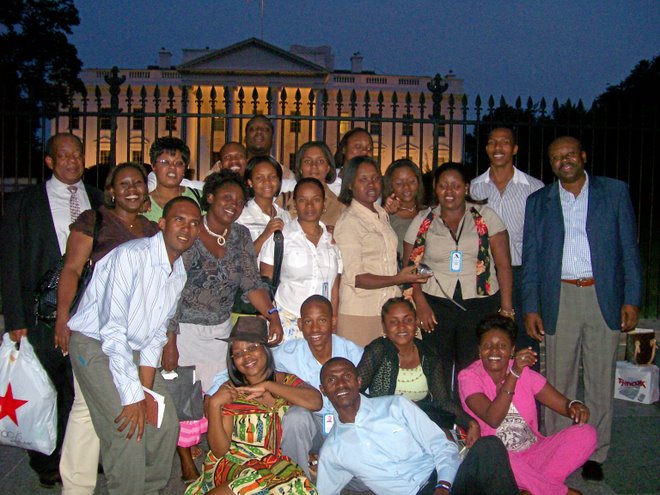
Diaspora: Preparons la Saison Cyclonique de 2013 par Stanley Lucas


Background
La saison cylonique de 2012 a ete catastrophique pour Haiti avec des pertes de vies humaines et des degats evalues a US$1.1 milliard en moins de quarante cinq jours. En effet quatre desastres ont affecte Haiti pendant cette periode. Isaac, Sandy, une pluie torrentielle dans le Nord qui a inonde 65% de la ville du Cap-Haitien et une autre dans le Nord'Est qui a fait des degats considerables. L'evaluation des pertes des jardins de bananes, de mais, de pois, de riz etc.. perdus, les 30 ponts detruits, les dommages sur les differents arteres routiers, la destruction d'ecoles et les residences de nombreux citoyens totalisent un peu plus d'un milliard de dollars americains. Un sacre coup aux efforts de croissance economique deployes en 2012.  Ces pertes combinees a la montee des prix des produits alimentaires au niveau global en 2012-13 ont un impact direct sur le cout du panier journalier du citoyen. Il nous faut dans la diaspora tenir compte que la saison cyclonique 2013 qui commence dans quatre mois. Elle annonce encore une fois une periode inquietante pour notre pays.  Deja les previsions annoncent entre 16 a 20 cyclones pour la region l'ete prochain. Les noms pour 2013 sont les suivants: Andrea, Barry, Chantal, Dorian, Erin, Fernand, Gabrielle, Humberto, Ingrid, Jerry, Karen, Lorenzo, Melissa, Nestor, Olga, Pablo, Rebekah, Sebastien, Tanya, Van et Wend. Organisations de la diaspora, sommes-nous prets pour cette saison cyclonique?

Les Initiatives du Gouvernement Martelly-Lamothe
Depuis son arrivee au pouvoir le 14 Mai 2011 l'administration du President Martelly a consenti des efforts enormes pour augmenter les capacites de l'etat pour gerer les degats naturels. Le renforcement des capacites du personnel du Ministere de l'Interieur et de la Protection Civile ont ete renforcees, de nouveaux equipements facilitant la gestion de ces desastres ont ete achetes, les moyens logistiques d'interventions mis en place, l'etablissement de reseaux de communications efficaces entre autorites locales et les institutions variees au niveau national, une meilleure integration de l'assistance externe et du support de la diaspora dans les interventions nationales et l'education civique. Les efforts d'institutionalisation de la gestion des desastres naturels continue. Il faut ratraper vingt ans de perdu. L'administration Martelly a demontre une volonte de travailler avec la diaspora. Etes-vous prets sa saisir cette opportunite? 

Diaspora et Preparation de la Saison Cyclonique 2013
Que peut faire la Diaspora? Il faut continuer a institutionaliser les interventions de la diaspora et creer plus de synergies dans les interventions. Le Ministere des Haitiens a l'Etranger (MHAVE) veut accompagner la diaspora dans ses interventions pour aider nos freres de l'interieur. La Ministre Fidelia est une rude travailleuse. Je propose une reunion des organisations de la diaspora interessees a intervenir en Haiti pendant la periode cyclonique du 1 Juin au 30 Novembre 2013. Il faudra repondre a quelques questions simples:
1. Que peut faire le gouvernement Haitien pour faciliter l'intervention des organisations de la diaspora pendant cette periode cyc;onique? Plus precisement que peuvent faire le MHAVE, les Ministeres de l'Interieur, les affaires etrangeres, Sante Publique, Agriculture, Education, les finances et la douane pour faciliter l'intervention des organisations de la diaspora? La production d'un document avec des recommandations specifiques a ces ministeres sera necessaire.

2. Que peuvent faire les organisations de la diaspora pour preparer la saison cyclonique 2013? Quels sont les appuis institutionnels (partnerships) que la diaspora doit mettre en place a l'avance dans les pays d'acceuil?

3. Est-ce qu'il serait bon de constituer des groupes d'interventions specialisees? Sante (association des medecins Haitiens a l'etranger, COSH, association des nurses)? Infrastructures (association des ingenieurs)? Education (association des professeurs, GRHAN) ect... et jumeler des le depart ces groupes avec les ministeres concernes?

4. Comment travailler avec nos ambassades et nos consulats pour faciliter les interventions des organisations de la diaspora?

5. Comment definir une politique pour les volontaires (haitiens et etrangers) qui veulent integrer les organisations haitiennes de la diaspora?

6. Quelle strategie de communication pour les organisations de la diaspora?

Une journee de reflexion avec la participation du MHAVE serait suffisante pour cette mise en commun. Rien ne peut remplacer une bonne planification. Comme je l'ecrivais en Fevrier 2010 low-cost emergency preparedness training could save lives, http://solutionshaiti.blogspot.com/2010/02/low-cost-emergency-preparedness.html Travaillons donc ensemble pour preparer la saison cyclonique et sauver des vies humaines.

Tuesday, March 30, 2010

Response to Senator Christopher Dodd: The Haitian People Deserve Sovereignty by Stanley Lucas

I am not sure which Haitians Mr. Dodd is talking with to back up his assertion that the Haitian people want the United States and the international community to takeover their country.  Most Haitians people that I talk to – and I talk to hundreds on a daily basis through numerous radio interviews – are frustrated that they still do not have stead access to food or tents.  Their frustrations are pretty equally aimed at the failed Haitian government and the international community.  Donations poured into international coffers and aid is only slowly trickling out.  More than 1.2 million people still sleep on the streets – in the rainy season.  About 65,000 pregnant women are among them.  The distribution of aid needs urgent attention.


But Mr. Dodd’s call for the UN to take over the country based on a manipulation of the Chapter VII provision for trusteeship is ludicrous bordering on subversive. Trusteeship is just a technical word for “soft occupation” which has traditionally been reserved for countries that were invaded or that have severe political unrest, as Dodd points out while noting the potential “distastefulness” of the concept. Haiti suffered an earthquake.  Is that reason to usurp the country’s sovereignty?  Did we invoke a trustee after the tsunami in Southeast Asia?  Did the federal government take over control of New Orleans after Katrina? 


The international community unfortunately does not have the best track record in Haiti over the past few decades.  After 15 years and $9 billion in aid money, there is nothing to show for it.  Haiti was in ruins before the earthquake and is devastated after it.  The international community’s biggest mistake was never holding the Haitian leadership accountable for the aid sent to the country.  As a result, more than one Haitian leader has raided the Haitian coffers.   The international community and the U.S. government have also made the mistake of meddling in Haiti’s nascent democracy.  The international community has gotten behind two leaders (Aristide and Preval) that were elected through fraudulent and manipulated elections.  Both turned out to lead corrupt and violent Administrations.  Aristide was elected, evacuated, restored to power by the Clinton Administration, and then evacuated again a few years later. According to Haiti's General Accounting Office Aristide stole US$350 million over nine years.


MINUSTAH, the UN’s mission on the ground, has been in control of the security in Haiti for two decades at a cost of about $700 million yearly.  Unfortunately, the security situation in Haiti has also made little improvement.  The Haitian people suffered through two “Operation Baghdad” campaigns of terror and violence carried out by bands of thugs and gangs http://www.rnddh.org/article.php3?id_article=300 , often operating with the under the table support of the Haitian Government to achieve political ends.


Dodd further asserts, “Haitian authorities have repeatedly asked the United States and the international community to provide this help.”  Is he confusing requests for “help” with asking for the country to be taken over?   To my knowledge no Haitian official has requested occupation, takeover or trusteeship.   In fact, President Preval has called for elections this November when his term is up. This sounds nothing like a request for a takeover.


I agree with the Senator, however, on two major premises:  Haiti will need the help of the international community to rebuild – it cannot do it alone, and there needs to be better coordination.  There are ways to accomplish this without occupying the country.  So far, everyone has overlooked one significant resource that can step in immediately and help manage rebuilding:  the Haitian Diaspora.  Mr. Dodd does not mention them at all.  There are more than two million Haitians in the United States alone.  Some are political refugees; some are economic refugees.  But all are patriots, and bring unique skills. They have remit more than $2 billion a year annually to the country, accounting for almost 20% of the GDP.  They speak the language, and they are Haitian. 


For rebuilding to really work in the long term, it must be Haitian led with the strong support of the international community.  There is enough capacity in Haiti and among its Diaspora to lead reconstruction.  The international community has a strong role to play, particularly by focusing on capacity building, setting up systems of accountability and transparency for rebuilding, supporting the strengthening of the infrastructure, revamping legal codes, helping with security, and building up the private business sector.  What they must avoid is influencing the political system of a democratic country.  They must avoid picking their favorites for leadership or structuring the government.  That is the sovereign and democratic right of the Haitian people.  This is not to say that Haiti will not need help in organizing free and fair elections – it will.  But the international community should not be involved in decisions on when those elections are held, who participates, or declaring a winner.


On a separate note, Dodd’s history in Haiti calls into question his real goals in the country.  He was a strong supporter of President Aristide.  As Chairman of the Western Hemisphere subcommittee, he yanked the funding for important political training programs on the ground.  Under his leadership, little has been accomplished in Haiti.  Perhaps he has a favorite candidate for president?  Perhaps as a Senator soon to be retired he sees a future leadership role for himself in the Clinton initiative?


While the international community sorts out who will get what authority to manage Haiti, the people continue to sleep on the streets in the rain.  There is enough donation money right now to buy tents for every homeless person living on the streets.  Why can’t they get the tents?  Do we need to really finalize the power structure before tents are deployed?  The Haitian people have been devastated and demoralized – let us not add insult to injury.


The Miami Herald
Posted on Mon, Mar. 29, 2010

Place Haiti under `trusteeship'

BY CHRIS DODD
http://dodd.senate.gov

The nightly news cameras may have left, but the human suffering caused by the devastating earthquake in Haiti continues.

Hundreds of thousands of people are dead or injured. Many more are homeless or orphaned. And without sustained intervention by the international community, Haiti's future could be very bleak indeed.

Nearly a quarter million homes -- and 20,000 commercial buildings -- have been destroyed, or so badly damaged that they will need to be demolished. And the earthquake, which struck just 16 miles from the capital of Port-au-Prince, essentially destroyed the capacity of Haitian authorities to act.

Haiti's education system, in the words of its minister of education, has ``totally collapsed.'' Transportation and communication systems have been wiped out. Finance and industry have been crippled.

There is no health care system to treat the wounded, no social services to help the displaced, and no government infrastructure left standing to bring about order out of the chaos.

The Haitian government, for all practical purposes, does not exist. It lies in ruins, in the rubble of the presidential palace, and other government buildings ranging from the Supreme Court to the National Assembly.

After the quake, the Washington Post interviewed Haitians who begged the United States to take over control of Haiti.

Haitians no longer believe that their government could do what needs to be done to save their country. Said one man: ``When we tell the government we're hungry, the government says, `We're hungry, too.' ''

Sadly, they may be right.

I do not believe, of course, that we should occupy Haiti. We should not take lightly the importance of sovereignty, not discount the Haitian people's long history of enduring difficult times. But we cannot pretend that Haiti can lead its own reconstruction.

Fortunately, there is precedent for situations in which the international community must intervene to ensure that a troubled country can look forward to a brighter future.

Chapter XII of the United Nations Charter established the International Trusteeship System for the supervision of territories placed under U.N. control by agreement of the territories themselves as well as the states administering them.

The idea was not to bring about hostile takeovers of failed states, but rather to provide administrative support for countries emerging from the geopolitical reshuffling after World War II -- until those countries could stand on their own two feet.

The Trusteeship System was, by all accounts, successful. And even after the program became obsolete, a form of trusteeship was used in Bosnia, Kosovo, East Timor, and Cambodia -- places where the collapse of order necessitated help from the international community to perform the basic functions of a government.

Haiti -- an independent sovereign nation and a United Nations member -- would not be eligible for trusteeship. But, as in those other cases, the U.N. mission can be broadened to coordinate the various international actors currently working in Haiti.

Instead of the ad-hoc system currently in place -- the United States controls the airport, the United Nations controls food distribution, and other responsibilities are divided in a scattershot fashion -- a form of trusteeship would allow the UN to coordinate assistance in an orderly and transparent fashion.

Other international actors could then be tasked with specific roles -- ranging from security and governance to economic development and the coordination of international aid.

The goal is simple: Provide Haitians with a legitimate, functional state -- one capable of managing the day-to-day tasks of government and providing security, economic stability, and social services.

This won't work without the Haitian people and their elected leaders -- it must be done with them, not to them.

Indeed, Haitian authorities have repeatedly asked the United States and the international community to provide this help, and we must answer their call in a way that allows Haiti to get back on its feet and regain control over its future.

The task of rebuilding Haiti will fall on the international community -- that much is clear. And I believe we can do it most effectively if we have a coordinated strategy for our efforts.

Intervention on this scale might not be pleasant to consider, but it is what the Haitian people want -- and, more importantly, it is what Haiti needs to emerge from this latest tragedy and build a new future.

Sen. Chris Dodd, D-Conn., is chairman of the Western Hemisphere Subcommittee of the Senate Foreign Relations Committee.


Read more: http://www.miamiherald.com/2010/03/29/v-print/1552739/place-haiti-under-trusteeship.html#ixzz0jcA6jJDe

Saturday, January 30, 2010

TREMBLEMENT DE TERRE EN HAITI: PREDICTIONS POUR 30 JOURS


Aléa et sécurité sismique en Haïti et dans la région Caraïbe Communiqué du bureau géologique américain (U.S. Geological Survey)
Emis le 21 janvier 2010 Le séisme de magnitude 7 du 12 janvier 2010 près de Port-au-Prince en Haïti a généré un accroissement brutal des préoccupations concernant le potentiel de futurs séismes en Haïti et dans la région alentour. Ces préoccupations sont liées à notre compréhension de l’aléa sismique et à notre connaissance de actions à mener pour assurer la sécurité vis a vis des séismes à venir. 

Le but de ce communiqué est de faire savoir notre meilleure évaluation sur Répliques : La séquence de répliques d’un séisme de magnitude 7 continue pour des mois, sinon des années, dans la région affectée. La fréquence des événements va diminuer avec le temps, mais des séismes dommageables resteront possibles dans les mois à venir. Il y a aussi une petite chance de séismes à venir qui seraient plus forts que le choc initial. La séquence de répliques du séisme de Port-au-Prince continue à être forte et active. Sur la base de cette activité et des statistiques des séquences de répliques en général, notre estimation de l’activité des répliques pendant une période de trente jours commençant le 21 janvier 2010 est la
La probabilité d’un ou plus séisme(s) de magnitude 7 ou supérieure est moins de 3%. La probabilité d’un ou plus séisme(s) de magnitude 6 ou supérieure est de 25%. La probabilité d’un ou plus séisme(s) de magnitude 5 ou supérieure est d’environ 90%.
Approximativement 2 ou 3 répliques de magnitude 5 ou supérieure sont attendues pendant cette période de temps.
Ces estimations seront mises à jour à mesure que de nouvelles informations seront disponibles.
Précautions : Toute réplique de magnitude supérieure à 5.0 sera largement ressentie et peut cause des dommages additionnels, en particulier aux structures vulnérables déjà endommagées. Chaque personne vivant en Haïti ou qui y est impliquée dans les actions de secours doit rester consciente de son environnement et de sa sécurité sismique personnelle. Il faut à tout moment être conscient de la conduite à mener si le sol commence à trembler. Les espaces ouverts sont généralement sûrs, mais courir parmi des chutes de débris pour atteindre un espace ouvert peut être dangereux. Seuls des ingénieurs qualifiés peuvent déterminer si un bâtiment endommagé est sûr et peut être réoccupé. La règle à tenir tant que les ingénieurs ne sont pas sur place la suivante : si un bâtiment n’a pas l’air sûr, c’est qu’il ne l’est pas. On doit éviter de pénétrer ou de réoccuper une structure clairement endommagée.
Préoccupations à court terme : La faille géologique qui a causé le séisme de Port-au-Prince fait partie de la zone sismique active entre les plaques tectoniques Caraïbe et Amérique du Nord. Le séisme a sans aucun doute dissipé des contraintes sur le segment de faille qui a rompu, mais l’extension de cette rupture le long de la faille reste mal connue pour le moment.
Les modèles de glissement, la mesure préliminaire des déformations en surface par radar et l’examen de l’imagerie satellitaire et aérienne suggèrent que le segment de la faille d’Enriquillo situé à l’est de l’épicentre du 12 janvier et directement adjacent à Port-au-Prince n’as pas subi de glissement important pendant cet évènement. 

Ceci implique que la faille d’Enriquillo près de Port-au-Prince accumule suffisamment de déformation pour être libéré lors d’un fort séisme destructeur à l’échelle de la durée de vie des structures qui seront construites durant l’effort de reconstruction à venir

Historiquement, Haïti a subi de multiples séismes importants, apparemment sur des failles adjacentes. Nous continuons à étudier la situation à l’aide de radar, LiDAR, et données photographiques prises de satellites et d’avions. Il est essentiel d’effectuer des études de terrain, au sol, des décalages engendrés par cet événement. L’étude des événements passés est essentielle pour évaluer le potentiel pour de futurs séismes à proximité de Port-au-Prince.
Préoccupations à long terme : Il est essentiel que l’effort de reconstruction en Haïti prenne en compte le potentiel, en fait le caractère inévitable, de séismes futurs forts. Haïti est coupé par deux failles majeures. Au cours des trois derniers siècles, des séismes comparables ou plus forts ont frappé Haïti au moins quatre fois, en particulier en 1751 et 1770, détruisant Port-au-Prince. 

Les ingénieurs et professionnels de la reconstruction savent comment concevoir et construire des structures qui ne s’écrouleront pas lors de fortes secousses sismiques. L’estimation de l’aléa sismique fournit la base pour la mise en place de codes de construction appropries et pour l’identification de régions à haut risque. Une estimation approfondie de l’aléa sismique en Haïti, ainsi que dans d’autres pays de la Caraïbe, fournira la base pour établir ou améliorer les codes de construction et pour renforcer la résistance des bâtiments sur le long terme. 

De telles estimations requièrent des investigations géologiques des failles et des propriétés du sol, la remesure de stations géodésiques pour déterminer l’accumulation de la déformation, et l’étude de la sismicité récente et historique ainsi que de la distribution spatiale et des statistiques de cette sismicité. 

Ces estimations prennent généralement plusieurs années mais peut être accélérées et fournir des résultats largement meilleurs que ce qui est actuellement disponible. A partir de ces investigations, on peut déterminer la probabilité et la nature des mouvements forts du sol sur plusieurs échelles de temps. La mise en place de structures et infrastructures plus résistantes est un objectif à long terme, en particulier en cas de limitations économiques. A court terme, il est critique que l’effort de reconstruction soit entrepris en pleine conscience du potentiel pour des événements dommageables au cours des mois et des années à venir. Il est essentiel que les structures telles que les hôpitaux, écoles, et équipements critiques soient reconstruites avec une bien meilleure résistance afin de préserver des vies et le fonctionnement du pays.
Préoccupations régionales : L’expérience du séisme de Port-au-Prince en Haïti révèle le besoin de mieux comprendre la nature et l’étendue du risque de séismes et de tsunamis dans la région Caraïbe. L’arc d’iles qui forme les petites et les grandes Antilles suit le contour général du contact entre les plaques Caraïbe et Amérique du Nord. Cette région dans son ensemble est sismiquement active à cause du mouvement relatif entre ces plaques et est sujet à des séismes destructeurs : il s’agit d’un petit « cercle de feu » comme celui qui suit les bordures du Pacifique. Des séismes historiques de magnitude supérieure à 7 ont eu lieu à Porto Rico, en Jamaïque, en République Dominicaine, en Martinique et en Guadeloupe. Le long de la côte du Venezuela, la frontière entre les plaques Caraïbe et Amérique du Sud a causé des séismes destructeurs au voisinage de Trinidad et Tobago. Des règles parasismiques, y compris les codes de construction dans l’ensemble de la région, devraient être basés sur une estimation approfondie de l’aléa sismique.
Traduit par Eric Calais de l'université de Purdue

Risk tranblemanntè ak mezu sékirité nan Péyi Dayiti ak tout zòn Karayib-la Komuniké Sant enspéksyon jéolojik Étazini 28 janvyé 2010
Échèl Richtè, sé yon mannyè pou mezuré puisans yon tranblemanntè.
Yon lòt mo pou di puisans yon tranblemanntè, sé mayitud. Yon lòt mo pou di tranblemanntè, sé séyis, ou byen kataklis tou, ki pi jénéral. Manman kataklis ki té pasé nan péyi-a le 12 janvyé, li té genyen yon mayitud 7 sou échèl Richtè, ki vlé di ke li té fò anpil.
Depui dat-sa-a, anpil enkiétud vin maré an Ayiti ak tout zòn Karayib-la. Anpil moun ta renmen komprann sa ki rivé anba tè-a, ki danjé ki devan-nou toujou, ak tout sa nou ta ka fè pou nou pwotéjé-nou kòrèkteman, si yon tranbleman konsa té vlé rivé ankò.
Nou konstaté genyen anpil entèprétasyon divès sou késyon-an. Entansyon dènyé komuniké sila, sé pou transmèt lidé pi solid ke nou genyen sou li, ak bon bèt syantifik.
1. Réplik : Yo rélé réplik chak sékwé nou santi anba tè, nan yon zòn koté yon manman tranblemanntè pasé. An fèt, réplik sé yon tranbleman pout tèt pa-li, mè yo rélé-li réplik parce que li vini apré yon premyé tranbleman.
Malérézman, yon tranbleman mayitud 7 pa p’ manké kontinué bay réplik, petèt pandan dè mwa, petèt pandan dè zané.
Nou konnen genyen anpil mannyè pou nou pwotéjé-nou leù réplik rivé, menm si yo fè kè-nou soté chak Nou konnen ke li pa enposib pou yon lòt tranbleman parèt sou nou ankò, nan mwa-yo ki devan-nou. Mè, nou ka paré pou li.
Genyen tou yon ti posiblité tou piti ke yon tranbleman pi fò ke sa nou pran-an vin fè déga toujou. Mè, bon nouvèl-la, sè ke nòmalman, frékans réplik-yo supozé diminué de plu zan plu ; frékans, sa vlé di konbé fwa y’ ap’ retounen. Donk, réplik-yo supozé ban-nou repo, piti a piti. Mouvman anba tè Pòtoprins, li rété yon gwo priorité pou syantifik-yo k’ apé suvéyé-li. Mouvman sa-a, li toujou aktif. An fèt, tout sou-sòl anba tè toujou an mouvman, sou planèt Tè-a. Sé sou tout enfomasyon tè-a ka bay nan mouvman-li-yo ke nou ka komprann yon séri de bagay sou li.
Avèk nouvèl enfomasyon sa-yo, san konté tout bagay jéològ ak sismològ konnen kòm statistik sou réplik,nou éstimé ke aktivité réplik-yo nan zòn Pòtoprins ka sanblé konsa, nan pwochen trant jou ki devan-nou(dépi le 21 janvyé) :
Chans pou youn, ou byen pluzieù tranbleman mayitud 7 ou byen pi fò rivé, sé mwens ke 3 pousan.

Chans pou youn, ou byen pluzieù tranbleman mayitud 6 ou byen pi fò rivé, sé 25 pousan. 

Chans pou youn, ou byen pluzieù tranbleman mayitud 5 ou byen pi fò rivé, sé pétèt 90 pousan.
A pé prè 2 ou 3 réplik mayitud 5 ou pi fò ka rivé nan périòd trant jou sa-a ki devan-nou. Éstimasyon sa-yo pral’ mizajour chak fwa ke nou obsèvé nouvèl doné, é konsa, n’ ap’ ka komuniké-yo ban-nou. Sonjé byen ke chif sa-yo, sé rézilta anpil kalkul syantifik trè konplèks. Yo sé dè chif de sa yo rélé statistik ak pwobabilté, sa vlé di konbé chans yon bagay ka pasé, konbé chans li ka pa pasé tou. Sismoloji, sé sa sismològ ap’ pratiké ; sé yon syans ki étudyé konpòteman tè-a, éspésyalman leù tè-a bay séyis.
Sismoloji, sé pa tankou météoroloji ; si moun ka fè prévizyon météo, pa gen moun ki ka fè prévizon séyis. Fòk nou pa kité moun fè nou konprann lòt kozé. Donk, si yo di gen 90 pousan chans pou yon séyis mayitud 5 rivé, sa vlé di tou genyen 10 pousan chans pou li pa rivé tou.
Fòk nou di-nou tou 2 lòt ti kozé sou chif nou sot wè-la-yo :
1) Dezièm gwo sekous nou pran-an, mèkredi 20 janvyé, mayitud-li té plis ke 6. Nou wè poutan ke menm si li té genyen yon grenn pwen an moins sou échèl Richtè-a, li pa té fè otan déga ke premyé-a, sètadi sa nou pran-an le 12 janvyé.
Alé wè pou 2 réplik madi le 26-yo, ki té mayitud 4,4 sèlman.
2) Pouki sa yo pa té osi grav que tranblemannté le 12-la ? Sé paske chak fwa ou désan yon pwen sou échèl Richtè-a, énèji sékous-yo trant fwa mwens fò. Sa vlé di ke menm si genyen pwobablité nou pran réplik mayitud 5 nan pwochen mwa-a, si yo rivé, y’ ap’ trant fwa mwens fò ke sa mèkredi le 20 janvyé-an, ki li-menm té trant fwa mwens fò ke sa nou pran le 12 janvyé-a.
Sa pa vlé di pou n’ pa pran prékosyon, paske prékosyon, sé premyé priyorité. Mè nou ta vlé fè nou komprann doné sa-yo byen, pou nou pa paniké tou.
2. Prékosyon : Menm si yo pa osi fò ke manman tranbleman-an, nenpòt réplik ki gen mayitud 5 ou byen plis, n’ ap’ santi-li. Réplik sa-yo ka fè déga, surtou sou kay ak édifis ki déjà félé. Tout moun ki en Ayiti a leù kilé, ke y’ ap’ viv nan péyi-a oubyen ke yo nan péyi-a pou vin édé, fòk yo konn byen koté yo rété-a, sètadi si kay-yo oubyen édifis-yo solid.
Yon lòt bagay ki trè zenpòtan, sé konnen ki sa pou nou fè si nou santi tè-a koumansé ap’ tranblé, koté n’ ap’ kouri mété tèt-nou. Tout koté ki louvri anba syèl, sé pi bon koté pou nou yé nan moman sa-yo. Kanta évaluasyon éta yon kay oubyen yon édifis ki yon jan domajé, sé SÈLMAN yon enjényeu kalifyé ki ka fè-yo, ki ka fè-n’ konnen si nou té mèt antré ladan-yo. Anvan yon enjényeu ka vin fè évaluasyon-sa-yo,
fòk nou réspékté 2 règ :
1) Si édifis-la sanblé li yon jan panché, ke li yon jan pa fin solid tankou l’ té yé anvan, enben li pa bon pou n’ retounen anndan-li.
2) Si édifis-la klèrman gen gwo domaj sou-li, pa antré anndan-li.
3. Sa pou-n’ konnen pou jounen jodi-a : Manman tranbleman 12 janvyé-an, lakòz-li sé sa yo rélé yon fay. Fay pa-nou-an, li rélé « Fay prèskil du Sud », ou byen « Fay Anrikiyo ».
Yon fay, sé yon manman fant ki chita nan mitan sa yo rélé plak téktonik. Plak sila-yo, sé dé gwo moso tè ki anba pyé-nou. Yo pi gwo pasé péyi, pasé kontinan, é y’ ap’ maché anba tè apéprè nan menm diréksyon. Sepandan, genyen ki maché pi vit pasé lòt.
Plak tektonik yo toujou apé fwoté youn kont lòt tou. De plak téktonik ki maré fwoté anba tè Ayiti, sé plak yo rélé « Plak Amérik du Nò » avèk « Plak Karayib ».
Ant 2 plak ki youn kont lòt, konn genyen dé koté nan-yo ki maré kolé, ki ataché.
Leù 2 plak ap’ fwoté youn kont lòt, leù 2 plak ki kolé ansanm pa maché ak menm vitès, koté ki maré kolé-yo santi-yo apé rédi anban tansyon. Sé kòm si yon moun ap’ ralé bra-‘w nan yon diréksyon, épi yon lòt moun ap’ ralé lòt bra-a nan yon lòt.
Donk, koté nan plak-yo ki kolé-yo, yo vin tankou élastik ki sou tansyon : plus plak-yo ap’ élwayé-yo, plus koté ki maré-yo sou tansyon. Leù koté-sa-yo pa ka kenbé ankò, yo kasé, yo lagé-sa, ak tout énèji rédi,tout tansyon ki t’ ap’ bouyi anndan-yo.
É leù yo lagé, sé leù sa-a nou santi tè-a tranblé. Koté-sa-yo, ki té maré mè ki té fin par lagé tansyon, yo rélé sa épisant tranblemanntè-a.
Sé sa ki rivé-nou, le 12 janvyé. Dènyé fwa élastik-la té lagé kò-li, sété ya desankarant an de sa. Nou ka imajiné-nou dépi konbé tan moso plak-yo ki té kolé-yo, nan zòn Pòtoprins, t’ ap’ rédi, t’ ap’ tann jou pou yo lagé tansyon-a.
Nan listwa-li, Ayiti subi anpil anpil gwo tranblemanntè. Sanblé sé fay-yo ki travèsé-li ki lakòz sa. Jounen jodi-a, nou konnen ke li trè zenpotan pou nou voyé jé sou tranbleman pasé-yo, pou nou ka évalué ki pwobablité yo ka rivé ankò, pi devan. Nou menm, moun sant jéolojik-yo ak éspésyalis lunivèsité-yo nan késyon séyis, n’ ap’ analizé événman pasé sa-yo, n’ ap’ analizé téren-an tou, ak rada, foto satélit, foto ki pran nan avyon, éksétéra, pou nou ka konnen valeù dékalaj ki té pwodui sou longeù fay-yo dépi le 12 janvyé.
Koulié-a, fòk nou gadé yon lòt aspè késyon-sa-a. Leù moso fay Anrikiyo-a ki té kolé-a vin kasé, le 12 janvyé, li relaché yon pakèt énèji rédi, on pakèt tansyon li té genyen anndan-li. Sé sa ki té fè anpil déga, ki té lakòz anpil lanmò.
Sependan, pour linstan, nou poko vrèman konnen si li té lagé tout tansyon-a. Modèl syentifik ke nou genyen-yo, ak tout doné nou genyen sou défòmasyon tè-a gras a rada, foto satélit, foto ki pran nan avyon,éksétéra, yo sanblé yo vlé démontré ke bò fay-la ki a lès Pòtoprins, li pa té déplasé anpil.
Sa vlé di 3 bagay : 1) Genyen lòt pwen ki kolé toujou, ant 2 plak-yo 2) Lòt pwen-sa-yo, yo ka kasé 3) Koté yo pral’ kasé ? Li enposib pou nou konnen, pour linstan.
Donk, li pa enposib pou lòt réplik vin fè déga sou édifis toujou, éspésyalman édifis ki domajé-yo, mè osi sou tout struktu ke nou sur le pwen rekonstrui-yo, si yo pa rekonstrui jan yo dwé. Sé pou sa fòk nou pa paniké, mè fòk nou pran prékosyon-nou ak késyon koté n’ rété-a, ak késyon rekonstruksyon kay ak édifis.
4. Sa pou-n’ konnen pou pi devan : Tout rekonstruksyon nan péyi-a, fòk yo kenbé kont ke pral genyen lòt gwo séyis ankò, petèt pa demen, petèt demen. Anba tè, sé 2 manman fay ki fandyé Ayiti. Sé konsa li té toujou yé, sé konsa l’ apé toujou rété. Dépi twa dènyé sièk-yo ki pasé, péyi-a subi katastwòf tranbleman omwen 4 fwa. Parégzamp, en 1751 ak 1770, Pòtoprins té pran nan séyis ki té pi fò pasé sa 12 janvyé-a. Kapital-la té krazé nèt.
Péyi-a pa p’ chapé nan situasyon jéolojik-li, sètadi sa ki anba tè-li. Sepandan, genyen yon pakèt lòt péyi sou Latè k’ ap’ viv avèk menas séyis, tankou Japon, Kalifòni, éksétéra, é sé pa vré ke yo viv nan lapeù sekous-sa-yo rivé, oubyen nan lapeù kay tonbé krazé. Enjényeù ak pwofésyonèl rekonstruksyon konnen trè byen kijan pou bati bon jan édifis solid, ki kapab rézisté gwo tranblemanntè san yo pa krazé sou moun. Konstruksyon ékspèr sa-yo, yo rélé sa konstruksyon parasismik.
Évaluasyon danjé séyis, syans sou séyis, sé sèl baz ki pou pèmèt établi bon kòd, bon lwa sou konstruksyon ak bon lwa sou kijan pou nou ranfonsé édifis ki la déja, pou yo ka rét’ kanpé lontan. Évaluasyon danjé séyis, syans sou séyis, sé sèl baz ki pou pèmèt idantifyé zòn nan péyi-a ki a risk. Évaluasyon-sa-yo, yo vlé di ankèt jéolojik sou fay-yo, ankèt sou kondisyon tè-a, ak okupasyon stasyon jéodézik, sètadi stasyon koté yo chèche konnen valeù énèji tansyon nou té palé toutaleù-an. Évaluasyon-sa-yo, yo vlé di tou analiz statistik aktivité séyis ki té pasé lontan ak séyis ki fenk pasé, épi ki koté yo té pasé sou téritwa péyi-a, konbé fwa, éksétéra.
Tout travay-sa-yo, dabitud, yo pran tan pou yo fèt, petèt dèzané. Mè yo ka fèt pi vit, yo kap’ akséléré. Si yo pa mal pou fèt san zatann, yo pral bay pi bon doné syantifik ke sa nou genyen jodi-a. Avèk évaluasyon sa-yo, na va konprann pwobablité ak natu gwo tranbleman ki ka vini-yo, épi kijan tè-a ka sekwé, anba diféran échèl tan.
Mété an plas dè struktu ak dè zenfrastruktu ki pi résistan, ki parasismik, sé yon objéktif ki ka pran tan, sutou lò pa genyen anpil lajan ki ka dépansé pou sa. Mè, pou jounen jodi-a ak jounen demen-an, li trè trè zenpòtan pou tout éfò rekonstruksyon-yo genyen plèn konsyans ke genyen posiblité pou lòt tranbleman rivé sou nou ankò, nan mwa ak ané ki devan nou.
Tout lopital, lékòl, ak édifis enpòtan, tankou édifis léta-yo, fòk yo rekonstrui ak pi bon règléman sou résistans, pou nou pa kontré ak lanmò ankò, é pou péyi-a ka fonksyoné kanmèm, si tranbleman rivé. Sé menm bagay pou tout antrépo koté nou kenbé ékipman nou bézwen anpil-yo, nan situasyon ijans.
5. Sa pou nou prévwa pou tout zòn Karayib-la : Ékspéryans tranbleman zòn Pòtoprins, Jacmel ak tout zòn afékté-yo, li montré-nou ke nou bezwen genyen yon pi bon konpréyansyon zafè séyis ak tsounami nan Karayib-la. 

Tsounami sé sa ki rivé leù yon tranblemanntè voyé yon gwo dlo lanmè sou tè.Ti zilé ak gwo zilé Zantiy-yo, yo fòmé yon ark, ki an jénéral suiv zòn koté plak téktonik Amérik du Nò ak Karayib-yo an kontak. Tout zòn-nan, sé yon zòn ki aktif pou séyis ; li pa mal pou pwodui tranbleman. Yo konn di sé yon ti « sèk-dufeu », tankou sa ki lonjé Oséyan Pasifik-la. Nan listwa, manman tranblemanntè té pasé nan Pòtoriko, Jamayik, Dominikani, Matinik ak Gwadloup. Yo tout té gen pi gwo mayitud pasé 7 sou échèl Richtè, mayitud séyis nou pran le 12 janvyé-a.
Nan lakòt Vénézuéla, fwontyè ant plak Karayib-la ak plak Amérik du Sud-la té lakòz gwo séyis bò zòn Trinidad ak Tobago. Yo té krazé anpil anpil.
Tout règ pou préparé-nou kont yon lòt gwo désolasyon, notaman kòd sou konstruksyon nan tout péyi zòn-nan o gran komplè, yo dwé bazé sou éstimasyon syantifik pwofondé sou késyon danjé sismik-la.
Komuniké sa-a té rédijé apartir de komuniké ofisyèl Sant enspéksyon jéolojik Étazini, par Stéphane
Lahens, de lunivèsité Monréyal ak Les Éditions de la Cime, é sou diréksyon syantifik Pwoféseù Éric Calais, de lunivèsité Purdue.

Thursday, November 5, 2009

Savannah Monument: Let's do what's right by Stanley Lucas


In the late 17th to early 18th century in the Americas, the winds of freedom had its roots in Haiti. Haitians under les Chasseurs de Saint Domingue fought alongside Americans in the U.S. Revolutionary War in Savannah, Georgia in the United States of America. Among the Haitian soldiers that fought for U.S. independence was Henri Christophe, who would later become a great Haitian king. Haiti's founding fathers saw beyond the war to the universal values of freedom and equality. Haitian also fought alongside Simon Bolivar in his quest to liberate Latin American countries. For Haitians it was not about supporting a particular ethnic group or race, it was about freedom and liberation.

Haiti's great story of support was almost lost until a group of Haitian leaders in the diaspora decided that this significant contribution needed to be highlighted and honored in a meaningful way. This group of Haitians was lead by Daniel Fils Aime who conceptualized and implemented a project to build a monument to our ancestors in Savannah, Georgia. The monument honors a platoon of Haitian soldiers who fought for American independence at the Siege of Savannah in 1779. Because of Daniel's efforts and steadfast lobbying, the political leaders of Savannah really extended themselves to make this monument come to fruition as did the people of the Haitian American Historical Society. At some points, the project almost sunk because of a lack of resources, but Daniel Fils Aime actually put up his own house as collateral to pay for the monument. I call that patriotism, conviction and dedication to the greater good.

I attended the inauguration of the first phase of the project and witnessed a proud group of Haitians and American that came from all over the United States and Haiti for what was an exciting and meaningful event. Everybody went back home happy and proud to be a Haitian. Tourists from around the world will be amazed to read the plates around that monument (note: the statue will be mentioned on the Gray Line Tour of historic Savannah). Haitian's contribution to the U.S. will be better known -- something that only two books have covered in the 200 years of US history.

Also because of Daniel Fils Aime's lobbying, Representative Kendrick Meeks introduced House Resolution 909 commemorating the courage of the Haitian soldiers that fought for American independence in the Siege of Savannah and for Haiti's independence and renunciation of slavery. The resolution passed successfully in the U.S. House of Representatives.

The second phase of the project started right the way and Daniel Fils Aime again swung into action. Like a preacher trying to convert citizens, he traveled, called and tried to reach out to every single citizen in order to collect the funds to complete the project. Despite all efforts, he fell short. Again, he did not give up, and he continued to work the phones. While revisiting previous donors, he encountered Rudy Moise that was willing to put forward the remaining US$120,000 to complete the project. Again the Society and Daniel did a fantastic job in finishing the job and organized a great party attended by an impressive crowds of politicians, professionals, business leaders, and others. Most unfortunately, I was unable to attend because I was in Europe on business.

A bombshell landed shortly after the event with a report by Philipp Brutus revealing that the faces of two of the sculptures depicting the Haitian soldiers were those of Daniel Fils Aime and Rudy Moise. A close observation and pictures revealed that was the case. This revelation has created an outrage among Haitians. Haitians are very sensitive to the accuracy of our collective history, and unfortunately, many of them felt violated by this act. It should be noted that many raising their voices in criticism never contributed a dime to the construction of the monument -- including Philip Brutus who has been leading the charge.

How did this happen? How did the faces of Daniel Fils Aime and Rudy Moise appear on the statues? There are many explanations flying around. The most accurate version of what happened was shared with me by James Mastan, the sculptor and designer of the monument. He actually took it upon himself to put the faces of both men in the sculpture by using their pictures.

Quite simply, it was a mistake -- and an honest mistake that was blown out of proportion so that some could score political points. This could have been cleared up quickly and effectively without this divisive brouhaha.

Now we must move forward -- and the mistake should be remedied. James, Daniel and Rudy must recognize that an honest mistake was made and correct it in order to respect the accuracy of history. By doing so, they will not only make everyone happy, but it will respect our history and our legacy. Was that not the initial purpose? For those who want to turn this into a political circus, you must know that you are only doing damage to our collective reputation. Let's wise up and do what's right.