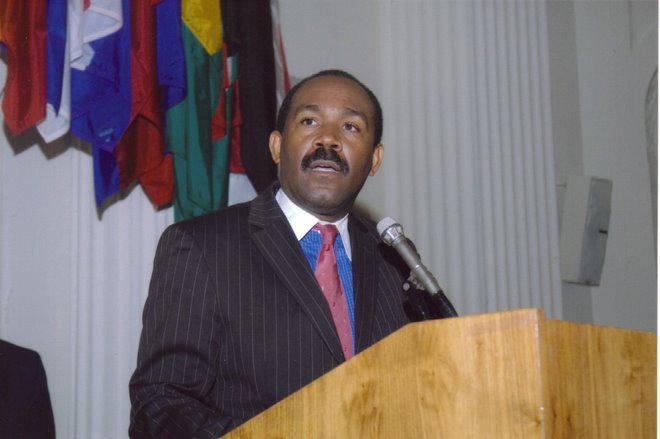
Je remercie l’AQOCI de m’avoir invitée à tenir les propos d’ouverture à ce Forum qui réunit une nouvelle fois des collègues haïtiens et québécois autour de la problématique de la reconstruction en Haïti, après les destructions massives causées par le séisme du 12 janvier 2010, et des pertes en vie humaine qui se chiffrent autour de 300 000 personnes. Nul doute qu’il s’agit là d’une catastrophe majeure et il est impératif effectivement, comme l’ont jugé les organisateurs du forum, deux ans après, de dresser des constats et de proposer des analyses qui, je l’espère ouvrirons des pistes de réflexion susceptibles de renouveler la pensée sur ce pays qui déroute autant qu’il fascine.
Je tiens à souligner l’engagement de l’AQOCI et de la Concertation pour Haïti auprès des organisations haïtiennes dans leurs luttes pour les droits, pour le changement social et la démocratie en Haïti.
Un des pays les plus expertisés se plait-on à dire, celui sur lequel on ne cesse de publier des rapports et des essais de toutes sortes, sur tous les sujets, allant de l’économie à la culture, de la sécurité à l’éducation, de l’environnement à la démographie, de la reconstruction à la refondation, de l’histoire à la pauvreté. La pauvreté oui. Parce qu’il faut surtout mettre en exergue le slogan qui ne manque jamais de nous qualifier et qui semble toujours vouloir nous réduire à cette essence là : « le pays le plus pauvre de l’hémisphère ».
Et pourtant, en dépit de tentatives d’analyses parfois savantes mais trop souvent aplaties sur de fausses certitudes, la complexité de la société haïtienne échappe encore à ceux qui par fascination, par compassion ou par opportunisme croient saisir les caractéristiques fondamentales d’un pays en pleine mutation.
Regarder ce pays de près, de très près exige une grande humilité. Celle qui commande le respect pour un peuple qui a fait la démonstration au monde entier qu’il était possible, au sortir d’un combat victorieux contre l’esclavage et contre les plus grandes puissances colonialistes de l’époque, de survivre pendant près de deux siècles, dans la précarité absolue en se forgeant un mode de vie, une vision du monde, de la maladie, de la mort, de la solidarité et de la dignité. Pendant longtemps seul, absolument seul. Conséquence de l’insolence.
Mais en même temps, cette exigence d’humilité s’accompagne nécessairement d’un regard sans complaisance sur les mécanismes internes autant qu’externes qui ont conduit à la dégradation actuelle, antérieure au séisme du 12 janvier, mais que celui-ci a mis à nu, révélant dans son imprévisibilité même l’étendue du désastre.
Déjà en 1986, dans un livre qui mérite sans doute d’être relu, « Les racines historiques de l’Etat duvaliérien » Michel Rolf Trouillot tirait la sonnette d’alarme. Ce pays disait-il est arrivé au bout de ses échéances. « Il y avait un moment, inscrit dans le système, où les gouvernants et les marchands auraient tellement purgé cette paysannerie qu’il n’y aurait plus rien à accaparer sans forcer le peuple à la pauvreté la plus abjecte ». Et plus loin, « Les problèmes économiques empireraient, les contradictions sociales se corseraient, et la politique passerait dessus, mettant à l’écart la paysannerie, mais renforçant dans un espace de plus en plus réduit, l’acharnement de la compétition urbaine. » Vingt six ans après ces constats, les échéances sont là avec pour conséquence grave, l’extrême vulnérabilité du pays tout entier. Dans une publication récente de janvier 2012, « Haïti réinventer l’avenir », Nathalie Barrette et Laura Daleau, deux géographes québécoises, écrivent ceci : « Haïti est sans contredit une terre de risques… Pratiquement tous les risques se retrouvent sur le territoire haïtien, mais on remarque que dominent les risques naturels (géophysiques, hydrométéorologiques…), pour la plupart à la source des autres types de risques (sanitaires, alimentaires…). En effet un risque naturel, comme une inondation, peut facilement engendrer un risque sanitaire qui, à son tour, peut conduire à un risque politique et social. »
Effectivement, il pleut tous les jours à Port-au-Prince et sur de larges régions du pays depuis plus d’un mois, avant même la saison pluvieuse et la saison cyclonique, et chaque jour on compte les têtes de bétail perdues, les champs inondés, les rues défoncées, les ravins engorgés, lorsque ce ne sont pas des vies humaines que les pluies emportent dans un glissement de terrain, une coulée de boue, une crue de rivière ou une inondation. Il suffit de lire les bulletins d’information de l’Observatoire de la Sécurité Alimentaire publiés tous les mois département par département, ou celui de la Direction de la Protection Civile, pour être frappé par la récurrence des mots et expressions suivantes : situation précaire, récoltes perdues, intensification de la production de charbon de bois, maladies, augmentation des cas de choléra, déficit hydrique, hausse des prix, malnutrition chez les enfants, « grangou », envahissement de produits « pèpè », les rejets des pays développés. Il n’existe pas un coin du pays qui ne soit touché par l’extrême vulnérabilité environnementale, sanitaire, alimentaire, avec tout ce que cela entraîne comme effets aggravants de la non-maîtrise de l’espace-temps.
Et voilà que surgit encore et encore l’éternelle question : comment en sommes-nous arrivés là ?
Sans vouloir faire un détour par l’histoire, détour qui pourtant s’imposerait puisqu’il permettrait de mettre en lumière les ruptures mais surtout les continuités de notre trame historique, il n’est pas superflu de rappeler quelques éléments-clés qui tentent d’apporter une explication sur la vie politique, économique et sociale du pays dans ses turbulences, ses tentations totalitaires mais aussi ses rêves et ses planches d’espérance. Tentative pour comprendre le dérèglement institutionnel et le délitement social actuels qui à leur tour expliquent largement l’ampleur de la catastrophe et de ses conséquences.
Déjà depuis les années 1960, l’économiste français Paul Moral, auteur d’un livre qui avait marqué l’époque, Le paysan haïtien, Etude sur la vie rurale en Haïti, alertait, quelque peu comme le fera plus tard Michel-Rolf Trouillot, sur le poids de la rente extraite de la paysannerie dans l’économie haïtienne et de ses conséquences désastreuses en regard du fait qu’aucun investissement n’en assurait la stabilité. Si la famille paysanne, repliée dans les piedmonts et les montagnes, dispersée pour fuir les rigueurs du nouvel Etat fortement militarisé, faisait pour la première fois l’expérience de la vie privée, son poids démographique a augmenté rapidement, passant d’environ un demi million au moment de l’indépendance à plus de quatre millions au milieu du 20ème siècle. Et le verdict de Moral est sans appel : l’équilibre population/ressources est dorénavant rompu, le paysan haïtien aura de plus en plus de difficultés à nourrir sa famille dans les conditions actuelles d’exploitation. Les politiques de dérégulations et d’ajustements structurels imposées et acceptées plus tard au cours des années 1980, continueront d’exacerber la dégradation et de réduire la production nationale à une peau de chagrin. Les effets s’en ressentiront dans le monde urbain aussi bien que dans le monde rural.
L’exode vers les villes, vers les pays étrangers commencera dans une division régionale du travail qui dure encore depuis l’occupation américaine de 1915. Haïti a été et est encore considéré comme un réservoir de main-d’œuvre à bon marché. Il existe dans ce pays de montagnes plus de 100 000 hectares de terre arables non exploitées, pourtant aucun investissement (ou si peu) ne se fait dans l’agriculture mais des millions sont investis dans des parcs industriels pour des usines de sous-traitance. Résorber le chômage de cette manière occupe bien sûr une partie de la main-d’œuvre surtout féminine, mais vu la volatilité de ce secteur, son caractère exogène et l’absence de mobilité sociale qui le caractérise, saurait-il être le modèle économique susceptible d’assurer un développement durable ? Je ne le crois pas.
Le paysan haïtien, condamné à cultiver une terre de plus en plus improductive équipé de sa seule houe coloniale, apprendra certes, à s’organiser sur un mode revendicatif sous la poussée de certaines églises et d’institutions de la société civile engagées dans les mouvements sociaux, mais aussi, il migrera vers les villes, en masse, et la capitale recevra en continu les lots les plus importants de nouveaux venus à la ville qui constituent aujourd’hui la masse de jeunes chômeurs, ou de ceux engagés dans l’informel qui n’est autre chose que du chômage déguisé.
Ecoutons ce que nous dit Jean Goulet dans un texte intitulé, « La gestion urbaine aux antipodes de la technocratie : L’expérience des bidonvilles de Port-au-Prince », publié en 2004 dans Démocratie et management local : « Il n’est pas surprenant qu’Haïti soit considéré comme l’Etat le plus pauvre des Amériques, l’Etat le plus pauvre de l’hémisphère nord, et occupe le 146ème rang sur 173 dans le classement des Nations Unies… La zone métropolitaine de Port-au-Prince, qui a fini par englober dans un même continuum urbain la quasi-totalité des villes et villages de la baie de Port-au-Prince, abrite aujourd’hui selon les dernières estimations quelques 2 500 000 personnes. Il n’y en avait guère plus de 700 000 il y a 20 ans. »
Et il continue : « Ce sont ainsi 350 bidonvilles érigés dans 119 quartiers appartenant à 6 communes qui se répartissent dans toute la zone métropolitaine. Ces bidonvilles regroupent environ 1 600 000 personnes. Il ne s’agit donc pas de rassemblements plus ou moins homogènes de quelques dizaines ou centaines d’abris de fortunes, mais bel et bien de véritables cités dans la cité : 200 000 personnes à Cité Soleil, 100 000 personnes à Cité l’Eternel, 80 000 personnes à Fort National, 365 000 personnes à Christ Roi/Nazon, et d’autres agglomérations plus petites comme Bon Repos 4 000 habitants, Thor avec 20,000 habitants et Péguy Ville avec 6 000 habitants. Toutes ces cités ont comme caractéristiques communes de présenter l’image d’un développement anarchique et non structuré, de ne pas posséder de lotissement précis, d’être pauvres en infrastructures publiques (quand ce n’est pas leur absence totale), d’héberger une population très majoritairement pauvre et analphabète, d’afficher une densité d’occupation très élevée, et d’occuper des espaces très souvent dégradés et peu propices à l’habitation (zones à risques, anciens dépotoirs, terres basses inondées, pentes prononcées, etc.)
Bien que le propos de cet auteur est de nous montrer que le bidonville est une forme d’appropriation de l’espace par les plus pauvres, et constitue ainsi la résultante d’une rente foncière peu élevée pour des terrains peu attrayants qui rencontrent les exigences ou les possibilités des ménages à faibles revenus, il insiste sur le fait que le bidonville est aussi la conséquence du vide institutionnel et de l’indifférence étatique.
Les données fournies nous indiquent que plus des deux tiers de la population de la zone métropolitaine de Port-au-Prince vivent dans ces conditions, avec pour corollaire qu’une partie de l’autre tiers vit dans des bidonvilles de luxe, sans planification urbaine, sans voirie, sans trottoir, dans un enchevêtrement de rues et de ruelles au tracé sinueux et aléatoire concentrant autour des villas cossues des satellites urbains dans lesquels se retrouvent souvent installée, la flopée de domestiques au services des plus nantis. Et ce jeu de miroirs entre les riches et les pauvres renvoie en de multiples images, l’étendue du déséquilibre social et du chaos urbain.
Dans de telles conditions, si le tremblement de terre n’a pas choisi ses cibles, il semble bien que dans son aveuglement même, il aura frappé les zones les plus fragiles à grande concentration démographique, et c’est dans ces quartiers que l’on comptera le plus de morts ; et en disant cela, il ne s’agit nullement de minimiser les pertes en vies humaines que l’on a enregistrées dans l’Administration publique, la PNH, et dans les nombreuses familles qui ont vu disparaitre des êtres chers en moins de 40 secondes. Morts pour la plupart sans sépulture, sans processus de deuil, on y reviendra.
Je me permets ici de faire appel à un important ouvrage de André Marcel d’Ans, publié en 2005 sur le Honduras après l’ouragan Mitch, intitulé Ecologie politique d’un désastre : « Aborder l’étude d’une catastrophe dans l’optique de l’écologie politique, écrit d’Ans, revient à écarter d’emblée l’idée que la dite catastrophe puisse être considérée comme naturelle. » Il est évident que des facteurs météorologiques et sismiques peuvent provoquer un enchainement de désordres à effets catastrophiques, mais comme le signale l’auteur, « A tout moment au contraire, nous voyons des facteurs d’ordre économique, démographique, sociologique, psychologique ou culturel interférer dans ce cortège de conséquences, sans qu’il soit toujours forcément possible de décider s’il s’agit de causes ou d’effets tant chacun de ces facteurs se trouve pris dans un écheveau d’interactions croisées, constitutives du lien vital que toute société est amenée à négocier avec son cadre matériel, en partie façonné par elle, et faute duquel les agissements de ceux qui la composent ne pourraient avoir aucune réalité. »
Mon propos n’est pas de m’étendre sur l’écologie politique du tremblement de terre du 12 janvier 2010, mais bien de montrer que dans ce cas spécifique comme dans d’autres, la catastrophe ne peut être considérée comme « naturelle ». Les éléments d’analyse proposés plus haut ont été avancés pour le rappeler. A cela il faut ajouter les mises en garde de l’ingénieur Claude Prépetit qui semblait prêcher dans le désert, tout seul, en annonçant l’imminence d’un tremblement de terre, et en alertant sur l’impréparation chronique du gouvernement et de la population à y faire face. Comme l’a rappelé, Roberte Momplaisir dans le Liminaire du livre que Prépetit vient de publier, La menace sismique en Haïti, hier, aujourd’hui et demain : « Je connais Claude Prépetit depuis trente-cinq années. Il n’a jamais été un ‘grand diseur’. Et pourtant depuis 2003, il parle, il répète, il se répète. On n’a commencé à bien l’écouter que le 13 janvier 2010. Quand trop de voix se sont tues. »

- Alors, en regard de ce qui vient d’être dit plus haut, comment poser la problématique de la reconstruction et du rôle de la communauté internationale, lorsque l’on sait qu’en plus tous les facteurs de vulnérabilité qui préexistaient à la catastrophe ont été exacerbés par le séisme du 12 janvier :Instabilité politique due au dysfonctionnement de l’appareil d’Etat, au dysfonctionnement des institutions, à la corruption (et l’Etat n’est pas le seul lieu de corruption), à l’absence de planification et de cadre juridico-politique adapté, à l’absence d’une puissance publique susceptible d’exercer ses prérogatives régaliennes, à la perte de champs de souveraineté, à la faible capacité à gérer les crises.
- Déconnexion entre l’administration publique et la population ; la dépendance économique aggravée par la crise financière internationale, l’économie de rente, la non-coordination de l’aide, la primauté de l’aide humanitaire sur les investissements productifs, l’absence de politique de crédit, l’absence de médiations entre le citoyen et l’Etat réduisant les revendications populaires pour l’accès aux services sociaux de base à de pures chimères.
- Retrait apparent des organisations de la société civile qui semblent avoir toutes les peines du monde à retrouver le dynamisme qui les caractérisait il y a de cela quelques années. On pourrait en dire autant des partis politiques et de l’université. Mis à part quelques exceptions, les mouvements de femmes par exemple (que je tiens à saluer pour le travail remarquable réalisé au cours des vingt dernières années, entre autre dans leurs luttes pour changer un cadre juridique discriminatoire à l’égard des femmes), les organisations de la société civile sont quasi-absentes de la scène politique, et on a peine à croire par exemple, que le retour de l’ex Président-à-vie Jean-Claude Duvalier n’ait créé aucun mouvement de protestation sinon de la part des quelques victimes de la dictature qui ont eu le courage de porter plainte.
- Densité de la population, étendue du bâti, absence de programmes de préventions des risques, absences de consignes claires si bien que les constructions précaires se reconstruisent comme avant le séisme.
- Absence de plan commun de reconstruction agréé par les entités étatiques concernées, chacun prenant des initiatives isolées , le Ministère de l’économie et des finances ayant fait appel à la Fondation du Prince Charles, le Ministère de la planification et de la coopération externe à la firme canadienne IBI-DAA, et la mairie de Port-au-Prince à une firme privée haïtienne.
- Manque absolu de transparence dans l’attribution des contrats, des programmes d’aide, des financements de la myriade d’opérateurs, de sous-opérateurs, d’ONG qui font et défont, au gré des idéologies qui les portent, et surtout au gré des financements disponibles, ignorant les pouvoirs publics, s’installant de manière totalement immorale dans l’humanitaire et l’éphémère.
La liste serait encore longue. Ecoutons ce que nous dit OCHA dans son dernier Bulletin Humanitaire, Haïti, No. 17, 1er mai 2012 :
« L’aide humanitaire mise en œuvre par la communauté internationale au lendemain du tremblement de terre n’a pas permis d’accroître la résilience haïtienne. » C’est le constat tiré par l’étude « Evaluation de l’aide humanitaire en Haïti sous l’angle de la résilience » présentée le 23 avril à Port-au-Prince par l’Université d’Etat d’Haïti en partenariat avec la Disaster Resilience Leadership Academy de l’Université Tulane des Etats-Unis.
Le rapport indique que l’ampleur du séisme a provoqué un élan de solidarité sans commune mesure et que le financement des efforts humanitaires pour appuyer cette réponse a été nettement supérieur par rapport aux dix dernières années. En 2010, Haïti a reçu plus de 3 milliards d’aide humanitaire contre 42 millions en 2003.
Toutefois, précise l’étude, deux ans après le séisme, les Haïtiens n’ont pas recouvré l’intégralité des ressources qu’ils avaient perdues lors du tremblement de terre. Plus de la moitié des résidents des camps possèdent moins de ressources aujourd’hui qu’avant le 12 janvier. »
C’est dire que le processus d’appauvrissement est réel, et les millions déversés, et les satisfecits que se donnent les bailleurs ne semblent pas impacter positivement et durablement sur la vie de la population, particulièrement des plus pauvres. A bien regarder, il y a là quelque chose qui souvent frise l’obscène.
Le rapport souligne également que les mauvaises conditions de vie dans les camps ont facilité la détérioration de la santé psychosociale des résidents pour qui les séquelles de la catastrophe du 12 janvier étaient encore présentes. Quelque 35% de la population adulte des camps souffrent de stress psychologique, selon les données de cette enquête.
J’avais dit plus haut que je reviendrais sur la question du deuil. Laënnec Hurbon et Edelyn Dorismond sont deux auteurs qui à mon avis ont traité récemment de la question avec le plus d’acuité. Dorismond en proposant tout une analyse de ce qu’il nomme la culture post-traumatique et qu’il définit ainsi : « c’est la culture d’une société bouleversée par des événements dramatiques particuliers ayant déstructuré les repères symboliques ou géographiques, fendant la société dans son tissu de solidarité, à savoir le rapport entre les vivants eux-mêmes et leur rapport aux morts ou aux mourants. La culture post-traumatique est en panne d’orientation dans l’espace symbolique aussi bien que dans l’espace géographique. » Et il conclut : « Exister dans les catastrophes reviendrait à encourager le parti pris symbolique en faveur de l’être, de la vie, du bien-être, à l’œuvre dans la culture et la société, par une politique responsable, une politique qui promeut le vivre-ensemble en instituant une nouvelle symbolique du deuil collectif, un programme d’accueil aux handicapés, aux familles démembrées. Bref une politique qui pourra instituer, c’est-à-dire créer des structures fermes pour résister aux effets liquéfiants, déstabilisants, tant du point de vue sociologique, anthropologique que psychologique, du tremblement terre. »
Et Laënnec Hurbon d’ajouter en insistant sur la question de la mémoire : «D’une catastrophe à l’autre, la question de la mémoire demeure la croix du projet de reconstruction de la capitale. Toute culture est en effet fondée sur un mode particulier de rapport entre les vivants et les morts, en le visible et l’invisible. Production continuelle de sens, élévation de soi vers une condition plus humaine, la culture ne peut jamais se déployer dans l’inattention aux traces du passé… La culture devrait donner le ton à la reconstruction pour sortir de la politique traditionnelle dominée par l’improvisation et la corruption, mais tout concourt à montrer que la culture est pour le moment le pilier absent de la reconstruction. »
Et nous savons tous le rôle et le poids de la culture et de la créativité dans notre histoire.
Faut-il croire alors que cette reconstruction dont on a tant parlé n’est elle aussi que pure chimère ? Dans un article paru dans un nouveau magazine qui vient tout juste de sortir, L’Observatoire de la reconstruction, Alain Gilles dans « Reconstruire avec des outils d’autrefois » a relevé que dans le document de 120 pages sur l’évaluation des dommages, Haïti, PDNA du tremblement de terre, le mot reconstruction est utilisé 192 fois. Dans le plan d’action de 54 pages du même mois (mars 2010), le terme refondation est repris 40 fois et celui de reconstruction 58 fois. La refondation devait être territoriale, économique, sociale, et institutionnelle.
Qu’en est-il, deux ans après, suffit-il de se gargariser de mots ?
Après avoir relevé les immenses difficultés de la situation actuelles, je me dois d’insister sur le fait qu’il existe encore quelques poches d’espérance dans ce pays. Oui, il existe encore quelques organisations qui se battent quotidiennement pour maintenir la flamme d’un avenir meilleur. Il existe encore quelques individus, hommes et femmes qui ne désespèrent pas, par éthique, par engagement, par conviction qu’un monde meilleur est possible, chez eux, et qui se battent contre les préjugés, contre l’obscurantisme et la médiocrité, pour la promotion des valeurs de respect, de dignité, des droits fondamentaux de la personne. Il existe aussi quelques organismes de coopération internationale qui ont cheminé et cheminent encore aux côtés de ces organisations, accompagnant, finançant solidairement. Et lorsque dans les pays développés qui soutiennent ces organismes de coopération internationale surviennent crise financière, revirements politiques, coupures drastiques, les conséquences sont graves chez eux, mais aussi chez nous. C’est la raison pour laquelle le combat doit se mener aussi bien chez eux (chez vous) que chez nous, en Haïti.
Je dirai pour terminer qu’aujourd’hui il nous faut solidairement trouver ensemble des solutions aux crises financière, économique, sociale, environnementale, alimentaire, morale d’un système en bout de course. Dans le débat et la confrontation d’idées.
La construction, je dis bien construction, de cet autre Haïti, de cet autre monde, je le dis et le répète souvent, passe par un nécessaire changement de paradigme :
· Dans le domaine de l’économie sans lequel le développement durable n’est pas possible, pour sortir de ce qu’Alain Gilles nomme « la raison rentière ».
· Dans celui de la gouvernance, donc du politique pensé sous l’angle du bien commun et de l’intérêt collectif pour sortir du clientélisme, du népotisme, pour inscrire la citoyenneté au cœur des politiques publiques et des actions de l’Etat.
· Dans celui de l’éducation et de la santé pour une vraie maîtrise de l’environnement.
· Dans celui de la responsabilité et de l’action citoyenne pour fédérer les énergies et créer de nouveaux modèles pour les jeunes.
Pour cela, il nous faut continuer le combat, mais aussi partager l’espérance.
Je vous remercie. Mèsi anpil !


-3.jpg)


.jpg)


.jpg)


.jpg)
.jpg)
.jpg)
.jpg)
.jpg)
.jpg)