HAITIAN DIASPORA FORUM:
CONTRIBUTING TO A STRATEGIC PLAN FOR RECONSTRUCTION AND DEVELOPMENT IN HAITI
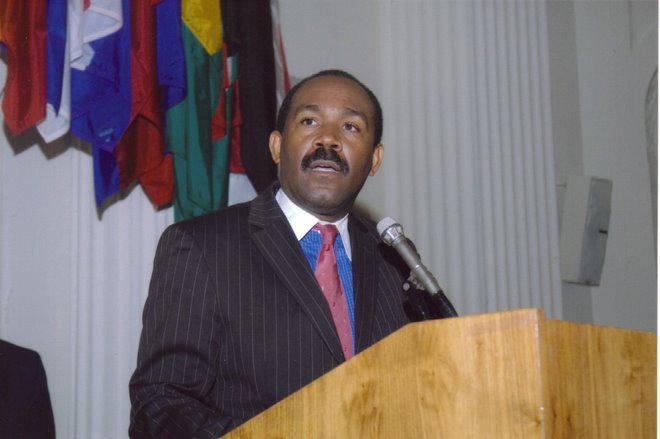
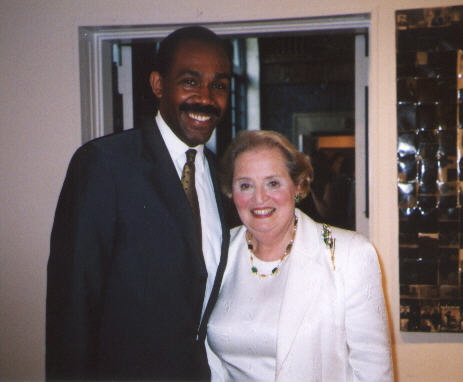
Stanley Lucas Architect and Co-organizer
Chairman of The Haitian Coalition
Co-Chairman of the Greater Washington Haiti Relief Committee
March 21-23, 2010
CONSOLIDATED RECOMMENDATIONS ANDREPORTS OF WORKSHOPS
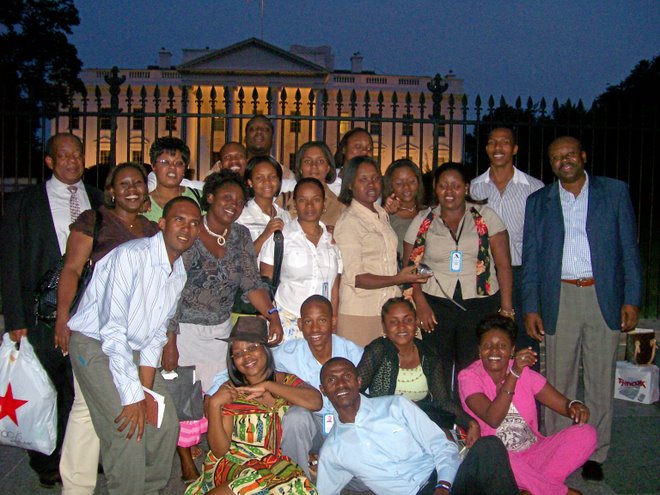
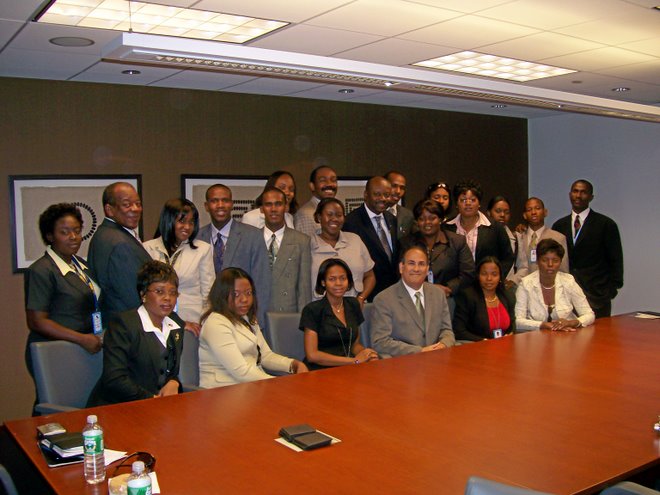
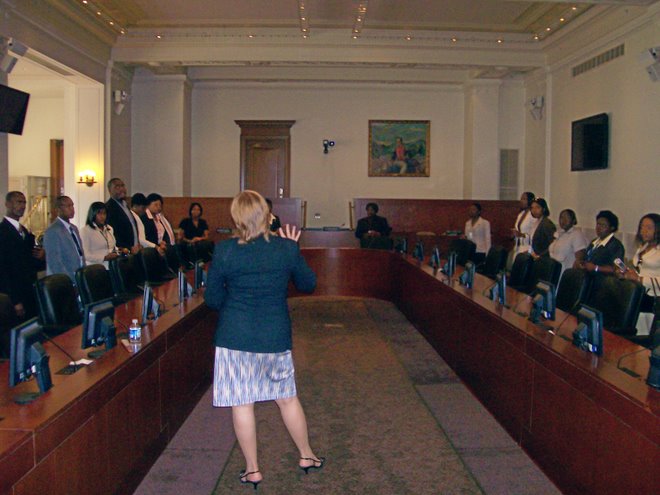
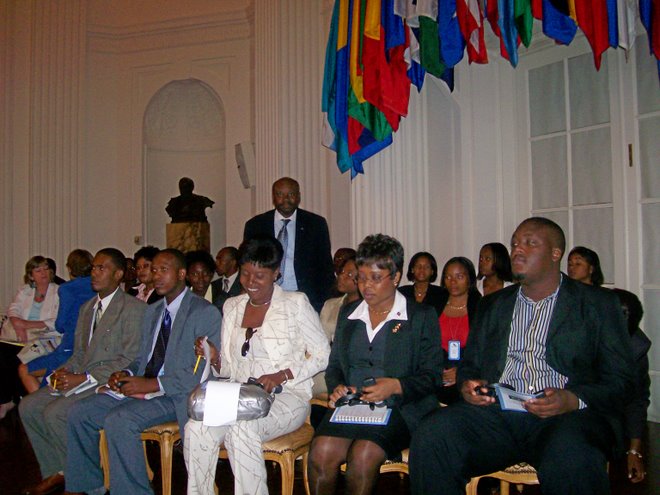
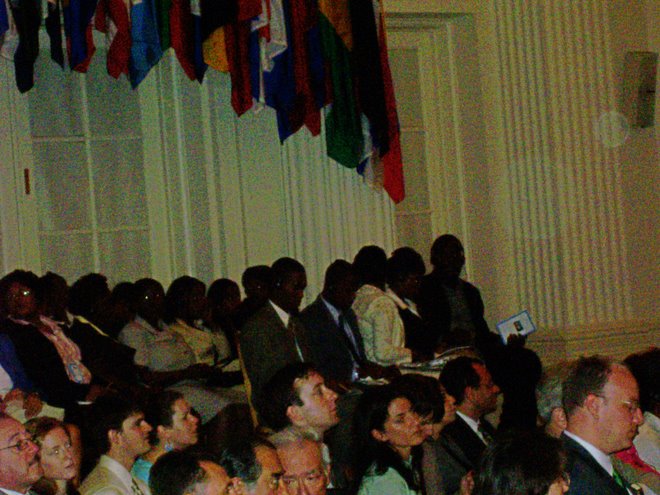
The Haitian Diaspora wishes to thank the Organization of American States (OAS) for convening some 400 representatives from the Haitian Diaspora in its headquarters in Washington, DC, from March 21-23, 2010, to submit recommendations to the Government of Haiti and donors ahead of the discussion to be held on March 31st, 2010 at the United Nations in New York, as part of its contribution into the elaboration of a strategic plan for the reconstruction and development of its homeland. Following are the recommendations that emanated from the two-day discussions:
URGENT HUMANITARIAN NEEDS AND EFFECTIVE DEPLOYMENT OF FOREIGN AID
The Diaspora acknowledges and supports efforts by the Government of Haiti (GOH) and the private sector to address the post-earthquake urgencies. It welcomes their insistence to the international community that, in purchasing food aid, preference be given to local producers and national suppliers in order to avoid the contraction of domestic production. It also welcomes efforts initiated with the help of the international community to assess the structural integrity of existing homes, and to implement cash for work programs.
The Diaspora would like to urge the GOH to:
R1. Collaborate with the international community to ensure that food distribution systems and shelter arrangements take into account social and cultural factors and respect the dignity of people (e.g. establish distribution schedules and community kitchens; keep lines short at distribution points; target vulnerable beneficiaries for special distribution channels including home delivery; uphold regional equity by extending distribution to areas that have welcomed the displaced population; etc.).
R2. Transform the idle time at the camps into educational opportunities and provide various trainings, including civic education for children, young adolescents and adults. At the same time, strengthen the educational infrastructure outside of Port-au-Prince including at higher educational levels.
R3. Seek the coordination of distribution efforts with all stakeholders, including local governments, international aid agencies, hometown associations and community groups in Haiti and abroad. Additionally, increase transparency and accountability by requiring aid agencies to publicize a detailed accounting of funds expended in Haiti.
R4. Given the fast-approaching rainy and hurricane season, seek the collaboration of aid agencies and local Haitian organizations to identify and prepare areas outside of Port-au-Prince that are less susceptible to natural disasters. Build seismic and cyclonic resistant temporary housing, such as modular housing and prefabricated homes. In the design of long-term housing and shelter plans, adopt and enforce seismic and cyclonic resistant building codes.
R5. Increase the effectiveness of humanitarian aid by empowering aid recipients through the extension of work for food and cash for work programs within the camps and throughout the critical areas, with a focus on the youth and women. Collaborate with aid agencies to assess periodically the humanitarian needs and the effectiveness of aid distribution within and outside of Port-au-Prince, including through feedback from beneficiaries.
ENSURING A DYNAMIC AND TRANSPARENT RECONSTRUCTION PROCESS
R6. Increase accountability through greater transparency and oversight of all reconstruction funds (public or private) with the creation of an Inspector General Office. Such Office shall be required to conduct audits and investigations to prevent fraud, waste and abuse, and shall report its findings publicly.
R7. Make best efforts to ensure that firms that are contracted in Haiti hire Haitian workers and contractors as a priority, including from the Diaspora, as a means to alleviate poverty, enable job training and creation, reverse the brain drain by expanding human capital that will, in turn, attract foreign investment.
R8. Recognize the importance of the Diaspora in the Haitian economy and, referencing the Plan d’Action pour le Relèvement et le Développement National (March 2010), yield to the Diaspora’s strong request for a full voting seat in la Commission Intérimaire pour la Reconstruction d’Haïti.
R9. Create a Civil Service Corps with the participation of Haitian nationals and the Diaspora, particularly women, to assist in the building process. Donors are encouraged to review their personnel’s legal framework with the view of facilitating the transfer or detail of Creole speaking employees to work on loan in Haiti.
ECONOMIC DEVELOPMENT
The Diaspora stands ready to play its part in the development of private capital vehicles for investing in Haiti such as social venture capital funds, and to bring to bear its multifaceted expertise in capital markets, technology, engineering, green energy, etc. The proposals of the Diaspora for a sustainable development are articulated around two themes: (i) greater involvement of the Diaspora and (ii) sector specific recommendations.
The Diaspora urges the GOH to:
R10. Set an ambitious but concrete and quantifiable goal for the short and medium run, particularly in terms of GDP growth (6% per year or more) and reduction of poverty.
R11. Work with donors to formally engage the Diaspora in the implementation and follow up of measures and recommendations for recovery and reconstruction. As such, create a platform for exchanging information and ensuring that (i) the Diaspora is updated on business opportunities as well as other developments and (ii) at the same time that the GOH is aware of resources available in the Diaspora (financial and human).
R12. Publicize eligibility and selection criteria for donor-funded projects and ensure greater participation of Haitian small and medium-sized enterprises (SMEs) and Diaspora investors. Moreover, create streamlined/expedited processes for business formation and license applications including a single point of entry for business proposals where investors can get responses from relevant authorities on firm timetables.
R13. Recognize dual nationality. Although the Diaspora understands that there are no legal impediments to investments, dual nationality will create greater inclusion and incentive.
R14. Increase accountability and transparency, and oversight of all funds with detailed reporting through a public information system and a reformed/strengthened judicial system.
R15. Have an updated and publicly available inventory of all NGOs operating on the national territory and a mapping of their activities and the sources of their funding.
R16. Promote green (solar, wind, ocean thermal and geothermal) and/or locally produced energy to achieve energy independence and security. Reduce electricity theft through wireless usage meter.
R17. Prioritize projects based on their contribution to decentralization, deconcentration, and the participation of women.
R18. Strengthen the role of the Investment Facilitation Center (Centre de Facilitation des Investments -CFI) and institute self-contained, automated regional branches to facilitate the establishment of corporations and investments directly outside the Port-au-Prince metropolitan area. Also, amplify the database within CFI of potential partners by sector.
R19. Create a mechanism to promote Haiti as a tourism destination even in the short term and to address all aspects of tourism security.
R20. Have a subaccount for the apparel industry within the framework of the Guarantee Fund which is currently being created. Moreover, create a mechanism to make credit readily available for the productive activities, particularly in the agricultural sector.
R21. Increase productivity by strengthening vocational training and targeting skills demanded by the market, while promoting the employment of women. This would include an assessment of available skills and needs by sector.
R22. Encourage innovation through the strengthening of intellectual property rights.
R23. Transform the rural landscape by promoting local farming to better compete with agricultural imports, by aggressively pursuing food security and promoting agro-exports and agro-industry (including vertical integration). Specifically, promote rural units of integrated production including aquaculture, livestock, light manufacturing, services, etc.
R24. Identify each region’s comparative advantage and invest accordingly. Provide for appropriate financing of development activities, particularly through the widening of the tax base.
STRENGTHENING GOVERNANCE
The Diaspora views institutional rebuilding and democratic governance consolidation as imperative. It believes that social justice, the rule of law, the respect of civil liberties and the protection of private property are key to creating an environment conducive to economic growth and development. Thus, it encourages the GOH to:
R25. Combat impunity and review immunity provisions in order to prosecute to the full extent of the law officials who have been perceived to abuse their privileges.
R26. Implement provisions of the Constitution with regards to decentralization.
R27. Adopt a realistic decision on the scheduling of the elections taking into consideration the special circumstances as a result of the earthquake. Collaborate with international partners and Diaspora organizations to put in place a mechanism to encourage greater participation of the Diaspora as electoral observers in all upcoming elections.
R28. Pursue the transfer of knowledge and expertise to help strengthen capacity through effective mechanisms such as (i) twinning/exchange programs with Diaspora professionals and through online communities and (ii) partnerships with academic centers for the training of civil servants.
SUSTAINABLE DEVELOPMENT, NATURAL DISASTER PREPAREDNESS AND MITIGATION
The Diaspora believes that natural disaster management should be a long-term priority of the state. If Haiti cannot control the likelihood of natural disasters, it must manage the ensuing vulnerability and risks. Hence, the GOH should:
R29. Strengthen the capacity of the country to react to catastrophes and manage natural disasters through the implementation of a national emergency action plan. Particularly, implement strict building codes.
R30. Reinforce La Direction de la Protection Civile through formal training of public servants at all levels in disaster-related fields. At the same time, implement programs for disaster preparedness and simulation exercises. For example, implement a web-enabled crisis information management system to provide real-time information sharing to improve the response to disasters.
SOCIAL DEVELOPMENT
Child Welfare
The Diaspora believes that laws and regulations that govern child abandonment, foster care, kinship care, domestic and inter-country adoption need to be modernized. Diaspora professional social workers and specialists in child welfare models as well as legal experts stand ready to consult and partner with the Ministry of Social Affairs, particularly l’Institut du Bien-Être Social et de Recherche (Institute for Social Welfare and Research), to provide training and technical support. NGOs working with children should be required to register with the Ministry prior to having access to children, and then be monitored by a set of guidelines.
The Diaspora makes the following recommendations for short-term improvements and long-term sustainability:
R31. Adopt the Hague Convention on the Protection of Children and Cooperation in Respect of Inter-country Adoption (Hague Adoption Convention), which aims to prevent the abduction, sale or traffic of children, and prioritize the adoption of children by Haitian families in Haiti and the Diaspora. Further, work with identified partners to develop culturally congruent education and training for those wishing to care for Haitian children in order to minimize additional trauma and maximize adaptive outcomes consistent with Haitian culture and values.
R32. Support family preservation to prevent child abandonment, by offering support services to families and/or extended families to care for their own children. Moreover, phase out the orphanage system through the re-integration of children into family/extended family like settings (i.e. foster care models).
R33. Create a central database of all children in out-of-family placement, where progress and services are recorded and tracked ---modeled after best practices.
Education
Members of the Diaspora who are in academia wish to collaborate with the government and the private sector to offer their services in implementing the following recommendations:
R34. Implement quality Universal Education For All (EFA) that assure equitable access to all children, including over-aged students and students with disabilities, that make no difference between rural and urban schools, that offer health and sports program, and civic education, that supply second-chance education (drop-outs and youths) as well as youth mentoring and adult literacy programs, and that provide free meals (breakfast and lunch), free transportation, potable water, uniforms, and school supplies. Such education will have to be provided in schools built on the basis of safe building codes and fitted with all modern sanitation and hygiene facilities.
R35. Strengthen the certification process of teachers and administrators, and implement (i) appropriate training structures to ensure their ongoing professional development and (ii) a mentoring and exchange program between Haiti and Diaspora teachers. Similarly, implement a program of adoption of Haiti schools and students by Diaspora schools and students. Such partnership should occur also at the higher learning level, and extended through collaboration with foreign universities. Moreover, provide incentives to teachers and administrators through decent wages and reasonable benefit packages.
R36. Design school programs that utilize result-based criteria and reflect national standards. Such programs should be culturally relevant (use of Creole), promote differentiated curricula (by age and ability level), foster STEM (Science, Technology, Engineering and Mathematics) program, uphold technologically friendly tools and conduits (distance learning, media, internet, etc.), and support post-secondary internships for workforce readiness, as well as school readiness programming through a community approach that leads to higher education and vocational training.
R37. Address the needs of all vulnerable groups (special education, orphans/unaccompanied minors, restavek/children in domesticity, exploited children, disabled youths, etc.). Further, implement psycho social support services.
Health Development
The need for medical attention and care has nearly tripled as a result of the seism; and the doubling of medical infrastructure and services is indispensable to avoid a major health care crisis. As a result, the Haitian government needs to:
R38. Increase Haiti’s medical and health care capacities to meet the actual and future needs of the population through a medical assistance program with the Haitian Diaspora where Haitians from abroad will provide their services for two weeks at time on a year round basis.
R39. Foster a partnership between Diaspora and local health care professionals to provide intense and modern technology training. Particularly, offer clinical mentorship programs to build technical and practical capacity for the numerous medical students who are no longer in school.
R40. Partner with universities as well as public and private hospitals to achieve uninterrupted medical service through clinical education. Further, maintain a medical residency and fellowship, focusing on diseases that are endemic to Haiti and the Caribbean (use of current technologies where continued training and support of Haitian doctors and nurses can be done through teleconferencing).
R41. Create a “mini-fellowship” fund in infectious diseases for local doctors and nurses.
R42. Strengthen family planning, women’s reproductive health and child health organizations, health centers in conjunction with the GOH. Special attention must be given to pregnant women living in precarious conditions in temporary shelters.
R43. Create mental health clinics to address the various post-earthquake traumas to provide therapy, especially to children and other vulnerable groups. Social workers from the Diaspora can be key in addressing this issue while understanding how culturally sensitive this is.
R44. Create therapy centers for the rehabilitation of thousands of amputees and for their reintegration in society.
R45. Urge donor countries to create a program to sponsor a certain number of students (a number to be agreed upon) per accredited medical schools per year during the period of reconstruction.
HAITIAN DIASPORA FORUM:
CONTRIBUTING TO A STRATEGIC PLAN FOR RECONSTRUCTION AND DEVELOPMENT IN HAITI
March 21-23, 2010
WORKSHOP RECOMMENDATIONS
The following recommendations were generated through dialogue among the Haitian Diaspora representatives within the framework of six workshops held as part of the Haitian Diaspora Forum: Contributing to a Strategic Plan for Reconstruction and Development in Haiti, which took place from March 21-23, 2010 at OAS Headquarters in Washington, D.C.
WORKSHOP 1: URGENT HUMANITARIAN NEEDS, EFFECTIVE DEPLOYMENT OF FOREIGN AID, AND EXPERIENCES FROM AROUND THE WORLD IN RECOVERING FROM AN EARTHQUAKE & CURRENT HUMANITARIAN CHALLENGES, DEPLOYMENT OF AID, AND RECOMMENDATIONS FROM THE DIASPORA ON HOW TO IMPROVE THE PROCESS
1. Food distribution
a. Distribute uncooked food in kits easily portable
b. Establish standard operating procedures (SOP) for food distribution that protects the dignity of the population and includes the most vulnerable, people with disabilities, for example
c. Food has to be distributed based on a schedule known to the beneficiaries
d. Establish relationships with Mayors and other Local Authorities and Organizations, particularly women’s groups, to support distribution
e. Identify criterion such as efficiency and transparency in the choice of local partners in Haiti;
f. Promote local agriculture by distributing locally produced food
g. Include aid distribution in areas beyond Port-au-Prince, which have welcomed displaced people
h. Encourage the use of community kitchens in camps
2. Working with the International Community
a. Cooperation must be multilateral
b. International cooperation and OAS inter-American disaster mitigation: Early warning system, risk management and post standard for construction. Sustainability of progress
c. Principles to keep into account: Deepen democracy, peace, security, and the strengthening of institutions
d. All actors, from public and private sectors, must be involved in the reconstruction process: local, national and international
3. Shelter
a. Immediate relocation of displaced Haitians because of the rainy season
b. Solicit the assistance of the US Corps of engineer to rapidly relocate populations
c. Cannot move people from one disaster area into another. Evacuate people from Port of Prince as soon as possible, before the raining season (to higher areas in Haiti). However, the houses and the areas must be ready for the people to move before they do.
d. Haïti doit reconstruire plus petit mais plus solide
e. Have shelters like the ones build for Katrina victims in New Orleans (Dormatories)
f. Consider more resistant shelters – other than just the short-term tents
g. Registration form to identify camp population
h. Look for transitional/temporary housing
i. Improve security environment in camps
4. In relation to the use of the money
a. Transparency is necessary to avoid frustration and doubt;
b. Be sure that money goes to organizations able to provide credible reports;
5. In relation with coordination and capacity of interventions
a. Promote preparedness so as to facilitate quick and efficient response;
b. Promote Coordination between competent Agencies through the use of Emergency Management Sofwares (web EOC).
c. Coordination should be before coming to Haiti. We have had two mistakes, one the lack of resources, and then, we are receiving resources we don’t need. In this sense, coordination should be done in advance.
d. Make assessments about what is needed before requesting and receiving (example: clothes for adults and kids receive in an improper manner making it hard to distribute).
e. Ensure that the beneficiaries’ voice is taken into account to get regular feedback on the effectiveness of aid distribution; include a voice in cluster meetings.
f. Strengthen Haitian NGOs on the ground.
g. Foster employment: Putting Haitians back to work in close coordination with the civil society, the Haitian Government, and the International Community.
h. Encourage legislators and cooperation agencies to keep aid organizations and other aid providers accountable by requiring that a feedback loop be created to verify the effectiveness of aid programs with beneficiaries.
6. Need to reunify families – community organization
a. Reunite families and re-start building communities. To build communities, families need to receive the proper conditions (transportation, literacy, health, food distribution, civil and community education, water systems, recreation areas, waste management, among other basic needs), in order to transit to a new society and to a new way of life for Haitians.
b. Empowering people and victims become workers, community facilitation.
c. Employment: cash for work program to clean the drainage to avoid disaster during the rainy season
d. Put Haitian back to work – regain dignity
7. In relation with the intervention capacity
a. The civil protection needs to have its own capacity.
8. In relation with the diaspora
a. La diaspora a un avantage: la connaissance du pays. Celle-ci doit etre exploitee
b. Database for people able to help for the reconstruction of the country
c. Make in place a corps of volunteer including the diaspora
d. The diaspora must be involved (communications)
9. Coordination de la diaspora
a. Voter positivement pour la fédération de la diaspora
b. Regroupement – actions par commune
c. Promote network
10. Other recommendations:
a. Absolutely take into account the long-term implications of aid distribution so that population eventually becomes self-sufficient (i.e. consider agricultural industry) and not wholly dependent on economic aid.
b. Give them an incentive to do activities (job creation), especially building homes and also inside the camps (for example, people to work within the camps)
c. Haitians are willing to find ways to work efficiently and strive for our country’s development. We welcome international help but we don’t have to put any blame or claim in support of organizations if they don’t come on time or in an appropriate way. Haitians to develop our country in respect to our motto: “L’union fait la force”
d. Recommendations put together by the Montreal Diaspora can be found at www.grahn.net e. Promote tourism.
f. Little plans and projects are ok, but massive action is needed.
g. Establishing of a central national agency to coordinate investment and manage reconstruction efforts. Channeling reconstruction funds and efforts directly to communities.
h. Make simulation exercises with the population for preparedeness of disasters.
i. Youth have to be involved in this process that will serve as therapy in terms of providing literacy and civic education, organizing food and/or goods distribution.
j. Need to create the environment so that investors perceive liberty to invest in the country.
11. Les mots d’ordre à retenir (Rep. From the Ministry):
a. Préparer la saison cyclonique et la saison de pluies 2010 (identifier les zones à risqué, sécuriser les populations affectées par le tremblement de terre, renforcer les systems d’alerte précoces et d’évacuation, reconstruir les infrastructures du secteur et augmenter les capacities du niveau national, des equipes départamentales, communales et locales).
b. Systematiquement incluir les aspects environmentaux dans toutes les décisions en rapport avec le relèvement et le développement.
c. Incluire la gestión des risques et des désastres dans les mesures de tous les secteurs (code de construction, assurance, consolidation et budget de fonctionnement, plans de contingences et continuités des activitités).
d. Le défi que le pays doit aujourd’hui relever est de parvenir à reduire les pertes de PIB en changeant de paradigme par la promotion et l’adoption de mesaures eficaces telles que: intégration de la gestión des risques dans les programmes de développement, integration de la gestión des risques dans le cursus scolaire et universitaire, intégration de la gestión des risques dans l’aménagement du territoire.
WORKSHOP 2: ENSURING A DYNAMIC AND TRANSPARENT RECONSTRUCTION PROCESS
Participants of the workshop consisted of architects, engineers, project managers, curators and human rights activists from the United States, Canada, Haiti, France and elsewhere. Sustainable development efforts that include green building, harnessing solar energy, use of indigenous building materials and the incorporation of Haitian esthetic sensibilities and other design issues are imbedded in the pragmatic and philosophic viewpoints of this particular workshop.
By taking serious ownership of the process, participants quickly acknowledged the urgency on the ground – namely the need to provide immediate and significant temporary shelter solutions to internally displaced persons as long terms answers are sought.
Workshop participants elected to focus on five keys recommendations to ensure a more organic and transparent reconstruction process in Haiti. They include but are not limited to the following matters that emphasize transparency, accountability, compliance, inclusion and the mitigation of corruption:
1. The need for an Inspector General to oversee the procurement process for contracts relative to the built environment, NGO funding, and other transactional relations is strongly prioritized and recommended for issues such as:
a. How the biding process is organized;
b. Bid selections and notifications;
c. How contract generation is facilitated and managed;
d. Control of building and infrastructure compliance and regulations including safe zones [or earthquake free areas;]
e. Ensuring accountability, transparency, responsibility and compliance from top to bottom through the duration of building processes;
f. Accountability of NGO’s in Haiti.
2. The Inspector General (IG) whose post is potentially accounted for via the Executive Directors post in the Interim Haitian Recovery Commission (the pre-cursor of the Haitian Development Authority) would have the following duties and responsibilities:
a. Provide for the independent and objective execution and supervision of audits and investigations;
b. Provide objective leadership and coordination of and recommendations on policies designed to promote economy, efficiency, and effectiveness in management of Haiti’s reconstruction programs and operations, prevent and detect fraud, waste, and abuse;
c. Review existing and proposed legislation and regulations and make appropriate recommendations;
d. Maintain effective working relationships with other government agencies and non-government organizations regarding oversight in Haiti;
e. Report irregularities to appropriate stakeholders;
f. Submit reports in a consistent and timely fashion to relevant stakeholders in the Haitian redevelopment process.
3. Mechanism to develop strategic partnerships with Haitian nationals and Haitians of the Diaspora for meaningful, sustainable, mutually beneficial and inclusive procurement and bidding processes is urged of the donor community. A goal of 40% (25% minimum) must be “set aside” or accounted for to make sure that when non-Haitian firms are hired, they have Haitian nationals and her Diaspora at the table if not as primary, then as secondary or sub-contractors to rebuilding efforts. This is especially important as capital is sought and joint ventures within the Haitian community-at-large are created to further enable participation in larger procurement contracts. This methodology aims to alleviate poverty in the country, enables job training and creation; reverses the brain drain by expanding human capital exponentially and attracting foreign investment.
4. Emboldened by the OAS Haitian Diaspora Forum, the Diaspora recognizes the magnitude of its remittances to the Haitian Republic and how those contributions totaling $2 billion dollars annually allots for 30% of the GNP of Haiti. With the creation of the Interim Haitian Recovery Commission that seeks to spend hundreds of millions of dollars over the next 18 months in rebuilding efforts, we in the Diaspora recognize that we are the single largest donor to Haiti, as such, we strongly urge our current seat as a formal “observer” to the Commission’s work be up-graded to a full voting seat in the interest of equity, parity and accountability.
5. Relative to the Interim Haitian Recovery Commission is the Multi-donor Trust Fund with some 18 members that may have the World Bank pooling donor dollars towards reconstruction. There are no members of the Haitian Diaspora on the Commission. We formally request two (2) voting seats for the Haitian Diaspora on the Multi-donor Trust Fund (MDTF). This is strongly recommended.
6. An architectural term applied to this exercise is the “scaling up” of skills in terms of capacity building, technical assistance, professional development and apprenticeship programs that expand and sustain the building process. This notion speaks to enabling a design and build process in Haiti that necessitates serious vocational preparation or training; further refinement of existing skill sets; advanced management; technology and other tools for a rebuilding process that will meaningfully include Haitian nationals and members of the Diaspora. Expansion of skill sets also encourages putting exacting systems in place to manage the overall process. To that end, built environment professionals propose creation of a Civil Service and Professional Support unit that consists of Haitians, Haitians descendents, and members of the Diaspora.
7. In conclusion, Haitian nationals and the Haitian Diaspora possess the intellectual and creative capital to rebuild the country towards prosperity. Resources in the form of training, financial capital, re-enfranchisement of its citizenship, repatriation, technical assistance, investment in schools, education, health, cultural patrimony and the environment must be made by the Haitian government to buoy the unprecedented talent, efforts at resource mobilization, political will, vision and courage at its disposal. The Haitian government must facilitate the enrichment of Haitians first: practically, spiritually, morally, economically and intellectually before it enables this for others. Inclusionary processes, implementation of best practices, transparency and good governance enable our collective move towards progressive and sustainable change.
WORKSHOP 3: STRENGTHENING GOVERNANCE
The Haitian Diaspora is cognizant of the fact that numerous studies have been conducted and many solutions have been proposed over the years to strengthen governance and the justice system in Haiti. The Diaspora proposes a fresh approach, seizing on the opportunity presented by the disaster of January 12 to build a better and stronger Haiti. Members of the Diaspora strongly urges that that any Justice Sector/Governance initiatives in Haiti be organically conceived and implemented, and encompass working with all levels of the Haitian government, beginning with the smallest township authorities to highest level officials in the three branches of government, but not neglecting other domestic actors, including school age children and post-secondary students, on their role in having a justice and governmental system that works for all. These efforts must be long term, as past experiences have shown that short term efforts generally only yield short term results.
We urge all stakeholders involved in the reconstruction of Haiti to make full use of the Diaspora: the Diaspora is poised to play a significant role, offering its professional skills, cultural awareness and language capabilities, to work both in Haiti, within Haitian governmental institutions and the foreign and local NGO communities; as well as in the donor countries with governmental, nongovernmental and private entities involved in the reconstruction process. The use of Haitian professionals of the Diaspora shall be in the same manner and with similar remuneration as transfers, details, or employment of non Diaspora members.
The goal is not to duplicate nor supplant the much needed long term changes to the GOH Civil Service career track, and the need for a larger programmatic objective of reversing the brain drain in Haiti; instead it is designed to address the immediate and short-term human resource needs that currently exist in Haiti.
1. Institutional rebuilding and democratic governance consolidation
a. Constitutional Reform: while constitutional reform is important, the immediate and basic needs of the Haitians on the ground must be the primary focus of the reconstruction strategy. However, we urge the GOH to continue the process of reforming the Constitution, recognizing that the new provisions will not take effect immediately. In addition, the aspiration is that as the new Constitution is contemplated, the drafters consider eliminating the constitutional provision granting what amounts to absolute immunity from prosecution to parliamentary and high government officials; officials involved in wrongdoing must be held accountable like every other citizen, they should not be shielded by immunity.
b. Decentralization: We urge the GOH to give full force and effect to constitutional provisions regarding decentralization, and this must occur with all deliberate speed. The decentralization process must include providing the necessary competencies (legal authority to get things done) and resources (funds) needed to effectuate it.
c. Elections: Political stability is the cornerstone of any prosperous nation, and Haiti must provide political stability to its citizens, local and foreign investors, partners in the reconstruction effort and geographic neighbors. We urge the government of Haiti to find a solution to the potential destabilizing political climate that is forthcoming as the term of the lower Chamber of Parliament and some members of the Senate expires in May 2010, and that of President Preval and his cabinet in February 2011. In that light, Members of the Diaspora have called for free and fair elections to be held as soon as possible, possibly at the end this calendar year, but certainly before February 7, 2011, to ensure an effective transfer of power to a legitimate constitutional government. Others in the Diaspora recognize that these are extraordinary time and election s may not be possible, in that case, an alternative form of government is urged (such as an Assemblée Constituante) that would govern the country until free and fair elections can be organized. In any event, a survey of the population should be conducted to assess whether the Haitians living on the ground believe it is best to hold elections between now and February, or schedule them for later.
d. We urge the domestic entities organizing the elections as well as the international donors supporting them to make full use of the Diaspora as Election Observers in all upcoming elections.
2. Increasing the State’s capacity in governance matters
Any reconstruction strategy must prioritize strengthening State institutions so they become able to provide basic services to the citizens of Haiti as soon as possible. The Diaspora can serve as a bridge between the donor and NGO communities abroad, and the Government and people of Haiti on the ground, to effectuate that goal, through the following initiatives:
a. Train the trainers initiatives, using the skills of Kreyòl speaking Diaspora members whenever possible
b. Partnerships between the GOH, the Diaspora, and donor communities through, for example:
· Twinning programs/exchange programs between Diaspora professionals and the national and local governments in Haiti;
· Creation of online communities of practice;
· Use of an open source database of Diaspora expertise (not owned by any one organization)
c. Partnerships with academic centers, such as Haitian and foreign universities, for practical training programs for government officials
d. Help increase the capacity of the GOH through programs that promote accountability, transparency, combat impunity, establish watchdog organizations both in Haiti and in the Diaspora, but also provide strong incentives for good governance.
e. As relief efforts continue and reconstruction efforts take shape, we urge the GOH and donor countries to institute a rigorus evaluation and monitoring mechanism for all program activities in order to ensure that implementing entities are accountable for the results desired.
f. Establishment of a Civil Servant career track
g. Support of a strong and sound educational system in Haiti that will strengthen the capacity of all in Haiti
h. Establishment of a Civic Engagement Board to facilitate input from all segments of society, including the Diaspora
i. Integration of a structure of the Diaspora within the Ministry of Haitians Living Abroad
3. Rule of Law and Public Security
Prior to the earthquake, the weaknesses of Haiti’s criminal justice institutions were well known to all, domestic and international actors alike. Haiti’s laws are antiquated, the system is slow and burdensome, the detention facilities and prisons are overcrowded, justice sector personnel are not well trained, equipped, or supported, the experience gaps in middle management is pronounced, and corruption plague the system. These weaknesses have been exacerbated by the collapse of the Ministry of Justice building, the destruction of courthouses, police stations, and detention and correctional facilities in the earthquake zone. In the aftermath of the quake, the escape of more than 4,000 detainees and prisoners from the National Penitentiary and detainees now pose a domestic security threat for an already weak justice sector. While a lot progress in reducing crime was made by the Haitian National Police, with the support of MINUSTAH, in previous year, more needs to be done to professionalize the police in order to address emerging threats.
The Haitian Diaspora, at its March 2010 conference in Washington, DC, renewed its commitment to assist Haiti in the reconstruction effort by drawing on the thousands of professionals within it ranks. To that end, we offer the following specific recommendation:
a. The Government of Haiti should implement without delay the three laws enacted in 2007 establishing an independent judiciary.
b. The Government of Haiti should accelerate the reform of Haiti’s criminal laws and criminal procedure, and donors should increase their financial assistance in support of the same.
c. The Government of Haiti should, with donor support, take immediate steps to reform its civil code (e.g., contract, labor, and property, environmental) in order to facilitate economic growth, create jobs, pull citizens out of poverty, and foster a safe and secure environment for all Haitians to prosper.
d. The Government of Haiti should increase the number of judges, prosecutors, police, and corrections officers, and other court personnel, and with donor support, train them to meet post-earthquake law enforcement and economic development requirements.
e. The Government of Haiti, as it reforms the country’s justice system, should strengthen the capacity of its Ministries, including the Ministry of Justice and Public Security, to support national government institutions operating in local communities, and to develop and train a core of middle managers to assume leadership roles within their organizations.
f. The Government of Haiti should, with the support of the international community, develop a correctional system that consistently meets international standards.
g. The Government of Haiti should establish a robust anticorruption regime, staffed by properly vetted personnel charged with enforcing laws with severe penalties, including the suspension or revocation of the visa of public officials formally charged with corruption.
h. Donors should resolve and make it a high priority to utilize, in the first instance, police, attorneys, corrections and other justice sector (rule of law) professionals within the Haitian Diaspora in implementing all the above mentioned reform initiatives.
WORKSHOP 4: SUSTAINABLE DEVELOPMENT AND NATURAL DISASTER PREPAREDNESS AND MITIGATION
Les recommandations de cet atelier reposent sur le constat que la plupart des Haïtiens de l’intérieur, pour des raisons diverses, rêvent de quitter le pays, tandis que la majorité de la diaspora rêvent de rentrer de rentrer, sinon définitivement, du moins le plus souvent possible, au pays. La question se posait alors de savoir quelle était la logique de notre rapport au territoire, où était nous voulions vivre. A bien observer les pratiques communes et évaluer la mobilité des biens et des personnes, on s’avise que notre rapport au pays dépasse le cadre étroit du territoire national. La crise ouverte par le séisme a fait de la question haïtienne une cause internationale où se trouve engagée la responsabilité de toute une génération, au-delà des frontières de la République d’Haïti. Cela concerne aussi bien les Haïtiens qui ont quitté le pays (et qui représentent une population de plus de trois millions d’habitants en 2010), leurs descendants que les Haïtiens de l’âme, amis étrangers qui voient dans l’avenir de ce peuple prophétique une cause universelle digne de leur solennel engagement.
Aussi avons-nous guidé nos travaux sur l’idée que nous voulions participer à la tâche commune la posture de citoyens concernés, non pour donner des ordres ni dessiner à la place des Haïtiens le schéma de leur vie, mais pour aider à la réalisation d’une œuvre commune, fondée sur un plan concerté et rationnel afin de répondre à l’urgence de la crise ouverte par le séisme dans un premier temps, puis de jeter les bases d’un développement durable à plus long terme.
Nos propositions se résument en quatre points qui insistent sur:
· La gestion de l’urgence liée à l’aléa
· La gestion du risque lié à la vulnérabilité de la population
· La nécessité d’un schéma directeur d’aménagement et de développement durable du territoire
a. Après les experiences passées qui ont révélé la gravite de la situation, il faut veiller à la production de l’information pertinente pour anticiper la catastrophe. La premiere chose a faire : mettre en place une culture du risque au sein de l’administration, sans attendre, c’est dans l’urgence que se fait l’apprentissage nécessaire à l’amélioration des techniques de secours.
b. Dire aux gens quelles sont les attitudes à adopter dans l’urgence de la situation, sur le plan sanitaire, sur le plan relationnel, sur l’encadrement des personnes traumatisées, l’accompagnement et la prise en charge des personnes mutilées, des enfants en particulier, etc.
c. La radio doit être utilisée de facon systématique car c ‘est le média le plus accessible en Haiti.
d. Haïti est un pays de plans et de projets dans lendemain, cela ne suffit plus, il faut passer à l’action rationnelle, urgence oblige. Il faut établir un climat de confiance entre la population et les autorités par la divulgation du Plan national d’intervention d’urgence et de gestion des risques. Un tel document doit être consultable par chacun. C’est la condition de la diffusion de la culture du risque et de sa prise en compte réelle dans l’aménagement concerté du territoire. Cela implique que tous les partenaires et acteurs sociaux ont accès à la même qualité de l’information nécessaire aux prises de décisions importantes.
e. Il faut développer un système de recrutement et de formation d’un corps actif de volontaires bénévoles mobilisables sans délai. Cela pourrait se faire dans le cadre d’un service civil post-baccalauréat pour les jeunes gens et jeunes filles en fin d’études secondaires ou universitaires de façon à valoriser toutes les compétences.
f. Il faut former les secouristes haïtiens selon les standards internationaux de façon à faciliter l’articulation avec les volontaires internationaux et éventuellement participer eux-mêmes à des opérations de secours dans des pays étrangers, là où l’urgence se présente, ce sera une façon pour Haïti d’exprimer sa gratitude envers l’empathie universelle manifestée à l’occasion du séisme du 12 janvier 2010.
g. Il faut une plateforme qui permette la diffusion de l’information. Des plans d’urgence doivent être imaginés sous la forme de scénarios possibles en de catastrophe.
h. Définir une échelle dans les niveaux d’alerte et à chaque situation avoir un scénario crédible et clair, accessible à la population.
i. Il faut mettre en place un système de surveillance par GPS, comme moyen de prévention des seismes. 75 000 dollars ont été récoltés ici a Washington dc en 2001 pour acheter des équipement et les acheminer dans le pays. Il faut mobiliser les élèves et
j. Mettre en place un système sinon d’adduction mais d’acheminement d’eau et d’assainissement d’urgence. L’eau doit être un objet central de nos préoccupations à court et long terme. Multiplier les Citernes et fontaines publiques, mettre en place un plan de soins adaptés à la réalité des camps de réfugiés qui ne doivent pas devenir de fait de nouveaux bidonvilles au cœur de la cité. Le Champs de Mars n’a pas vocation à devenir un bidonville.
k. Il faut éduquer également les enfants, leur montrer comment créer des abris, comment y accéder le plus rapidement.
l. Il faut avoir tout de suite un plan d’occupation des sols, nécessaire à la mise en défens de certaines zones : les versants les plus pentus, les zones de mangrove.
m. Un parc marin pour protéger le golfe de Port-au-Prince et protéger l’avifaune de la mangrove durement éprouvée par l’envasement de la baie.
n. Il faut renforcer la capacité d’intervention des professionnels, des ingénieurs et des architectes en particuliers par une responsabilisation accrue, ce qui implique l’existence de normes admises et sanctions pénales en cas de non-conformité des permis de construire.
En bref.
L’information en cas de désastre/un plan est necessaire /la communication entre les segments de la population/le savoir doit être mieux approprié/la mise en place d’un systeme de défense civile fondée sur le volontariat et le bénévolat/lq cartographie des endommagements/la rénovation urbaine est une nécessité/
2. Gestion de la vulnerabilite
a. La vulnérabilite est a la fois physique et sociale. Il faut une carte de représentation du risque. La vulnérabilite est liée à la fois aux cyclones et aux séismes. Les facteurs de vulnérabilité sont aussi parfois des atouts: comme l’eau.
b. Il faut réaliser un plan national de réduction du risque, un plan de gestion durable, qui dépasse la temporalité d’un gouvernement quel qu’il soit. Une politique nationale doit être adossée à une legislation adaptee en vue d’un plam de gestion durable. Ainsi, de proche en proche, on peut prendre en compte les préoccupations sectorielles et locales.
c. Il faut définir un Schéma Directeur d’Aménagement du Territoire, articulé en trois échelles : une échelle régionale, une échelle municipale et une échelle locale. Il faut contrebalancer la macrocéphalie de portoprincienne par le renforcement de trois ou quatre métropoles d’équilibre vers lesquels orienter les investissements par une politique d’incitation fiscale. Il faut reconstruire les villes dont les rues et les voies ne sont pas formalisées. Les secours n’ont pas pu être acheminés à temps parce que les venelles sont difficiles d’accès aux camions de secours. Il faut cesser de construire la ville à l’inverse de l’ordre rationnel : les maisons s’entassent d’abord sans ordre et sans services, après on se rend compte qu’elles sont inaccessibles et dépourvues de services de base. Il faut garantir la fourniture de services de base aux communautés rurales qui représentent plus de 60% de la population du pays.
d. Il faut imposer des normes de construction. Il faut des plu locaux qui soient interactifs et capable de représenter un pal d’intervention d’urgence.
e. Le Chili est un exemple de diffusion d’une culture du risque efficiente qu’il faut avoir comme modèle.
f. Il faut penser aussi à l’aspect culturel de la vulnérabilite. Il faut penser à la culture de ceux qui sont appelés à appliquer les principes de la culture du risque. Il faut expliquer au peuple le pourquoi des mesures adoptées dans l’intérêt commun, c’est le seul moyen d’obtenir des résultats dans le changement des attitudes communes.
g. Il est important d’associer aux décisions la base, celle des associations populaires qui comme à Fondwa , Pandiassou, Fonkoze, des expérieneces pionnières comme le Lèt a gogo, etc. ont mis en place des stratégies de développement local dont les résultats sont encourageants et aidé à insuffler un regain de rersponsabilité dans le monde rural haïtien.
h. Il faut renforcer les capacités des collectivités locales.
i. DINEPA direction nationale plan d’assainissement et d’eau potable est un élément central du développement depuis 2009. Elle a fait les preuves de sa capacite de coordination dans la crise. Depuis deux ans et demi, la DINEPA a fait montre d’une meilleure organisation publique. La diaspora peut participer à son renforcement par la mise à disposition d’experts et de finances appropriées à une gestion à long terme.
En bref.
Il faut la mise en défens de certaines zones/les normes de constructions doivent être appliquées/les imageries satellitales doivent être utilisées dans les politiques de prévention/la population doit être actrice engagée dans le développement/les institutions doivent être renforcées et l’application des lois encouragées/ il faut mettre en place un système d’alerte efficace/ il faut une chaîne de responsabilité et des sanctions pour que les cadres se sentent tenus par leur engagement dans le service public/ les défaillances humaines doivent être punies et les sanctions exemplaires, à la mesure des enjeux humains et matériels.
3. Rôle de la diaspora
a. La diaspora doit aider à ameliorer la situation intérieure par le transfert des compétences.
b. Il faut faciliter les missions des Haitiens de la diaspora pour partager les compétences. Il faut encourager le volontariat et valoriser l’engagement en faveur d’Haïti. Il faut un programme et un plan d’intervention d’urgence articulé à celui du pays natal.
c. Il faut une traçabilite des fonds envoyés par la diaspora en Haiti. Un rapport précis et circonstancié de l’argent dépensé doit être accessible.
d. La diaspora peut aider à la formation des opérateurs de secours. L’expérience du carnaval 2009 est un succès : seulement un mort par accident, grâce a l’apprentissage de 200 volontaires de premiers soins l’année précédente dans le cadre d’une mission de formateurs volontaires issus de la diaspora.
e. L’assistance financière est acquise, plus de 1,3 millions de dollars par an, ce qu’il faut désormais, c’est l’assistance technique et sociale. La construction doit être un secteur clé du développement des relations entre la diaspora et le pays natal. Elle peut aider à la mise en place d’un centre de formation et de renforcement des capacités des métiers du bâtiment ou associés au génie civil en général.
f. La diaspora propose de créer un fonds en faveur d’un memorial en souvenir des victimes du séisme. Il faut inscrire dans la mémoire la catastrophe. « Bay kou bliye pote mak sonje » dit un proverbe créole.
g. Les universités étrangères (les universités francophones de l’Agence Universitaire de la Francophonier, pour des raisons de communauté linguistique évidentes, celles des Etats-Unis, du Canada et de la République dominicaine, pour des raisons géographiques de proximité) sont déjà très engagées aux côtés des universités haïtiennes, publiques et privées. La diaspora peut mobiliser des ressources en faveur de ces collaborations multiples qui sont des passerelles de connaissances et de compétences et de savoir-faire.
h. L’OEA en 2004 avait aidé au retour de 90 à 200 membres de la diaspora pour aider le pays: un tel programme pourrait etre systematisé.
i. Il faut travailler ensemble, en synergie avec le pays du dedans. La diaspora a devoir d’humilité, mais aussi un droit de regard sur les décisions qui engagent l’avenir de leurs familles restées au pays.
j. Comment envisager le retour des émigrés les plus formés?
k. Il faut un pont entre la diaspora et le ministère en charge de la gestion des risques en Haiti. Il faut un plan de disponibilité des médecins et professionnels haitiens, il faut utiliser les réseaux sociaux pour faire circuler l’information pertinente en temps utile.
l. il faut instaurer sans délai le droit à la double nationalité de tous les Haïtiens, ceux qui sont nés Haïtiens et ceux qui le deviennent par choix ou filiation directe.
En bref
La diaspora doit etre organisée de facon organique/le transfert des competences et des connaissances doit etre encourage/les transferts financiers sont importants, mais ils pourraient etre egalement techniques et scientifiques/il faut construire un memorial des disparus de la catastrophe, c’est la condition de la diffusion d’une authentique culture du risque/il faut une participation de la diaspora a la vie politique du pays natal/ des passerelles doivent etre etablies avec les ministeres pour faire face aux problems/ il faut ameliorer l’integration entre le pays interieur et la diaspora de facon a travailler de conserve et non pas de facon concurrentielle.
4. Plan de developpement durable
a. Il faut distinguer entre les aléas physiques et les enjeux économiques et sociaux : les aléas sont connus et peuvent être analyses indépendamment de la société, mais les enjeux sont directement corrélés aux préoccupations sociales. Les pauvres tiennent autant a leurs bicoques de fortune que les riches a leurs palaces, une politique publique de developpement durable doit prendre en compte les interêts des personnes d’abord, leur vouloir vivre ensemble. Il faut reloger autant que possible les gens selon des règles de solidarité vicinale de façon à maintenir les liens anciens. Les même communauté de vie peuvent être regroupés dans des logements salubres ailleurs que sur le site d’origine. Ce souci de regroupement est propice à l’équilibre psychologique à long terme de la population.
b. Les politiques publiques haitiennes ont ete le plus souvent des politiques d’urgence, il faut imaginer des politiques de developpement sur le long terme.
c. Il faut une banque de developpement et de reconstruction. Il y a un manque crucial au niveau du pays : une banque de la diaspora serait la bienvenue. Cela donnerait un plus grand accès au crédit en vue de la réalisation d’investissements productifs.
d. Il faut une politique d’amélioration des infrastructures : des autoroutes reliant les capitales régionales et les grandes villes de province. Des routes pour désenclaver les campagnes.
e. Il faut valoriser les secteurs ou le pays dispose d’avantages comparatives : par exemple, les exportations de produits d’élevage (cabrits et de pintades vivants en Republique dominicaine), la musique, la peinture, la sculpture et tout l’artisanat d’art, etc. Il faut diffuser l’information économique aux entrepreneurs et aux petits producteurs.
f. Il faut empêcher que les gens recommenecnt à construire de la même façon qu’avant. Des mesures drastiques doivent être prises.
g. Il faut distinguer entre les plans d’urgence et les plans de gestion durable. Les priorités, ce sont la production alimentaire, puis le relogement des personnes déplacées, il faut encourager le micro crédit.
h. La terre manque aux paysans entrepreneurs pour développer une production agricole durable. Les paysans sont traditionnellement considérés comme des pauvres a la périphérie de l’économie réelle. Il faut renverser la tendance et renforcer la tenure fonciere et les compétences des agriculteurs.
i. Il faut recourrir aux energies nouvelles comme secteur prioritaire : il faut encourager le recours aux energies renouvelables . Il faut des incitations et des subventions publiques pour encourager le recours à des ressources nouvelles (solaire, eolienne, biocarburant, etc.).
j. Il faut une politique de decentralisation et de developpement industriel sous la forme de technopoles ou les TIC occupent une place centrale. C’est le moyen de trouver la meilleure articulation entre la formation, l’enseignement supérieur et la production : des universities de pointe au service d’entreprises tournées vers la production de produits à haute valeur ajoutee destinées a l’exportation.
k. Une technopole metropolitaine dans la region de Port-au-Prince, adossée à un Campus Universitaire International (CUI) et des technopoles regionales, des pôles universitaires régionaux, de moindre envergure mais capables de drainer dans les principales villes de provinces, érigées en métropoles d’équilibre, les forces vives necessaries au rééquilibrage du tissu economique national.
En bref.
Il faut organiser le systeme educatif en vue d’une politique de développement/il faut encourager les technologies de l’information et de la communication/il faut lutter contre la pauvreté par la facilitation des mécanismes d’acces au credit et à la connaissance/il faut renforcer les infrastructures de communications et de télécommunication/il faut renforcer l’agriculture vivrière/ il faut un mécanisme public d’intervention pour la mise en place de plan d’intervention d’urgence/ il faut la mise en place d’un systeme d’alerte en cas de désastre.
WORKSHOP 5: ECONOMIC DEVELOPMENT
The Workshop on Economic Development (and Job Creation) is considered by the Diaspora as a consultancy forum and the recommendations formulated by participants can be regrouped under three themes.
1. To have a greater involvement of the Diaspora in the definition, implementation and monitoring of economic policy and development initiatives through the following points:
a. Create a Peace Corps model in every country where Haitians and people of Haitian origins can offer their services free of charge to Haitians and Haiti (foreign governments);
b. Increase the level of participation of the Diaspora in the Sister City Initiative in order to strengthen economic development and institutional capacity;
c. Fix an ambitious but concrete quantifiable goal for the short and medium term for example in terms of GDP growth (6% per year or more) and reduction of poverty;
d. Officially have donors and the government of Haiti (GOH) agree to formally engage the Diaspora in the implementation and follow up of measures and recommendations for recovery and reconstruction;
e. Create a platform for exchanging information and ensuring that (i) the Diaspora is updated on business opportunities as well as other developments and (ii) at the same time that the GOH is aware of resources available in the Diaspora (financial and human).
2. To instill confidence and leverage greater Diaspora involvement in the recovery and reconstruction, through the following points:
a. Recognize dual nationality: although the Diaspora understands that there are no legal impediments to investments , dual nationality will create greater inclusion and incentive;
b. Increase accountability through greater transparency and oversight of all funds through the strengthening of the judicial system, the appropriate and detailed reporting of through a public information system;
c. Create a Diaspora fund with the possibility of matching contributions from donors and others;
d. Create a social venture fund which could be in the form of a Haiti Bond or private equity fund;
e. Have an updated and publicly available inventory of all NGOs operating on the National territory and a mapping of their activities and the sources of their funding;
f. Publicize eligibility and selection criteria for donor funded projects and ensure greater participation of Haitian SMEs and Diaspora investors;
g. Home countries provide Tax relief incentives for investing in Haiti.
3. Specific sector recommendations and proposals are key to fostering job creation and a sustainable economy. They can be regrouped under the following topics: a. Mechanisms and tools to promote and attract investments in priority sectors such as agriculture, apparel industry and tourism particularly in newly defined economic hubs:
· Prioritize projects based on their contribution to decentralization, deconcentration, and the participation of women in economic activity;
· Strengthen the role of the Centre de Facilitation des Investments (CFI) and institute regional representation to facilitate outside the metropolitan area;
· Create a mechanism to promote Haiti as a tourism destination even in the short term and to address all aspects of tourism security;
· Have a subaccount for the apparel industry within the framework of the Guarantee Fund which is currently being created;
· Create a mechanism to make credit readily available for the productive sector particularly the agricultural sector;
· Increase productivity by strengthen vocational training and targeting skills demanded by the market. This would include an assessment of available skills and needs by sector;
· Strengthen the database within CFI of potential partners by sector;
· Encourage innovation through the strengthening of intellectual property rights;
· Transform the rural landscape by protecting local farming against agricultural imports, aggressively pursuing food security, and promoting agro exports and agro industry (including vertical integration);
· Promote rural units of integrated production including aquaculture, livestock, rudimentary manufacturing, services, etc;
· Identify each region’s comparative advantage and invest accordingly;
· Provide for appropriate financing of development activities, particularly through widening of the tax base.
b. Under the Infrastructure development particularly outside the capital city, the following suggestions were made:
· Energy
o Allow the private sector to distribute electricity; at the same time reinforce the power of the state to reduce non technical losses.
o Promote green energy by pursuing solar energy production and developing inexpensive storage systems (electro-chemical, kinetic, etc.) that can stock energy.
o Provide alternative energy solutions for reaching remote areas not serviced by national grid.
· Housing
o Create mortgage banking.
o Provide tax incentives for investments in social housing.
· Others
o Encourage investments in talent and promote culture sectors.
o Fiscal incentives to encourage investments outside Port-au-Prince.
o Ensure transfer of technology.
o Advocate green construction and use disaster resistant structure.
WORKSHOP 6: SOCIAL DEVELOPMENT
Child Welfare
A central flaw of the child welfare system in Haiti prior to the earthquake was that it was mostly private and suffered from the absence of appropriate government regulation. To address this, technical assistance should be provided to the Government of Haiti to develop laws that govern child abandonment, foster care, kinship care domestic and intercountry adoption. Many members of the Haitian Diaspora are master degreed social workers who have become specialist in Child welfare models. This Diaspora can consult and partner with the “Ministère des affaires sociales” in particular “l’Institut du bien Etre social et de Recherche” to implement, provide training and technical support in order to strengthen the infrastructure of the child welfare system. NGO’s working with children should be required to register with the Government prior to have access to the children then be monitored by a set of guidelines.
The Diaspora make the following recommendations in which they believe that the Government should be able to implement in the short term, and create infrastructure for long term sustainability;
1. Adopt the Hague Convention for international adoption; that aims to prevent the abduction, sale of or traffic in children that works to ensure that intercountry adoption is in the best interest of the children.
2. Support family preservation to prevent child abandonment, by offering support services to the family and/or extended family to care for their own children.
3. Prioritize the adoption of children by: Haitian families in Haïti and the Haitian Diaspora and work with identified partners to assist in developing culturally congruent education and training for those wishing to care for Haitian children in order to minimize additional trauma and maximize adaptive outcomes consistent with Haitian culture and Values.
4. Phase out the orphanage system through the re-integration of children into family/extended family like settings (i.e. foster care models).
5. Create a central database of all children in out of family placement, where progress and services are recorded and tracked. (modeled from the District of Columbia’s child welfare system)
Education
The members of the Diapora who are in academia wish to collaborate with the government and offer their services in implementing the following recommendations:
1. Wholistic view of education;
2. The government should attempt to provide schools with safe building codes including provisions with access for students with disabilities.
a. Provide to free meals, transportation, uniforms, schools supplies, and have a strategy for the implementation of technology in all classrooms.
3. National free Education System to reflect quality schools with no difference between rural and urban schools (Equitable access)
4. Certification process through professional institute for teachers and administrators
b. Ongoing professional development of educators and administrators
c. Higher wages for teachers and administrators
d. Diaspora Teacher Mentoring Exchange Program
e. Diaspora Adoption of School/Students Program
5. Start school readiness programming through a community approach that leads to higher education and vocational training
a. Develop second chance education ( Les suragés) and adult literacy programs
b. Support post-secondary internships with partners in the world for workforce readiness.
c. Build capacity of University of Haiti through partnerships with Universities abroad.
d. Support of Cultural Art Centers that could also serve as mental health therapeutic medium.
6. Develop curriculum with national standards with result-based evaluation criteria. Integrate the following considerations:
a. Create and implement culturally relevant curriculum
b. Create and implement differentiated curriculums (age and ability level)
c. Create and implement STEM (Science, Technology, Engineering and Mathematics) program
d. Use mechanisms such as distance learning, media tools, etc.
e. Create and implement health and sports program
7. Continue to promote early education in Creole in the provinces with emphasis of French as a second language in primary school to help address high illiteracy rate (Research-Based)
8. Promote civic education program for all students which includes sensitivity education and training awareness regarding student with disabilities
a. Youth Mentoring Programs
9. Implement psycho social support services in the schools, to address the Post-traumatic effects of the earthquake.
The Role of Women in the Reconstruction
1. Gender mainstreaming
a. Take into consideration gender in its conception, elaboration, et the establishment of structures, projects and programs.
b. Positive reinforcement of the status of women
2. PDNA focused on women: needs assessment and best practices
3. Empowerment through education
a. Skills building
b. Literacy
c. Higher education
4. Empowerment though agriculture infrastructure
a. Equipment
b. Access to funding
5. Strengthening the response to violence against women
a. Zero tolerance policy
b. Implementing a victim and abuser profile registry
c. Support grassroots organization in their efforts to reinforce education
d. Reinforce security on camps by women
i. Increase the presence of women in security personnel including local sand foreign troops.
6. Ensure that the Diaspora is effectively represented (with at least one of the two representatives being a woman) in the body responsible for allocation of funds from the international community.
Health Development
It has been conservatively estimated that the approximately two million earthquake survivors who are either injured, displaced or both, will need at least three times the medical and health care services as the remaining eight million or who survived unharmed. This effectively means that Haiti’s pre-earthquake capacity has to double. In an effort to avoid excess deaths and debilitations, the urgency to double this capacity is now.
It has also been estimated that the environmental refugee population will continue to be uprooted, poorly-housed and under terrific stress for months if not years. Subsequently the refugee population will be several times more vulnerable to secondary health problems, infections, accidents and mental illnesses than overall Haitians who were not displaced.
The moderator, rapporteurs and technical experts of the Health Development group developed an outline of the nearly 40 recommendations that were suggested by the collective Social Development group. The targeted population in need is as follows:
1. Victims displaced by the earthquake: The earthquake has caused a development of new population of people, “internally displaced persons”. One out of every five Haitians is in this population. Their needs are specific and immediate. Hence targeted health interventions are necessary.
2. Women: Women make up a majority of the Haitian population. Life expectancy is estimated at 53 years of age for women1. Women in Haiti suffer high rates of maternal and infant mortality, which is a key indicator of a country’s overall health. Action is needed to improve women’s health outcomes.
3. Children: Pediatric care in Haiti is in dire need of strengthening. Due to inadequate sanitation, clean water and poor living conditions, the children of Haiti are developing diarrheal illnesses and infectious diseases that could otherwise be prevented. The children of Haiti are struggling to survive as their mortality increases.
4. Elderly: The earthquake’s burden weighs heavy on the elderly. As repositories of Haiti’s history and culture, the elderly have specific chronic care needs, such as diabetes and hypertension that must not go unnoticed. Most elderly are taken care of by family members or neighbors and are at high risk of dying with lack of proper health care.
5. Laborers: In a land of manual labor, there are physical and emotional changes that will affect the workforce of Haiti. Many amputees (within all of the listed population in need categories) will not be functional without proper rehabilitation and follow up health care. Health workers who take care of the sick and injured also need appropriate follow up and medical care and often times forego the medical care they need as they take on the needs of others.
6. Students: Medical, nursing, paramedical persons are in need of sustained support and continuous training. They should be integrated in the health strategies that are developed so that they are leading the effort for optimal health care in Haiti.
The following recommendations by the workshop are categorized according to the type of professional groupings that will be involved:
Preventive Medicine
1. Promoting health education using the specific framework of social determinants of health
2. Supporting education campaigns within the camps focusing on infectious diseases such as TB, HIV, malaria, STDs, and water sanitation hygiene (WASH)- using media forum ie. radio, oral animation, theatre
3. Increase a health focus in the penitentiary system, ensuring access for health of prisoners
4. Promotion of healthy lifestyles for our youth through sports
5. Implementing a follow up care system, specifically post amputation, funding existing rehab centers and supporting them by well-established organizations from the Diaspora.
6. Investing in sustainable health by focusing on the environmental effects pre/post earthquake on healthcare in Haiti, (ie. measuring effectively the amount of toxins in the air and addressing this issue in an effective way, resources toward environmental standards for Haiti’s air, promoting clean air, replanting the trees to prevent continued deforestation of Haiti land mass).
7. Continue to increase the current capacity in Haiti through support of a developed health systems management strategy working with and through the MINISTRY OF HEALTH .
Human Resources
1. Promoting a partnership between Diaspora health care professionals and health care professionals in Haiti to provide intense and modern technology training
2. Support the existing development of small community health centers outside of the capital.
3. Investing in work force development, community workers and other mid level providers to build the infrastructure; these persons could be trained to be a mid level resource for the community.
4. Create incentives for specialists to work in the provinces thereby decentralizing special care services (an estimated 95% of specialists are living and practicing within Port-au-Prince and the ratio is 25/100,000).
5. Investing in indigenous Haitian organizations that promote health and provide health care and contracting them directly to continue these services.
6. Supporting a Haitian version of the US Comfort relief ship to be docked at the Haitian seaport, supplied with Haitian doctors, specialists, social workers, nurses, and an extended cadre of health care providers for a period of 5 years, while the current health system is being restructured.
7. Investing in a civil service humanitarian act for Haitians to return to Haiti for two weeks to provide services and for their jobs in the States remain secured.
8. While their schools are being rebuilt, using and working alongside the medical students to provide basic primary health care and public health promotion within the camps
Emergency Preparedness
1. Investing in an adequate emergency system, ICU, CCU system and promoting partnerships between American University Hospitals, and the Ministry of Health (MSPP) to provide sustainable outcomes.
Partnership in Advanced Clinical Education
1. Funding towards building medical schools of excellence in partnership with the private/public hospitals through:
a. Rebuilding hospitals (public/private)
b. Supporting clinical mentorship programs to build technical and practical capacity for the many medical students who are no longer in school
c. Partnering with the Ministry of Health (MSPP), Notre Dame, Quisqueya, L’hopital General, and other public/private hospitals to build medical continuum through clinical education.
d. Maintenance of a medical residency and fellowship focusing on diseases that are endemic to Haiti and the Caribbean ( ie, Telemedicine where doctors can communicate with international community via internet and web for continued training and support of Haitian doctors in Haiti)
e. Supporting Continuing Medical Education by visiting professors already established with the Faculty of Medicine and the General Hospital.
f. Supporting the training program already started by reputable medical associations, locally and from the Diaspora.
2. Fund a “mini-fellowship” in infectious diseases for local doctors. This activity will build capacity of the in-country physicians, and strengthen the skills of other members of the multi-disciplinary team, including the counselors and treatment support staff, and the technical staff (ie, pharmacists, lab technicians). This training will provide an opportunity for continued clinical technical assistance that will be sustainable over time by Haitians.
Women’s Health
1. Invest in family planning, women’s reproductive health and child health organizations, health centers in conjunction with the Ministry of Health that will promote the expansion of services for women’s health
2. Improving maternal health through increasing skilled midwifery and health providers and strengthening the referral systems to effectively manage complicated births
Performance Based Evaluations
1. Create a performance based evaluation system through the Ministry of Health for indigenous based organizations, hospitals and international aid working in Haiti.
Mental Health
1. Investing in mental health specifically since the earthquake, looking at different mediums of therapy especially for children.
Creating a culturally sensitive model for mental health care.


-3.jpg)


.jpg)


.jpg)


.jpg)
.jpg)
.jpg)
.jpg)
.jpg)
.jpg)