It is during our darkest moments that we must focus to see the light

Mwen se echantiyon yon ras kap boujonnen men ki poko donnen

Si vous voulez vous faire des ennemis essayer de changer les choses

Showing posts with label Haiti NGOs. Show all posts

Saturday, November 10, 2012

Haiti Needs a Bailout and Effective Foreign Aid By Stanley Lucas

Background
On January 12, 2010 a 7.2 earthquake hit Haiti.  The country lost 320,000 people.  Not only was this a devastating blow to the population, it took a serious blow on the country’s workforce.  About 25% of those losses were from the civil service, 18% teachers and 9% doctors and nurses.  That day more than $12 billion of infrastructure was lost along with all the government buildings, 7,000 schools, and the only state university, 420,000 homes destroyed, bridges, roads, ports, communications, and electricity lines were also destroyed.  To compound the human and infrastructure losses, eight months later UN Nepalese soldiers introduced the cholera bacteria to Haiti’s water system by contaminating the Mirebalais River.  It is estimated that it will cost the country $1.5 billion to eradicate the bacteria.  The UN is not covering that cost.

Fast-forward to 2012 and Haiti is again hit by two destructive hurricanes, Isaac, which destroyed $300 million in agricultural goods, and Sandy, which destroyed all agricultural production in five key geographic departments of the country Grande Anse, South, Nippes, South East and West.  Four other departments were also partially hit.  These hurricanes resulted in 120 casualties and destroyed or damaged about 30 bridges, roads, schools and hospitals. 

This compounding devastation has lead to the possibility of political unrest.  Haiti imports 85% of the food that it consumes.  Since August 2012, the country has been on the list of 20 countries that will face food insecurity in the next year as global food prices will increase between 10 to 35%.  The big global food producers have lost 60% of their production to drought.  Facing these realities, Haiti needs a real bailout and more effective foreign aid.  Haiti does not have to be this fragile and vulnerable.  If the tremendous foreign aid resources that poured into the country post-earthquake were to be effectively deployed, Haiti would be better positioned to meet and weather these challenges.

National Response
The Haitian Government has put in place a national strategy that is comprised of assisting the vulnerable (women, senior and children) and creating jobs.  The Martelly Administration has launched a credit program for rural women entrepreneurs and food for work programs in the countryside.  In the agricultural sector, they have provided direct assistance to farmers who have lost their crops.  But their resources – both human and financial – are meager.

International Response
Since 2010 Haiti has been the beneficiary of unprecedented international solidarity.  More than $1.4 billion of private donations rolled in after the earthquake.  These donations were mainly doled out to 80 international NGOs.  From the U.S., Haiti received approximately $2.9 billion of bilateral assistance, and about the same amount from Venezuela and other bilateral donors.  The United Nations conference on how to assist Haiti led to a $10 billion combined commitment to the country.

Yet with all this money, we have yet to see results.  The well intentioned NGOs and experts have come with ideas and strategies that have not proven effective despite best efforts.  There simply is no cure for global poverty.  Often, however, these strategies fail to take into account (and have event bypassed completely) local input and at times have a partisan or ideological bent to them. For more see:  http://www.scribd.com/doc/112995727/HAITI-HUMAN-SECCURITY-IN-DANGER

Unfortunately, another group has attempted to exploit opportunities in Haiti for personal gain and to build their political dynasties back home.  Foreign profiteers and some “non-profiteers” have benefited from the aid money without delivering any results for the people.  It is this group that is now in control.  In practice, they have been enriching themselves on three fronts:  the first by taking advantage of foreign aid through their contractors, NGOs or foundations; second by leveraging bilateral aid destined for investment in Haiti to capture control of the country’s business sectors, including telecommunications, remittances, banking and so on; and third, by creating an alliance with the Dominicans to take control of the country by weakening its institutions, taking control of the strategic investments and the new natural resources that are being discovered.  Just in the last two years,  $40 billion dollars of gold, and prospective for oil  and diamonds has been discovered.

The reality is that for every $1 in foreign aid the Haitian Government receives $.01 and the Haitian people receive $.07.  The rest of that dollar goes to overhead, salaries, and travel budgets.  Clearly this is an ineffective model for aid.

Often when one calls for accountability by asking questions – like where did the money go; what are the organizations/institutions that received funds for Haiti; how much per organization; what did they deliver, and where and who got what – you become a pariah, see: http://www.disasteraccountability.org/ .  No one wants the Haiti aid scam exposed.  What seems to be the case is that foreign aid has become an industry for profit among cronies.  This may seem to be a cynical point of view, but one only has to look at the situation on the ground in Haiti to see that there have been no real results despite huge spending. 

Here is what happens in practice: 

    •    Country X from the Middle East donates $30 million for the reconstruction and recovery efforts

    •    International NGOs compete for that money arguing that the Haitian government is corrupt, incapable or lacks the skills to effectively deploy the money.  Typically, those with the best connections to the leadership of that country get the money. 

    •    That NGO receives the money for a set of programs.  Industry standard is to take 22% overhead and then a portion of the money is allocated to salaries, per diem and travel.  NGO jobs are not the low paying jobs they used to be.  Senior staff can make anywhere from $150,000 to $400,000 annually.  NGO staff makes a number of trips to Haiti.  Arguably they stay in the hotels and use the local drivers, which is a small boost to the economy.

    •    They are supposed to deliver a set of “deliverables” for the money.  When action finally starts – let’s say to build houses for the victims of the earthquake – a contractor, which is part of the well-connected network is hired.  They get paid $45,000 to build a house.  The house is valued at $7,500 and is constructed with substandard materials that will not withstand a hurricane and in some cases can use materials hazardous to health and not suitable to the climate.

At the bilateral level, the process is the same.  For example, Congress has allocated funds to Haitian victims in its foreign aid bill.  These funds, which are managed by USAID, have been awarded through no bid contracts.  One politically well-connected institution received $104 million to create more than 30,000 jobs in Haiti. The institution was investigated by the Inspector General, which found that less than 4,000 jobs have been created.  That is $26,000 per job.  These jobs typically pay about $500/year.  Nobody knows who is getting the State Department and USAID Funds for Haiti – let alone the Haitian Government which has requested that information in an effort to understand resources – or what deliverables have been promised.  Meanwhile narrative reports of achievements read like propaganda.  The discrepancies between what they said they have achieved and the reality of misery in the ground is shocking.

Bailout and Effective Aid

Haiti desperately needs an immediate bailout in the range of $3 billion.  To bypass the “usual suspects” who receive aid and fail to deliver, about 60% of these funds should be allocated directly to the Haitian private sector associated with foreign private investments.  These investments should go to agriculture and agro industry, infrastructure and communications, garment manufacturing, tourism, education and services.  Meanwhile bilateral foreign aid should go straight to the Haitian public sector, mainly the Ministry of Planning and Cooperation.  International technical experts with veto power over the funds could be placed within ministries to ensure that the funds are being used for their intended purposes.  With these refinements to the foreign aid process, we would expect to see concrete results.  In any event, what would be the downside in attempting a new way of doing business?  It is clear that the current system is not working and needs to be revamped.  Let’s give the Haitian people a chance to take control of their destiny.

Wednesday, June 20, 2012

Haiti: State Department Trafficking in Persons Report 2012


Haiti is a source, transit, and destination country for men,  women, and children subjected to forced labor and sex trafficking. Many of Haiti’s trafficking cases are the estimated 150,000-500,000 restaveks – the term for children in forced domestic service. The majority of children that become restaveks do so when recruiters arrange for them to live with families in other cities and towns in the hope of going to school.  Restaveks are treated differently from other non-biological children  living in households; in addition to involuntary servitude, these children are particularly vulnerable to beatings, sexual assaults, and other abuses by family members in the homes in which they are residing. Dismissed and runaway children, many of whom were former restaveks, as well as many restaveks displaced by the 2010 earthquake, make up a significant proportion of the large population of street children who end up forced into prostitution, begging, or street crime by violent criminal gangs in Haiti. There were some incidents of foreigners procuring child commercial sex acts, including at least two incidents of sexual exploitation and abuse reported by the UN Stabilization Mission in Haiti (MINUSTAH). There have been documented cases of Dominican women in forced prostitution in Haiti.

NGOs monitoring the Haitian-Dominican border reported that children frequently cross the border illegally, often in the company of an adult who is paid to pretend to be the child’s parent or guardian until they get to the other side. Some of these children are reunited with parents working in the Dominican Republic, but others are believed to be forced into organized begging rings or in domestic servitude. Authorities have also reported regularly seeing trucks full of children heading for the border, as well as “mobile brothel” trucks containing people in prostitution, driving from town to town and across the Haitian-Dominican Republic border.

Haitian men, women, and children also are subjected to forced labor and sex trafficking in the Dominican Republic, other Caribbean countries, the United States, and South America. The groups most at risk to trafficking were those from the lowest income backgrounds, especially undocumented Haitians. One Haitian government report estimated that the births of more than 10 percent of Haitians were not registered. The Government of Haiti does not fully comply with the minimum standards for the elimination of trafficking; however, it is making significant efforts to do so. Despite these efforts, the government failed to demonstrate evidence of increasing efforts to address human trafficking over the previous reporting period; therefore, Haiti is placed on Tier 2 Watch List. The absence of strong legislation criminalizing all forms of human trafficking and related policies or laws on victim protection severely limited the government’s ability to prosecute trafficking offenders and protect victims. Still recovering from the 2010 earthquake, coordination of anti-trafficking activities remained a challenge and support for victims was almost exclusively donor funded because of the lack of capacity in existing and weak government institutions. However, government officials worked with NGOs to rescue child trafficking victims.


Recommendations for Haiti
Enact legislation prohibiting sex trafficking and all forms of forced labor, including domestic servitude, with penalties that are proportionate to other serious crimes such as rape; investigate, prosecute and convict trafficking offenders, including persons abusing restaveks or prostituting children under 18, using available legal instruments; adopt laws or policies to guarantee victims are not punished for crimes committed as a direct result of being trafficked; in partnership with NGOs, adopt and employ formal procedures to guide officials in proactive victim identification and referral of child and adult victims to appropriate shelters and services; raise awareness through high-level public statements to inform the public about the causes and consequences of forced labor and forced prostitution; and establish an inter-ministerial task force to plan and coordinate the government’s anti-trafficking efforts.

Prosecution
The government did not make discernible progress in prosecuting traffickers during the reporting period because Haiti does not have a law or laws specifically prohibiting trafficking in persons. Draft human trafficking legislation remained pending in Parliament during the reporting period. There were some laws that could potentially be used to prosecute some trafficking offenses, such as the Act on the Prohibition and Elimination of All Forms of Abuse, Violence, Ill-treatment or Inhumane Treatment against Children of 2003, but the government did not report any prosecutions or convictions of any trafficking offenders in Haiti under this law or under any other statutes during the reporting period. The Brigade for the Protection of Minors (BPM), the government agency responsible for investigating crimes against children, reported initiating 42 cases of child trafficking, resulting in 25 arrests during the reporting period. During the reporting period, the Haitian government attempted to extradite to the Dominican Republic a person charged with trafficking; however, because no extradition agreement exists between the two countries and there was no clear law against trafficking in Haiti, authorities released the individual after a two-week detention period without charge. The absence of legislation also contributed to confusion among elements of the Haitian government and some of its international donors regarding the crimes of human smuggling, human trafficking, and illegal adoption. In addition to the absence of trafficking legislation, other impediments included widespread corruption; the lack of quick responses to cases with trafficking indicators; the slow pace of the judicial branch to resolve  criminal cases; scant funding for government agencies; and low government capacity in general. Specialized training for officials on assisting trafficking victims and investigating human trafficking was limited during the reporting period, but officials participated in training that addressed trafficking sponsored by international organizations, NGOs, and foreign donors, including one training bringing together Dominican and Haitian officials.

Protection
The government made limited progress in the protection of trafficking victims during the reporting period. The government did not track data regarding trafficking victim identification and lacked formal victim identification and assistance procedures and resources. NGOs working with the government were able to identify over 1,000 trafficking victims during the reporting period. The government did not provide direct or specialized services to trafficking victims; however, the government referred suspected cases to donor-funded NGOs which provided shelter, food, medical, and psychosocial support. NGOs reported that they had good working relationships with individual government officials, and the leadership of BPM and the government’s social welfare ministry (IBESR) expressed commitment to helping child trafficking victims during the reporting period. Due to budgetary limitations, one senior official used personal funds to provide food for child trafficking victims. One NGO reported that the government assisted it in the safe repatriation of 20 child trafficking victims to their biological families or legal guardians during the reporting period. The government did not have formal trafficking victim protection policies to encourage victims to assist in the investigation and prosecution of trafficking offenders. Moreover, the government did not provide immigration relief for foreign victims of human trafficking facing retribution in the countries to which they would be deported or legal protections to ensure victims were not punished for crimes committed as a direct result of being
in a human trafficking situation.

Prevention
Efforts to prevent new incidents of human trafficking in Haiti were largely driven by international organizations and NGOs. There were no reports of government funded anti-trafficking information campaigns conducted or hotlines established during the reporting period. The government did not have a national plan of action to address trafficking in persons in a strategic way; officials expressed the desire to put together such a plan. No single agency or official had the lead in anti-trafficking efforts, and there was no inter-ministerial group to coordinate the government’s response to forced labor and sex trafficking. In an action that helped to prevent abuse of children and child trafficking, the newly installed head of IBESR closed several unregulated children care centers. There were no known measures by the government taken during the reporting period to reduce the demand for commercial sex acts.

Wednesday, January 4, 2012

Haiti After the Quake: Where the Relief Money Did and Did Not Go by BILL QUIGLEY and AMBER RAMANAUSKAS

Video: http://www.youtube.com/watch?v=qpa8f3Q8eds&feature=player_embedded#!

Haiti, a close neighbor of the US with over nine million people, was devastated by earthquake on January 12, 2010.  Hundreds of thousands were killed and many more wounded.

The UN estimated international donors gave Haiti over $1.6 billion in relief aid since the earthquake (about $155 per Haitian) and over $2 billion in recovery aid (about $173 per Haitian) over the last two years.

Yet Haiti looks like the earthquake happened two months ago, not two years. Over half a million people remain homeless in hundreds of informal camps, most of the tons of debris from destroyed buildings still lays where it fell, and cholera, a preventable disease, was introduced into the country and is now an epidemic killing thousands and sickening hundreds of thousands more.

It turns out that almost none of the money that the general public thought was going to Haiti actually went directly to Haiti.  The international community chose to bypass the Haitian people, Haitian non-governmental organizations and the government of Haiti.  Funds were instead diverted to other governments, international NGOs, and private companies.

Despite this near total lack of control of the money by Haitians, if history is an indication, it is quite likely that the failures will ultimately be blamed on the Haitians themselves in a “blame the victim” reaction.

Haitians ask the same question as many around the world “Where did the money go?”

Here are seven places where the earthquake money did and did not go.

One.  The largest single recipient of US earthquake money was the US government.  The same holds true for donations by other countries. 

Right after the earthquake, the US allocated $379 million in aid and sent in 5000 troops. The Associated Press discovered that of the $379 million in initial US money promised for Haiti, most was not really money going directly, or in some cases even indirectly, to Haiti.  They documented in January 2010 that thirty three cents of each of these US dollars for Haiti was actually given directly back to the US to reimburse ourselves for sending in our military.  Forty two cents of each dollar went to private and public non-governmental organizations like Save the Children, the UN World Food Program and the Pan American Health Organization.  Hardly any went directly to Haitians or their government.

The overall $1.6 billion allocated for relief by the US was spent much the same way according to an August 2010 report by the US Congressional Research Office: $655 million was reimbursed to the Department of Defense; $220 million to Department of Health and Human Services to provide grants to individual US states to cover services for Haitian evacuees; $350 million to USAID disaster assistance; $150 million to the US Department of Agriculture for emergency food assistance; $15 million to the Department of Homeland Security for immigration fees, and so on.

International assistance followed the same pattern.  The UN Special Envoy for Haiti reported that of the $2.4 billion in humanitarian funding, 34 percent was provided back to the donor’s own civil and military entities for disaster response, 28 percent was given to UN agencies and non-governmental agencies (NGOs) for specific UN projects, 26 percent was given to private contractors and other NGOs, 6 percent was provided as in-kind services to recipients, 5 percent to the international and national Red Cross societies, 1 percent was provided to the government of Haiti, four tenths of one percent of the funds went to Haitian NGOs.

Two.  Only 1 percent of the money went to the Haitian government.  

Less than a penny of each dollar of US aid went to the government of Haiti, according to the Associated Press.   The same is true with other international donors.  The Haitian government was completely bypassed in the relief effort by the US and the international community.

Three.   Extremely little went to Haitian companies or Haitian non-governmental organizations. 

The Center for Economic and Policy Research, the absolute best source for accurate information on this issue, analyzed all the 1490 contracts awarded by the US government after the January 2010 earthquake until April 2011 and found only 23 contracts went to Haitian companies.  Overall the US had awarded $194 million to contractors, $4.8 million to the 23 Haitian companies, about 2.5 percent of the total.  On the other hand, contractors from the Washington DC area received $76 million or 39.4 percent of the total.  As noted above, the UN documented that only four tenths of one percent of international aid went to Haitian NGOs.

In fact Haitians had a hard time even getting into international aid meetings.  Refugees International reported that locals were having a hard time even getting access to the international aid operational meetings inside the UN compound.  “Haitian groups are either unaware of the meetings, do not have proper photo-ID passes for entry, or do not have the staff capacity to spend long hours at the compound.”  Others reported that most of these international aid coordination meetings were not even being translated into Creole, the language of the majority of the people of Haiti!

Four.  A large percentage of the money went to international aid agencies, and big well connected non-governmental organizations (NGOs).  

The American Red Cross received over $486 million in donations for Haiti.  It says two-thirds of the money has been contracted to relief and recovery efforts, though specific details are difficult to come by.  The CEO of American Red Cross has a salary of over $500,000 per year.

Look at the $8.6 million joint contract between the US Agency for International Development (USAID) with the private company CHF for debris removal in Port au Prince.  CHF is politically well-connected international development company with annual budget of over $200 million whose CEO was paid $451,813 in 2009.  CHF’s connection to Republicans and Democrats is illustrated by its board secretary, Lauri Fitz-Pegado, a partner with the Livingston Group LLC.  The Livingston Group is headed by the former Republican Speaker-designate for the 106th Congress, Bob Livingston, doing lobbying and government relations.  Ms. Fitz-Pegado, who apparently works the other side of the aisle, was appointed by President Clinton to serve in the Department of Commerce and served as a member of the foreign policy expert advisor team on the Obama for President Campaign.  CHF “works in Haiti out of two spacious mansions in Port au Prince and maintains a fleet of brand new vehicles” according to Rolling Stone.

Rolling Stone, in an excellent article by Janet Reitman, reported on another earthquake contract, a $1.5 million contract to the NY based consulting firm Dalberg Global Development Advisors.  The article found Dalberg’s team “had never lived overseas, didn’t have any disaster experience or background in urban planning… never carried out any program activities on the ground…” and only one of them spoke French.  USAID reviewed their work and found that “it became clear that these people may not have even gotten out of their SUVs.”

Presidents George W. Bush and Bill Clinton announced a fundraising venture for Haiti on January 16, 2010.  As of October 2011, the fund had received $54 million in donations.  It has partnered with several Haitian and international organizations.  Though most of its work appears to be admirable, it has donated $2 million to the construction of a Haitian $29 million for-profit luxury hotel.

“The NGOs still have something to respond to about their accountability, because there is a lot of cash out there,” according to Nigel Fisher, the UN’s chief humanitarian officer in Haiti.  “What about the $1.5 to $2 billion that the Red Cross and NGOs got from ordinary people, and matched by governments?  What’s happened to that?  And that’s where it’s very difficult to trace those funds.”

Five.  Some money went to for profit companies whose business is disasters.  

Less than a month after the quake hit, the US Ambassador Kenneth Merten sent a cable titled “THE GOLD RUSH IS ON” as part of his situation report to Washington.  In this February 1, 2010 document, made public by The Nation, Haiti Liberte and Wikileaks, Ambassador Merten reported the President of Haiti met with former General Wesley Clark for a sales presentation for  a Miami-based company that builds foam core houses.

Capitalizing on the disaster, Lewis Lucke, a high ranking USAID relief coordinator, met twice in his USAID capacity with the Haitian Prime Minister immediately after the quake.  He then quit the agency and was hired for $30,000 a month by a Florida corporation Ashbritt (known already for its big no bid Katrina grants) and a prosperous Haitian partner to lobby for disaster contracts.  Locke said “it became clear to us that if it was handled correctly the earthquake represented as much an opportunity as it did a calamity…”  Ashbritt and its Haitian partner were soon granted a $10 million no bid contract.  Lucke said he was instrumental in securing another $10 million contract from the World Bank and another smaller one from CHF International before their relationship ended.

Six.  A fair amount of the pledged money has never been actually put up.  

The international community decided it was not going to allow the Haiti government to direct the relief and recovery funds and insisted that two institutions be set up to approve plans and spending for the reconstruction funds going to Haiti.  The first was the Interim Haiti Recovery Commission (IHRC) and the second is the Haiti Reconstruction Fund (HRF).

In March 2010, UN countries pledged $5.3 billion over two years and a total of $9.9 billion over three years in a conference March 2010.  The money was to be deposited with the World Bank and distributed by the IHRC.  The IHRC was co-chaired by Bill Clinton and the Haitian Prime Minister.  By July 2010, Bill Clinton reported only 10 percent of the pledges had been given to the IHRC.

Seven.  A lot of the money which was put up has not yet been spent.  

Nearly two years after the quake, less than 1 percent of the $412 million in US funds specifically allocated for infrastructure reconstruction activities in Haiti had been spent by USAID and the US State Department and only 12 percent has even been obligated according to a November 2011 report by the US Government Accountability Office (GAO).

The performance of the two international commissions, the IHRC and the HRF has also been poor.  The Miami Herald noted that as of July 2011, the $3.2 billion in projects approved by the IHRC only five had been completed for a total of $84 million.  The Interim Haiti Recovery Commission (IHRC), which was severely criticized by Haitians and others from its beginning, has been effectively suspended since its mandate ended at the end of October 2011.  The Haiti Reconstruction Fund was set up to work in tandem with the IHRC, so while its partner is suspended, it is not clear how it can move forward.

What to do

The effort so far has not been based a respectful partnership between Haitians and the international community.   The actions of the donor countries and the NGOs and international agencies have not been transparent so that Haitians or others can track the money and see how it has been spent.  Without transparency and a respectful partnership the Haitian people cannot hold anyone accountable for what has happened in their country.  That has to change.

The UN Special Envoy to Haiti suggests the generous instincts of people around the world must be channeled by international actors and institutions in a way that assists in the creation of a “robust public sector and a healthy private sector.”  Instead of giving the money to intermediaries, funds should be directed as much as possible to Haitian public and private institutions.  A “Haiti First” policy could strengthen public systems, promote accountability, and create jobs and build skills among the Haitian people.

Respect, transparency and accountability are the building blocks for human rights.  Haitians deserve to know where the money has gone, what the plans are for the money still left, and to be partners in the decision-making for what is to come.

After all, these are the people who will be solving the problems when the post-earthquake relief money is gone.

Bill Quigley teaches at Loyola University New Orleans, is the Associate Legal Director at the Center for Constitutional Rights and volunteers with the Institute for Justice and Democracy in Haiti. He is a contributor to Hopeless: Barack Obama and the Politics of Illusion, forthcoming from AK Press.  Bill can be reached at quigley77@gmail.com    

Amber Ramanauskas is a lawyer and human rights researcher.  A more detailed version of this article with full sources is available.  Amber can be reached at gintarerama@gmail.com

Wednesday, November 16, 2011

Cholera in Haiti: New Opportunity for Funding Foreign NGOs by Stanley Lucas


    Brian Concannon
The Institute for Justice & Democracy in Haiti (IJDH) and their Haitian affiliate the Bureau des Avocats Internationaux (BAI) filed complaints with the United Nations on behalf of 5,000 Haitian cholera victims.  In October 201, a severe cholera epidemic broke out in Haiti killing 7,000 people and sickening another half million.  While the UN denied having any involvement in the introduction of the epidemic, Haiti had not seen a case of cholera in more than 50 years and the strain was traced back to South Asia where some of the UN troops resided (see: 1. http://solutionshaiti.blogspot.com/2010/11/cholera-in-haiti-is-united-nations.html 2. http://www.cdc.gov/media/pressrel/2010/r101101.html  )

Now the IJDH and BAI are raising money to pursue the case.  They are requesting a minimum of USD 100,000 to compensate each victim who died from cholera, plus reasonable attorney’s fees and legal costs and expenses; and a minimum of USD 50,000 to compensate each victim who suffered illness and injury from cholera, plus reasonable attorney’s fees and legal costs and expenses. 

Furthermore, without ever approaching the Haitian Government, they have taken it upon themselves to also request, “that the UN enter into an agreement with
the Government of Haiti to establish and fund a countrywide program for clean water, adequate sanitation and appropriate medical treatment, to prevent the further spread of cholera.   The funds in this settlement should be furnished by the UN and allocated for measures that will end the cholera epidemic, including measures that improve (i) water quality and access; (ii) sanitation conditions; and (iii) access to medical services.”  They also note that, “Such measures will also limit the long-term liability of the UN for claims associated with cholera.”

At best, this seems an attempt to secure compensation for victims.  However, at worst, it seems an opportunistic attempt to capitalize on a tragic situation for fund raising purposes.  It is also unclear if the IJDH and BAI will collect a portion of the settlement, as is standard practice for tort lawyers or civil cases.  If so, there is an awful lot of money at stake.

The reason I am raising these questions is due to the head of IJDH’s track record in Haiti.  Mr. Brian Concannon has a long association with former Haitian President Aristide, who retainer Mr. Concannon for US$50.000/month paid for out of the meager coffers of the Haitian Government ( see: http://www.haitipolicy.org/Lobbying7.htm ).  His interests have seemed more to align with turning Haiti’s challenges and weak position into economic opportunity for him and his non-profit. 

Further, what is equally concerning is Mr. Concannon’s approach to this challenge.  Rather than offer the Haitian Government the technical and legal support to file and organize this case, he circumvented the government and pursued this project on his own.  This has been exactly the approach that has resulted in the failure of foreign aid in Haiti.  Many NGOs prefer to avoid the Haitian Government because it is weak and corrupt.  However, avoiding the Government only reinforces Haiti’s challenges.  Working to build capacity in the Government and train young Haitian prosecutors on how to file such a case would have actually left a lasting legacy of capacity with the Haitian system, which in turn would have strengthened the Government and its ability to provide for its people.  But that approach is very hard, and may not result in a big financial settlement.  It is much easier to exploit opportunities for your own organization’s gain.  In the end, I just hope that the 5,000 people that they promised justice, will actually see justice and receive some of that compensation

Wednesday, October 19, 2011

Dr. Paul Farmer Talks the Talk, but Fails to Walk the Walk by Stanley Lucas


Dr. Farmer gets a lot of the issues right in his book, "Haiti After the Earthquake", including one of his central points: public and private aid has bypassed Haitian institutions further weakening the country and the government to the point where it was unable to even respond to the earthquake.  This is the primary reason why Haiti has come to be known as the "Republic of NGOs".  Dr. Farmer also correctly points out that some NGOs do this intentionally (to keep getting their funding) and some unintentionally.  This process of bypassing of Haitian institutions is truly the central reason that the more than $20 billion in aid Haiti has received over the past few decades has really left no lasting mark on the country.
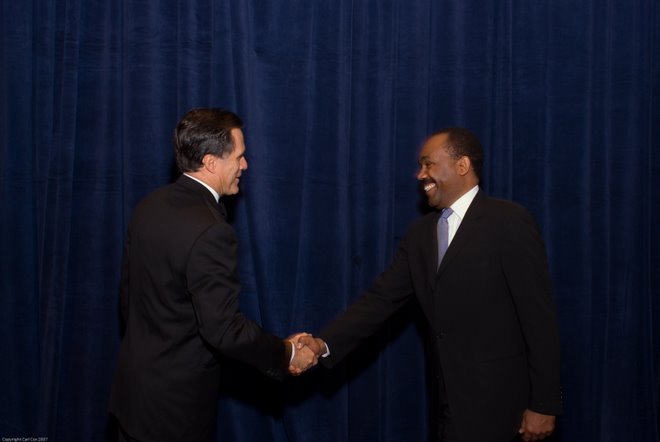
However, Dr. Farmer seems to try to have it both ways.  While he recognizes that bypassing Haitian institutions is a critical problem and touts his and President Clinton’s efforts to promote greater direct support for the Haitian government, including financially, his organization, Partners in Health, is the largest healthcare provider in Haiti.  How’s that for bypassing Haitian institutions?  The senior representatives at the Haitian Ministry of Health note that Dr. Farmer’s group built a kitchen in the state hospital and some medicine and equipments, but that’s all he’s done.  His hospitals and clinics all operate under the banner of Partners in Health, and his funding goes directly into those institutions rather than through the Ministry.  His plans now include building a massive teaching hospital in Haiti, but will operate it as Partners in Health, rather than under the banner of the Haitian Ministry.  To the Ministry’s knowledge, he has never provided any sort of technical assistance or institution building programs for the Ministry. 

While he advocates for greater strengthening of and direct funding for Haitian institutions, he has not funneled any of the $80 million in donations for earthquake recovery that he was granted into the Ministry.  He received tens of millions of dollars in funding from USAID and the UN Special Envoy’s office, led by President Clinton, where he serves as the Deputy Special Envoy (seems to be a conflict of interest there?).  In short, Dr. Farmer talks the talk in Haiti, but does not walk the walk.

Finally, and most disturbingly, Dr. Farmer turns partisan in this book.  He is an unabashed advocate of former President Aristide.  Again, given his role as UN Deputy Special Envoy, this seems to be a conflict of interest.  The Haitian people actually forced President Aristide out of Haiti in 2004 because they were fed up with his corruption and violence.  The Haitian Government Accounting Office estimates that Aristide departed Haiti with more than $350 million in stolen government funds see: http://solutionshaiti.blogspot.com/2011/03/truth-about-aristide-mob-boss-or.html .  


Aristide has never been held accountable, and in fact, returned to Haiti shortly after the earthquake.  The people were so happy he was returning that they ransacked his home the night he arrived taking everything from the mangoes on the trees to the bed linens.  How’s that for a welcome home?  Dr. Farmer’s partisanship in Haiti is cause for great concern among many Haitians, particularly given his role at the UN and his dominance in the healthcare sector. 

Aside from Dr. Farmer’s questionable political intentions, no one can deny the sincerity of his humanitarian intentions.  Dr. Farmer quite clearly loves Haitian culture and the Haitian people.  He has done a lot of good in the country, including making an enormous contribution to combating AIDS and the provision of health services, particularly in remote regions.  He speaks fluent Creole and is married to Haitian woman who is truly a force of nature in her advocacy for women in Haiti and healthcare.  There’s no doubt that he’s made a real difference in the lives of thousands of Haitians. 

So in the end, it seems this review wants to have it both ways too.  As a Haitian, I admire and appreciate Dr. Farmer’s work – and am deeply touched by his love for my country.  As someone who is frustrated by aid organizations bypassing Haitian institutions, I am disturbed and discouraged by how he has operated his NGO in Haiti.  And, as someone who has personally seen and experienced the violence of President Aristide, I am outraged by his partisanship.